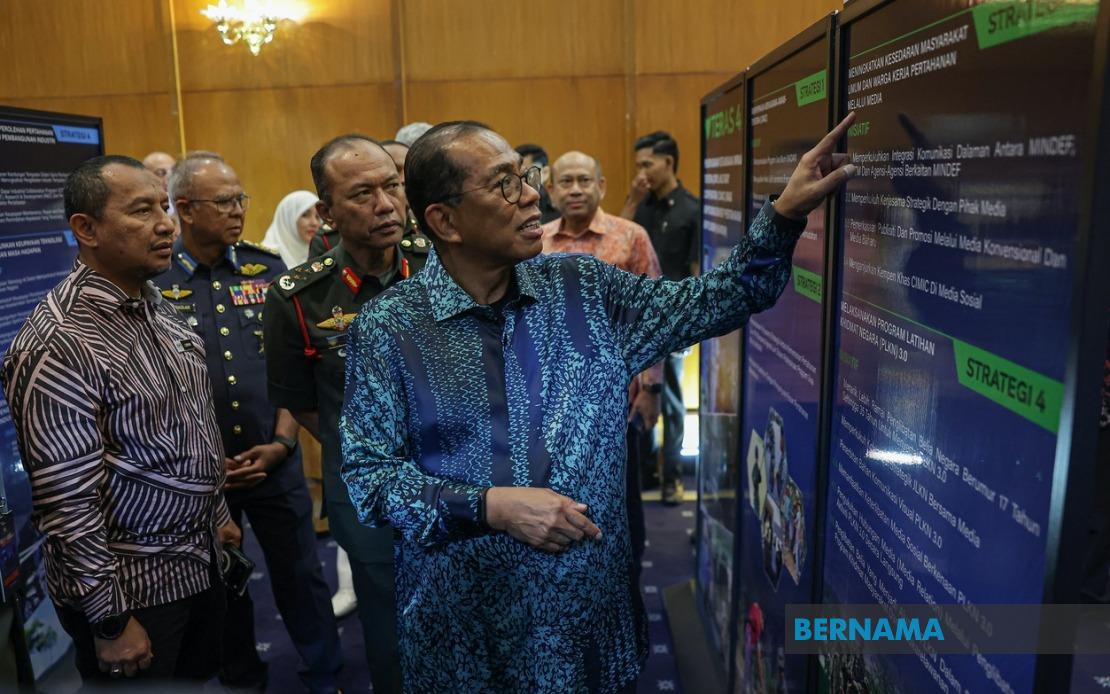
Malaysia's defence establishment has taken a significant step toward fortifying the nation's security posture by introducing two interconnected strategic documents designed to guide military planning through 2030. Defence Minister Datuk Seri Mohamed Khaled Nordin launched the National Defence Strategic Plan (PSPN) and the Defence Capacity Blueprint (RTKP) on June 25, positioning these frameworks as essential instruments for navigating an increasingly unpredictable strategic environment characterised by geopolitical volatility, technological disruption, and multifaceted security risks that extend beyond conventional military threats.
The timing of these initiatives reflects Malaysia's recognition that the international security landscape has undergone fundamental transformation. The region faces mounting geopolitical tensions, particularly involving major powers competing for influence across Southeast Asia's vital sea lanes and strategic territories. Concurrently, disruptive technologies including artificial intelligence and automation are reshaping military capabilities and operational doctrines worldwide. These dual pressures have prompted the Defence Ministry to conduct a comprehensive Mid-Term Review of the existing Defence White Paper, identifying gaps in current planning and proposing a more adaptive framework capable of responding to emerging challenges with greater agility than traditional defence models permit.
According to Minister Mohamed Khaled, the PSPN functions as a strategic compass, establishing seven core pillars that will anchor Malaysia's defence trajectory over the next five years. These pillars encompass operational readiness of the Malaysian Armed Forces, systematic enhancement of defence capabilities, personnel welfare including support for veterans, technological advancement and innovation, defence industry development, and institutional strengthening. Each pillar addresses specific vulnerabilities or opportunities within the defence ecosystem, collectively forming a comprehensive approach to national security that extends beyond purely military considerations into broader dimensions of national resilience.
Complementing the strategic vision, the Defence Capacity Blueprint serves a distinctly operational function. Where the PSPN articulates aspirational goals, the RTKP provides the mechanisms for achieving them by systematically addressing four critical resource dimensions: financial allocation, human capital development, technological expertise, and inter-agency coordination. This dual-document approach reflects international best practice in defence planning, wherein strategic vision remains disconnected from implementation unless accompanied by rigorous capacity assessment and resource mobilisation strategies. The minister emphasised that capacity encompasses not merely funding and personnel, but also leadership development, professional competencies, research infrastructure, and the institutional networks that bind government agencies and broader defence stakeholders into a cohesive operational ecosystem.
The whole-of-government framework underpinning both documents marks a conceptual shift in Malaysian defence thinking. Rather than viewing security as the exclusive domain of the Defence Ministry or military establishment, the strategic plan explicitly recognises that national defence constitutes a collective responsibility spanning civilian ministries, private sector partners, research institutions, and civil society. This integration acknowledges that contemporary security challenges—ranging from cyber threats to supply chain vulnerabilities to disinformation campaigns—resist compartmentalisation and demand coordinated responses across institutional boundaries.
The strategic documents arrive as Malaysia simultaneously modernises its operational capabilities. The Defence Ministry received three ANKA Medium Altitude Long Endurance Unmanned Aircraft Systems in March 2024, which have subsequently been deployed at Labuan Air Base and are now operational. These platforms represent a significant capability enhancement, extending Malaysia's surveillance and reconnaissance reach across the maritime domain—a critical asset given the country's extensive coastlines and exclusive economic zones. The unmanned systems allow for persistent intelligence gathering at reduced operational cost compared to traditional manned aircraft, while enabling rapid response to maritime security incidents.
Equally significant are scheduled acquisitions of additional military platforms that will reshape Malaysia's force structure. The Malaysian Armed Forces are positioned to receive FA-50M light combat aircraft, representing a qualitative upgrade in air combat capability. Maritime patrol aircraft will enhance surveillance along vital shipping corridors and fishing grounds, while additional Littoral Mission Ships will strengthen coastal defence and maritime law enforcement capabilities. These acquisitions align with the strategic plan's emphasis on capability enhancement and suggest a deliberate effort to modernise aging platforms and plug critical capability gaps within the armed forces.
The emphasis on maritime capability enhancement reflects Malaysia's geographic imperatives and strategic interests. As an archipelagic nation controlling portions of the strategically vital Malacca Strait and claiming substantial maritime zones in the South China Sea, Malaysia confronts persistent challenges in patrolling, monitoring, and defending its maritime interests. Rival claims to maritime resources, illicit trafficking networks, and the increasing projection of great-power naval presence throughout Southeast Asian waters all underscore the necessity for enhanced maritime domain awareness and responsive naval capabilities. The combination of unmanned surveillance systems, patrol aircraft, and littoral mission ships creates a more layered and resilient maritime security architecture.
The Defence White Paper itself, which these new documents complement and operationalise, has provided Malaysia's overarching defence framework since its initial formulation. The Mid-Term Review triggering the PSPN and RTKP represented an honest assessment that the strategic environment had shifted sufficiently to warrant refinement of planning assumptions, threat assessments, and capability priorities. Rather than abandoning the foundational document, Malaysia has chosen to evolve it through structured review processes, suggesting a pragmatic approach to long-term strategic planning that acknowledges both continuity and necessary adaptation.
For Malaysian defence industrial partners and technology companies, the strategic documents potentially signal expanded opportunities. The explicit commitment to defence technology and innovation, coupled with emphasis on research and development capacity, could catalyse greater private sector engagement in defence modernisation. Similarly, the whole-of-society framing may incentivise greater integration of civilian technological expertise and entrepreneurship into defence planning, potentially accelerating the adoption of emerging technologies within military contexts.
Regionally, Malaysia's updated defence strategy must be understood within broader Southeast Asian security dynamics. The strategic plan arrives amid intensifying competition between major powers for influence throughout the region, continued tensions over maritime territorial claims, and growing concern among smaller Southeast Asian nations about preserving strategic autonomy and freedom of navigation. By articulating a clear strategic vision and committing to systematic capability development, Malaysia signals both resolve in defending its interests and commitment to rules-based order in a region where power dynamics are increasingly contested.
Looking forward, the successful implementation of the PSPN and RTKP will require sustained political commitment and adequate resource allocation over multiple budget cycles. Defence planning across five-year horizons demands consistency that can withstand political transitions and competing budgetary priorities. The explicit capacity blueprint addresses this challenge by identifying specific resource requirements, though parliamentary and cabinet oversight mechanisms will ultimately determine whether allocated resources match strategic ambitions. The integration of cross-government and private sector stakeholders introduces additional implementation complexity, requiring coordination mechanisms and institutional arrangements that extend beyond traditional defence ministry structures.

