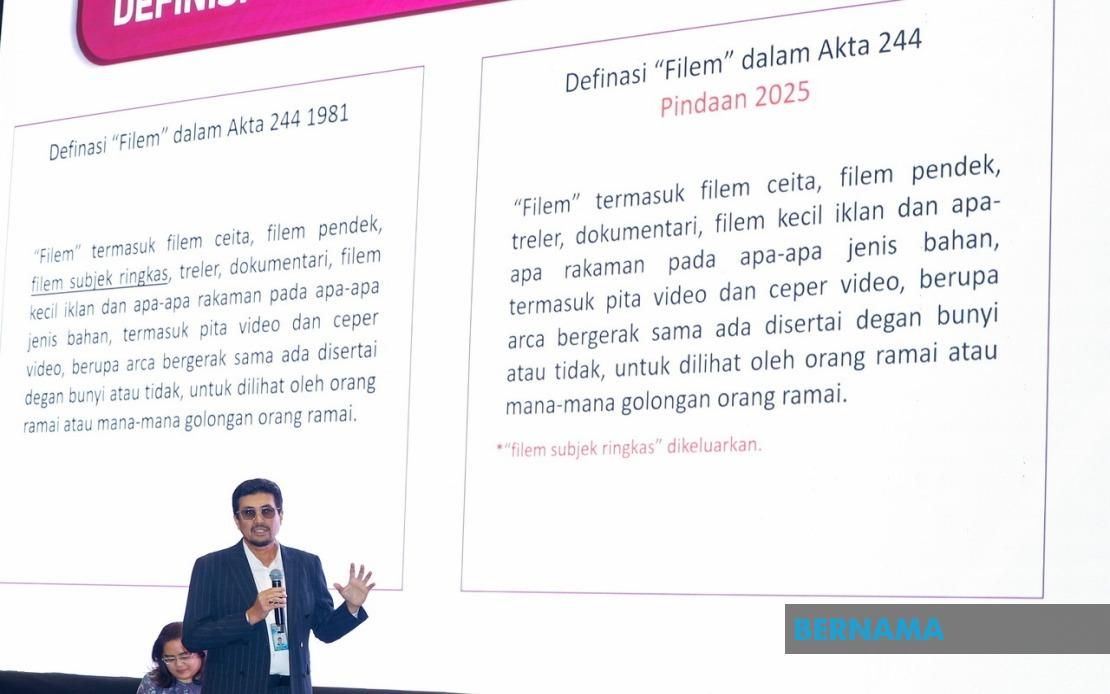
Malaysia's film industry is poised for a significant overhaul with the imminent introduction of the National Film Policy 2026-2035, a comprehensive framework that promises to reshape how the sector operates and competes globally. Datuk Azmir Saifuddin Mutalib, chief executive of the National Film Development Corporation Malaysia (FINAS), revealed that the policy is nearing finalisation following two years of intensive stakeholder consultations and will be launched within the year pending Cabinet approval. This development represents a watershed moment for Malaysia's creative industries, which have struggled to maintain international competitiveness amid rapid technological change and evolving audience preferences.
The new policy framework rests on five foundational pillars that collectively address the structural challenges facing Malaysia's film ecosystem. These encompass Financing and Investment mechanisms, Marketing and Promotion strategies, Industry Collaboration and Technology integration, Human Capital Development and Management, and Governance and Legislation reforms. Across these five areas, policymakers have crafted more than 70 discrete initiatives designed to work synergistically toward a shared vision of an accessible, dynamic, sustainable, and inclusive film industry that commands greater international recognition. The breadth of this undertaking underscores the government's recognition that narrow, sectoral fixes are insufficient to address the complex, interconnected challenges facing film producers, distributors, and exhibitors in Malaysia.
A particularly significant aspect of the 2026-2035 policy is its emphasis on alternative financing models and expanded market access. Traditional film financing in Malaysia has relied heavily on government grants and limited private investment, creating bottlenecks that constrain production volume and quality. By deliberatively developing new funding pathways, the policy aims to democratise access to capital and encourage private sector participation in film development. This shift acknowledges that sustainable industry growth depends on attracting diverse investors and revenue streams rather than perpetuating dependency on government coffers. For Malaysian producers operating in a competitive Southeast Asian landscape, access to reliable and diverse financing represents a critical competitive advantage against counterparts in Thailand, Indonesia, and the Philippines.
The incorporation of artificial intelligence and advanced technologies into the policy framework reflects a forward-looking approach that recognises film production is undergoing technological transformation. AI applications in areas such as scriptwriting assistance, post-production effects, distribution analytics, and audience targeting represent both opportunities and risks for Malaysia's creative workforce. The policy's commitment to adopting these technologies while simultaneously emphasising workforce training and certification suggests an intention to manage this transition thoughtfully. Rather than allowing technological disruption to displace workers, the framework aims to equip Malaysians with skills enabling them to operate effectively within AI-augmented production environments. This balanced approach distinguishes Malaysia's strategy from more laissez-faire approaches in developed markets.
Intellectual property protection emerges as another critical component of the new policy, addressing longstanding vulnerabilities in Malaysia's creative industries. Piracy and unauthorised content distribution have historically eroded returns for filmmakers, while inadequate IP protections have discouraged investment in high-risk film projects. Strengthening these protections through legislative reform and enforcement mechanisms creates a more secure environment for both domestic and international investors. For Malaysian producers seeking to sell internationally or collaborate with foreign partners, robust IP frameworks are essential credibility markers. Furthermore, improved protections support the emergence of indigenous Malaysian franchises and character-driven narratives that might otherwise be economically unviable under existing conditions.
The policy's emphasis on reflecting Malaysia's multicultural identity while driving national unity positions cinema as a vehicle for social cohesion and cultural expression. This framing acknowledges that film carries significance beyond commercial metrics and box office returns. By deliberately supporting narratives that celebrate Malaysia's ethnic, religious, and cultural diversity, policymakers are investing in soft power and social capital alongside economic returns. For a nation navigating complex communal dynamics, cinema offers a uniquely powerful medium through which shared values and mutual understanding can be communicated and reinforced. This dimension of the policy may prove particularly valuable for international audiences encountering Malaysia through film.
The formulation process itself warrants examination, as it involved extensive collaboration among FINAS, Universiti Teknologi MARA (UiTM), and the National Academy of Arts, Culture and Heritage (ASWARA), alongside consultations with government agencies, industry players, and relevant ministries. This inclusive approach reduced the risk of policy misalignment or duplication with existing initiatives and brought diverse expertise to bear on complex structural problems. The two-year engagement timeline, while lengthy, permitted thorough vetting of proposals and iterative refinement based on stakeholder feedback. Recent engagement sessions have focused on editorial clarity and greater specificity regarding FINAS's operational cooperation with industry associations, suggesting policymakers remain responsive to legitimate concerns about implementation feasibility.
This 2026-2035 policy marks Malaysia's third national film strategy since the 1980s and constitutes the first major legislative update to the 2005 framework that has guided the sector for two decades. The longevity of the 2005 policy, while testament to its foundational soundness, also reflects how rapidly the industry landscape has shifted. Streaming platforms, social media, changing consumption patterns, and technological innovation have all transformed the environment in which Malaysian filmmakers operate since 2005. A comprehensive policy refresh is therefore overdue and necessary to ensure Malaysia remains relevant within an increasingly competitive and technologically sophisticated global film ecosystem.
Looking forward, the policy's positioning of film as an engine of economic growth carries significant implications for Malaysia's broader creative economy strategy. Film production, distribution, and exhibition generate employment across multiple skill levels, attract foreign investment and tourism, and create spillover benefits for related industries such as hospitality, real estate, and digital services. Should the 2026-2035 policy succeed in expanding production volume and international visibility, multiplier effects could ripple through the Malaysian economy. Neighbouring countries such as Thailand and the Philippines have already demonstrated how strategic film industry investment yields outsized economic returns; Malaysia's new policy framework suggests determination to replicate and potentially exceed these successes.
The policy's approval pathway involves submission to the Communications Minister, followed by Cabinet consideration and eventual public launch. This procedural deliberation, while potentially time-consuming, ensures high-level governmental buy-in and coordination across relevant departments. The launch timeline of late 2024 positions the policy to begin shaping industry incentives and investment decisions before the 2026-2035 implementation period commences formally. For industry participants currently planning productions, investment decisions, and capacity development, the anticipated policy details offer signalling value that encourages forward-thinking strategic positioning. Malaysian filmmakers and producers should begin aligning their capabilities and propositions with anticipated policy priorities, positioning themselves advantageously for whatever new funding mechanisms, promotional platforms, and collaborative opportunities emerge.

