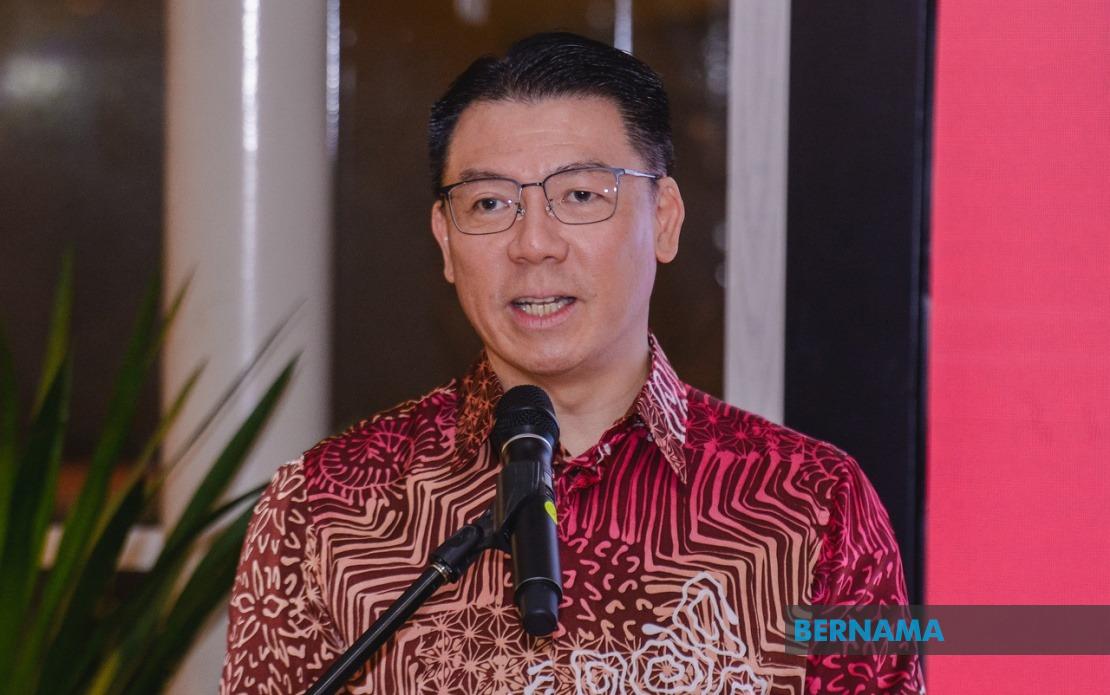
The Malaysian government is moving to ease property acquisition costs by introducing a 10 per cent discount on home purchases during the ASEAN Real Estate Conference (AREC) 2026, which will convene at the Malaysia International Trade and Exhibition Centre (MITEC) from July 29 to August 1. Housing and Local Government Minister Nga Kor Ming revealed the measure as part of a coordinated strategy to address affordability challenges in the residential market, particularly for first-time buyers struggling with down payment obligations.
The discount scheme emerges from a partnership between the Ministry of Housing and Local Government (KPKT) and the Real Estate and Housing Developers' Association Malaysia (REHDA), signalling a deliberate alignment between government policy and the private development sector. By targeting the mandatory 10 per cent deposit stipulated under the Sale and Purchase Agreement (SPA), the initiative directly addresses one of the most significant barriers to home ownership for middle and lower-income Malaysians. This timing coincides with AREC 2026, a four-day gathering anticipated to generate RM1.5 billion in property transactions through forums, business matching sessions, and exhibition activities.
Prime Minister Datuk Seri Anwar Ibrahim is scheduled to officially open the conference, underlining the government's commitment to positioning property development as a strategic economic driver. The high-level political endorsement reflects the broader policy focus on housing affordability, which has emerged as a critical electoral and social concern across Southeast Asia's rapidly urbanising economies. Malaysia's approach aligns with regional trends where governments increasingly intervene in property markets to manage affordability crises.
Complementing the purchase discount, the government has launched the Rahmah Cement initiative, a supply-side intervention designed to mitigate escalating construction expenses for developers. The programme will release 1.6 million metric tonnes of cement specifically earmarked for affordable housing projects, functioning as a cost-control mechanism in the development pipeline. By stabilising material costs, the initiative creates conditions for sustained price restraint across the residential sector, addressing the structural components of affordability rather than relying solely on demand-side subsidies.
Minister Nga articulated the philosophical underpinning of these measures through the government's "Rumahku, Syurgaku" (My Home, My Heaven) campaign slogan, framing housing access as a fundamental right rather than a luxury commodity. This rhetorical positioning establishes home ownership as a social entitlement worthy of state intervention, particularly relevant in Malaysia's context of rapid urbanisation and wealth inequality. The framing acknowledges that while economic growth has lifted many households, speculative investment and rising construction costs have outpaced wage growth, pricing ordinary families out of the market.
Malaysia's international property sector achievements provide broader context for these domestic initiatives. At the FIABCI World Prix d'Excellence Awards 2026, Malaysia emerged as the overall champion with 14 accolades comprising eight gold medals and six silver medals, demonstrating competitive strength across residential, commercial, retail and mixed-use development categories. Gold medal recipients included Park Regent @ Desa ParkCity, The Mansions @ ParkCity Hanoi, Merdeka 118, Elmina Lakeside Mall, Sunway Velocity Two (Phase 1), Gamuda Gardens, and Diamond Precinct in Vietnam, showcasing the technical sophistication and design innovation characteristic of Malaysian developers.
Since the FIABCI awards launched in 1992, Malaysian companies have accumulated 135 gold medals globally, establishing the nation as a serious contender in international property development. This track record reflects decades of capital accumulation, technical expertise, and project management capability within the domestic industry. For Malaysian readers, these accolades signal that domestic developers competing in the region possess world-class credentials, relevant information for investors and homebuyers assessing development quality and viability.
The international expansion of Malaysian property companies underscores the sector's maturation and capital surplus. ParkCity Group operates extensively in Vietnam, SP Setia has established operations in Australia, OSK Property maintains a presence in Melbourne, and EcoWorld has secured footholds in London. These overseas investments represent both capital export and professional capability diffusion, generating revenue streams while establishing Malaysian brands in competitive global markets. For the Southeast Asian region specifically, Malaysian developer presence in Vietnam and other neighbouring economies reflects intra-regional capital flows and the consolidation of economic influence through property development infrastructure.
Government support for developer internationalisation forms part of a deliberate strategy to position Malaysian companies as regional champions and global players. Minister Nga framed these international successes as validation of Malaysian competitive capacity, arguing that domestic policy frameworks enabling property sector development simultaneously create conditions for regional and global expansion. This perspective aligns Malaysian housing policy with broader foreign direct investment and economic diversification strategies, where property development serves as an engine for capital export and professional services expansion.
The announcement of the 10 per cent purchase discount and cement subsidy must be situated within the broader National Housing Policy framework, which Prime Minister Anwar Ibrahim will formally launch on July 30. This coordinated policy announcement—with multiple initiatives converging around AREC 2026—suggests comprehensive revision of Malaysia's residential sector governance. For Malaysian homebuyers, particularly middle-income households in metropolitan areas facing sustained price pressures, these measures represent tangible interventions reducing entry barriers. However, their long-term effectiveness depends on developer participation rates, sustained government subsidy levels, and whether demand-side support translates into measurable affordability improvements or merely benefits developers through volume increases.
Regionally, Malaysia's approach to housing affordability and property sector development carries implications for ASEAN economic integration. As younger Southeast Asian middle classes expand and urbanisation accelerates, housing access emerges as a shared challenge across the region. Malaysian policy innovations, disseminated through AREC 2026 and supported by the nation's developer export activities, may establish precedents that neighbouring economies reference when designing their own housing interventions. The conference thus functions not merely as a transaction venue but as a policy laboratory where Malaysian approaches to affordability, developer sustainability, and market regulation encounter regional audiences and shape future governance frameworks.
For Malaysian investors and businesses within the property sector, the convergence of purchase discounts, construction cost support, and high-profile international recognition creates momentum. Developers demonstrating capacity to participate in affordable housing schemes while maintaining quality benchmarks gain legitimacy within government procurement and policy frameworks. The 1.6 million metric tonnes of subsidised cement represents material cost advantage for qualifying projects, creating competitive advantage for developers with existing affordable housing pipelines. These policy mechanisms effectively channel state resources toward selective industry players capable of executing government priorities, reinforcing market consolidation around larger, internationally recognised developers with established affordable housing platforms.

