Malaysia's government has reaffirmed its commitment to sustaining all existing subsidy and assistance programmes even as petroleum product subsidies are expected to cost the nation nearly RM40 billion this year, primarily driven by global price volatility stemming from ongoing tensions in West Asia. Deputy Finance Minister Liew Chin Tong made this declaration during parliamentary oral questions on July 15, signalling the administration's resolve to prioritise household financial stability despite mounting fiscal pressures.
The government's decision to maintain support reflects a deliberate policy choice to shield Malaysians from external economic shocks, particularly the fluctuations in crude oil prices that have intensified since the West Asia conflict escalated in March and April. Rather than trimming welfare spending in response to ballooning subsidy costs, policymakers have opted to sustain a comprehensive safety net encompassing direct cash transfers through Sumbangan Tunai Rahmah (STR) and Sumbangan Asas Rahmah (SARA), alongside ongoing school assistance and other targeted relief measures. This approach demonstrates the government's conviction that maintaining purchasing power and social welfare during periods of global uncertainty takes precedence over immediate fiscal consolidation.
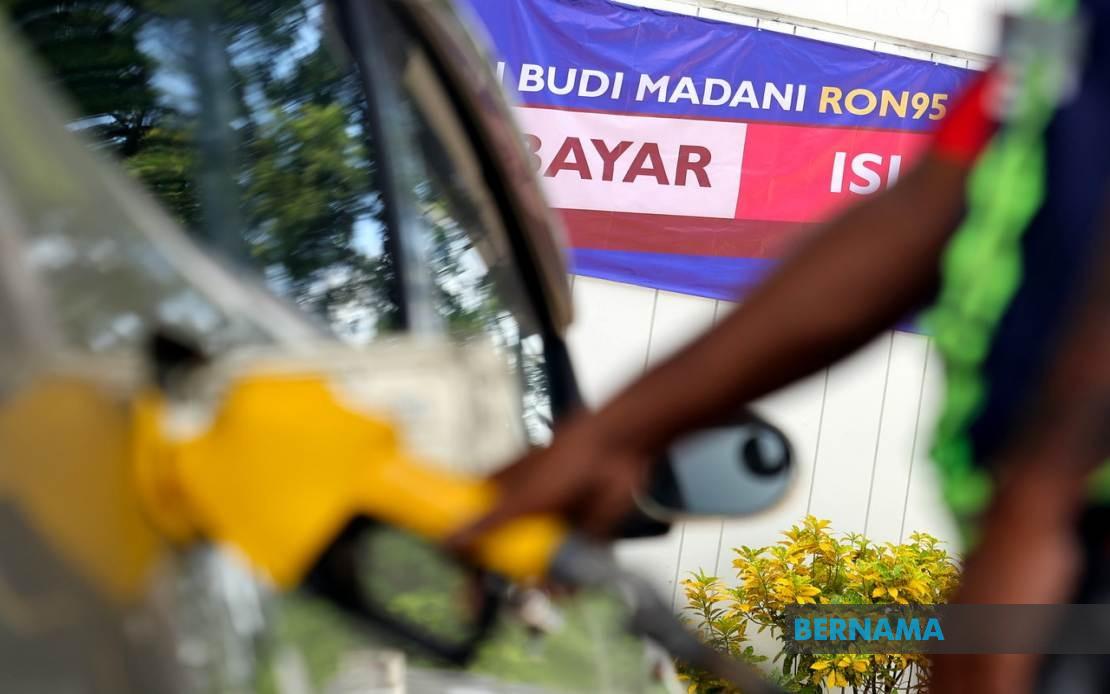
The BUDI MADANI RON95 (BUDI95) scheme, introduced in September of the previous year, has emerged as the centrepiece of Malaysia's strategy to insulate ordinary citizens from petroleum price shocks. By establishing a fixed price ceiling on RON95 petrol coupled with controlled quotas, the programme created a protective buffer that prevented consumers from experiencing the full brunt of international market movements. During the peak crisis months when global crude prices soared to RM5 per litre, Malaysian motorists continued purchasing fuel at the locked-in rate of RM1.99 per litre, a significant discount that would have been impossible without deliberate government intervention.
Liew emphasised that this pricing mechanism delivered two critical outcomes: first, psychological and financial relief for consumers facing unprecedented global uncertainty, and second, assurance of adequate domestic fuel supply despite international market turbulence. The minister highlighted that Malaysia's ability to maintain both stable prices and reliable petrol availability represents a distinctive advantage compared to nations forced to allow market forces to determine fuel costs directly. This stability has direct implications for businesses, transport operators, and households across the region, as Malaysia's consistent fuel availability prevents supply-chain disruptions that could cascade throughout Southeast Asian commerce.
The fiscal burden of maintaining these protections has grown substantially due to geopolitical factors beyond Malaysia's control. The West Asia conflict created upward pressure on global crude prices that forced the government to widen the subsidy gap—the difference between what petrol actually costs on international markets and what Malaysians pay domestically. Projecting nearly RM40 billion in annual petroleum subsidies represents a formidable commitment of public resources, equivalent to significant portions of other developmental expenditures. Yet policymakers have determined that the social and economic costs of removing these protections would outweigh the fiscal savings achieved.
When questioned whether the government might reduce other assistance programmes to accommodate petroleum subsidy costs, Liew provided an unequivocal response: no such reductions are contemplated. This stance reflects a broader policy philosophy that distinguishes between essential welfare support and fiscal flexibility. Rather than viewing the petroleum subsidy burden as justification for dismantling cash assistance programmes or education support, the government has chosen to accommodate both simultaneously, albeit at considerable budgetary cost. This decision carries implications for Malaysia's fiscal trajectory and debt sustainability, but represents a clear prioritisation of near-term social stability over medium-term balance-sheet consolidation.
The Malaysian experience offers important lessons for other developing economies navigating similar pressures. Many nations faced comparable choices following regional conflicts and commodity price volatility: whether to protect domestic consumers through subsidies or allow market mechanisms to determine prices. Malaysia's approach assumes that the distributional benefits of widespread subsidy protection—encompassing not only petroleum but also targeted cash transfers—justify the fiscal investment, particularly when global uncertainties threaten household incomes and purchasing power. This reflects a judgment that temporary fiscal strain is preferable to the social disruption that might accompany sudden price liberalisation.
Implementing this dual commitment to petroleum subsidies and social assistance programmes requires sophisticated administrative coordination. The government must simultaneously manage subsidy delivery through the BUDI95 mechanism while distributing cash transfers and education support through separate bureaucratic channels. Any operational failures in either stream could undermine the intended protective effect, creating situations where households experience relief in one area while facing pressure in another. The successful integration of these programmes depends on robust governance and clear communication with beneficiaries about eligibility, payment schedules, and benefit levels.
For Malaysian consumers, this policy continuity provides considerable certainty about future purchasing power despite external economic shocks. Households budgeting for fuel expenses can plan with confidence that prices will remain anchored at RM1.99 per litre, while eligible families can anticipate regular cash assistance payments without sudden reductions. This predictability contrasts sharply with the experience in nations where subsidy reforms led to sudden price increases that inflicted immediate hardship on vulnerable populations. By maintaining visible and tangible support, the government reinforces citizen confidence in state capacity to manage external crises without passing costs directly to households.
The broader regional context amplifies the significance of Malaysia's subsidy maintenance. Neighbouring economies have experienced varying degrees of petroleum price pressure and policy response, with some implementing partial liberalisation while others maintained stricter controls. Malaysia's decision to sustain protections may influence regional thinking about the feasibility and desirability of maintaining subsidy systems during volatile periods. It also reflects Malaysia's position as a petrol-producing nation with capacity to absorb subsidy costs that would prove unsustainable for energy-importing neighbours, creating differential resilience across Southeast Asia.
Looking forward, the sustainability of this approach depends on assumptions about global crude prices, West Asia tensions, and Malaysia's fiscal capacity. If petroleum prices normalise substantially or geopolitical tensions ease, subsidy costs would decline, making current commitments more affordable. Conversely, further price escalation or prolonged conflict could strain government finances severely. Policymakers have implicitly wagered that current conditions are temporary and that returning to lower subsidy costs will allow the government to address fiscal imbalances without dismantling social programmes. This optimism may prove well-founded or challenging depending on how international events unfold.
The government's parliamentary statement represents more than a budgetary announcement; it constitutes a social contract affirmation during uncertain times. By explicitly refusing to trim assistance despite massive petroleum subsidy obligations, Malaysian leadership signalled that protecting citizens from external shocks remains the primary policy objective. Whether this approach proves fiscally sustainable over the medium term will depend on factors largely beyond Malaysian control, but the signal sent to households and businesses—that the state will prioritise their economic security—carries substantial political and social value in its own right.

