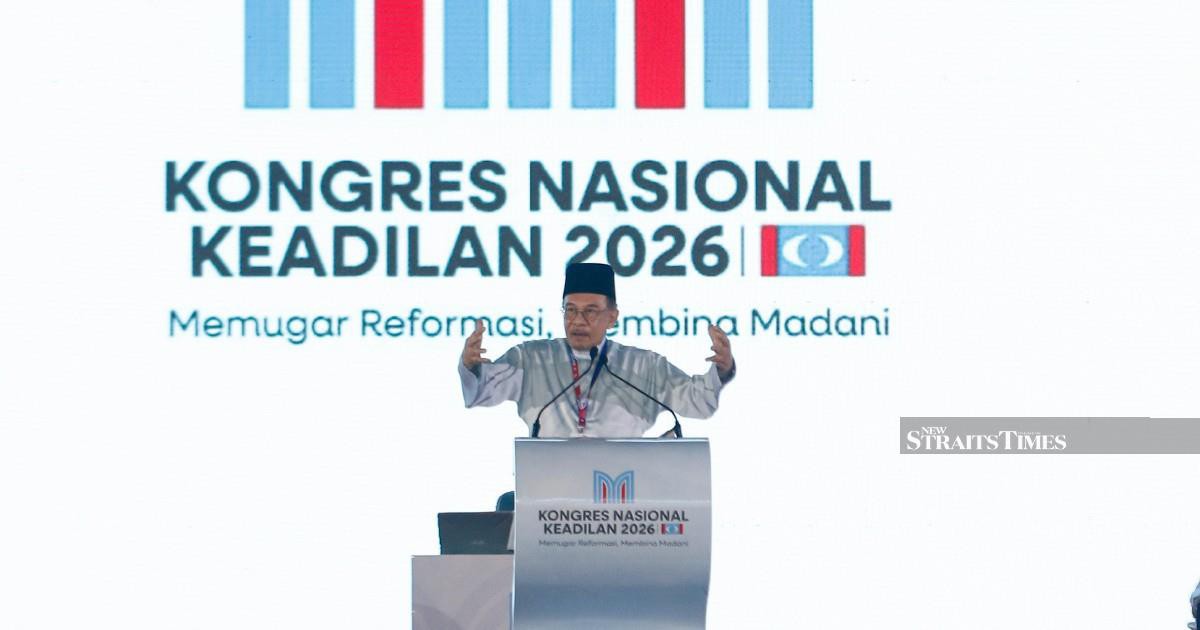
Prime Minister Datuk Seri Anwar Ibrahim announced in Ayer Keroh that his administration intends to repeal the Universities and University Colleges Act 1971 (Act 30), marking a significant departure from the legislative architecture that has governed Malaysia's university system for more than five decades.
The decision to dismantle this foundational legislation represents one of the most consequential policy shifts in Malaysia's post-independence educational landscape. Act 30 has served as the statutory framework under which public universities operate, establishing the legal parameters for institutional governance, academic freedom, financial management, and student conduct. Its abolition signals the government's commitment to fundamentally reimagining how Malaysia's higher education sector functions, suggesting deeper structural changes than routine legislative amendments would permit.
This move carries profound implications for Malaysia's 20 public universities and their stakeholders. The 1971 Act established restrictive provisions that have long been subjects of criticism from academics, student organisations, and institutional leaders. Notable among these constraints are limitations on student political activism, restrictions on campus gatherings, and hierarchical governance structures that concentrate decision-making power in administrative hierarchies rather than dispersing it among academic bodies. By repealing rather than merely amending the legislation, the government appears poised to introduce a substantially different regulatory paradigm.
For Malaysian university faculty, this announcement offers potential relief from decades of restrictions that many have viewed as impediments to vibrant academic discourse. Universities globally thrive on debate, experimentation, and intellectual challenge; Malaysia's rigid institutional framework has been repeatedly cited as a factor limiting research productivity and international university rankings. Reform-minded academics have long advocated for governance models that elevate faculty participation in decision-making and strengthen institutional autonomy from excessive ministerial oversight. Anwar's announcement suggests receptiveness to these arguments.
The timing of this announcement aligns with broader initiatives under Anwar's administration to recalibrate relations between government and civil society institutions. His coalition government has signalled commitment to democratic renewal, press freedom, and institutional checks on executive power. Extending these principles to universities would represent consistency with this broader trajectory, though implementation details remain uncertain. The government will need to navigate between institutional autonomy on one hand and ensuring accountability, quality standards, and social equity on the other.
Regional competition for talent and research excellence provides additional context for this reform. Singapore's universities, particularly the National University of Singapore and Nanyang Technological University, have attracted considerable Malaysian academic talent partly due to greater institutional autonomy and research funding. South Korea and Taiwan have similarly restructured their higher education systems to enable universities greater flexibility in hiring, research prioritisation, and curricular innovation. Malaysia risks further brain drain if its regulatory environment remains comparatively restrictive relative to neighbouring countries pursuing aggressive higher education advancement strategies.
Student organisations have historically viewed Act 30 as an instrument of political control. Provisions restricting student union activities and prohibiting campus political engagement have been contested as anachronistic in democratic societies. Young Malaysians increasingly expect university spaces to function as platforms for civic learning and democratic participation. Repealing legislation that institutionalises such restrictions would acknowledge shifting social expectations about university roles in developing informed, engaged citizenship.
The financial implications of this reform deserve consideration. Current legislation constrains universities' capacity to pursue diversified revenue streams, establish independent research institutes, and negotiate flexible employment arrangements for academic and professional staff. New legislation could enable more entrepreneurial approaches to institutional sustainability, though policymakers must ensure that commercialisation pressures do not undermine commitment to equitable access or public interest research. Malaysian universities depend substantially on government funding; reform frameworks must clarify how funding relationships will evolve under deregulation.
Implementation will prove as crucial as announcement. The government will need to draft replacement legislation that creates an enabling environment without abandoning quality assurance mechanisms, anti-corruption provisions, or mechanisms ensuring universities serve broader national development objectives. International experience suggests that successful university reform requires sustained consultation with academic leaders, student representatives, civil society organisations, and business stakeholders. Rushed implementation risks unintended consequences that could undermine reform objectives.
For Malaysia's international standing, this announcement signals openness to the structural reforms that globally competitive knowledge economies increasingly require. Malaysia aspires to transform into a high-income nation through innovation-driven economic development; universities constitute essential infrastructure for that transition. Removing legislative impediments to institutional innovation, research excellence, and academic freedom represents pragmatic alignment of higher education policy with economic ambitions that Anwar's government has articulated.
The coming months will reveal crucial details about the government's vision for post-Act 30 higher education governance. Stakeholders across Malaysia's university system—from chancellors to student activists—will scrutinise whether replacement legislation genuinely expands institutional autonomy or merely reshuffles governance arrangements. This announcement reflects recognition that Malaysia's educational future demands more flexible, responsive, internationally competitive universities; how thoroughly that recognition translates into statutory reform will define the measure of this initiative's success.

