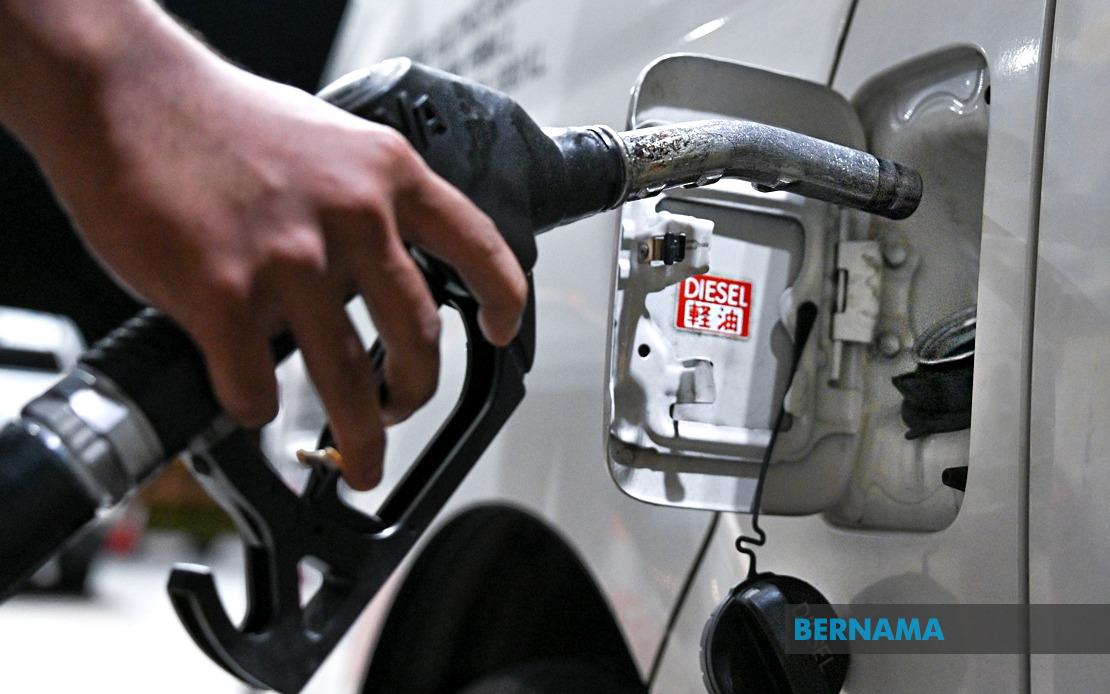
Malaysia's government is poised to roll out a comprehensive diesel subsidy reform programme that promises to recoup up to RM2 billion in annual savings while stabilising domestic fuel supplies. The BUDI MADANI Diesel initiative, set to commence on July 1, will fix the subsidised price of diesel at RM2.10 per litre exclusively for qualifying Malaysian vehicle owners, according to an announcement by Second Finance Minister Datuk Seri Amir Hamzah Azizan at a press conference in Putrajaya.
The new mechanism represents a significant restructuring of how Malaysia manages fuel assistance, moving away from a blanket subsidy system towards a targeted approach that verifies individual eligibility through MyKad identification. This shift mirrors the successful implementation of the BUDI RON95 petrol subsidy programme, which has demonstrated the effectiveness of digitalised verification in preventing unauthorised access to subsidised fuel. By restricting the programme to 700,000 registered private diesel vehicle owners, authorities expect to dramatically reduce the financial burden on government coffers while ensuring subsidies reach genuine beneficiaries.
The mounting cost of fuel support has become increasingly untenable for Malaysian public finances. While the monthly subsidy commitment for petrol and diesel averaged around RM800 million during stable market conditions, this figure ballooned dramatically to nearly RM4.7 billion in March and RM4.9 billion in April as international crude oil prices climbed. These escalating costs underscore why the government has prioritised subsidy reform, as the fiscal sustainability of universal fuel assistance schemes has come under severe pressure from volatile global energy markets.
One of the most alarming indicators prompting this intervention has been the anomalous spike in diesel consumption across Malaysia. Monthly consumption surged from approximately 624 million litres to nearly 1.2 billion litres, signalling massive leakages within the system. These losses stem from multiple channels, including sophisticated cross-border smuggling operations that divert Malaysian subsidised fuel to neighbouring countries, as well as systematic abuse where ineligible parties gain access to government-subsidised diesel through petrol stations. Such leakages not only drain public resources but also jeopardise the reliability of domestic diesel availability for legitimate commercial and transportation needs.
The problem reaches particularly acute proportions in Sabah and Sarawak, where consumption patterns reveal striking discrepancies between actual demand and recorded usage. Current consumption in these East Malaysian states approaches two billion litres annually, yet genuine requirements are estimated at approximately one billion litres per year. This gap of roughly one billion litres annually represents a significant portion of total subsidy leakage, demonstrating that the problem is geographically concentrated and potentially more controllable through regionally tailored interventions.
The government's strategy addresses these inefficiencies through a unified, transparent, and digitally managed system that standardises diesel subsidy mechanisms nationwide. Rather than allowing multiple pathways through which fuel can be diverted or misappropriated, the BUDI Diesel programme establishes a single verification protocol at all petrol stations. This approach aligns with broader government philosophy that targeted assistance is both fiscally prudent and more equitable, ensuring that limited public resources benefit those genuinely in need rather than funding leakage and smuggling networks.
For existing beneficiaries of diesel support, the transition to the new system will occur seamlessly. Those currently receiving RM400 monthly cash assistance through BUDI Diesel programmes will be automatically migrated to direct diesel subsidies dispensed at petrol stations upon MyKad verification. The government has emphasised that this transition requires no additional applications or administrative steps from recipients, reducing bureaucratic friction and ensuring continuity of support during the changeover period. This implementation approach demonstrates administrative sophistication and consideration for affected populations.
The rollout timeline reflects careful preparation, with early access to BUDI Diesel beginning June 27, 2026, exclusively for eligible private diesel vehicle owners in Peninsular Malaysia before the nationwide July 1 launch. This phased approach allows authorities to identify and resolve potential technical glitches in the MyKad verification infrastructure, monitor system performance under real-world conditions, and build operational confidence before extending the programme across the entire nation. The staggered implementation minimises disruption risks and provides time to communicate changes to relevant stakeholders including petrol station operators and vehicle owners.
The RM2 billion in anticipated annual savings would constitute a substantial reallocation of public resources. These recouped funds represent money the government can redirect towards other pressing priorities, whether additional infrastructure investment, healthcare expansion, education enhancement, or further targeted assistance programmes for vulnerable populations. In the context of Malaysia's fiscal constraints and competing budgetary demands, recovering this magnitude of subsidy leakage provides genuine policy flexibility and demonstrates the financial impact that can result from strategic subsidy design reform.
For Malaysian motorists and businesses dependent on diesel, the programme offers certainty of fuel availability and pricing. By eliminating smuggling losses and preventing cross-border diversions, the government can better forecast and manage domestic diesel inventories, reducing risks of supply shortages that could disrupt transportation networks and commercial operations. The RM2.10 per litre price point, while subsidised, remains transparent and predictable, allowing businesses to plan fuel costs more effectively compared to volatile market-driven pricing.
The wider regional implications merit consideration as well. Cross-border fuel smuggling represents a perennial challenge throughout Southeast Asia, with subsidised diesel from Malaysia, Indonesia, and Thailand frequently channelled to neighbouring countries. By implementing more rigorous verification systems, Malaysia may inadvertently encourage similar reforms across the region, potentially disrupting established smuggling networks that operate across porous borders. This could have spillover effects on neighbouring economies, particularly in Thailand and Brunei, which have long benefited from Malaysian fuel smuggling dynamics.
From a policy perspective, the BUDI Diesel programme exemplifies how emerging technology like digital identity verification can modernise social assistance and subsidy administration in developing economies. The MyKad system, already deployed for other subsidies, provides a template for integrating citizen identity data with point-of-sale transactions, creating an audit trail that enhances transparency and accountability. As Malaysia continues digitalising governance, such integrated identity-based subsidy systems may proliferate across different sectors and assistance programmes, fundamentally reshaping how welfare support is administered.
Looking forward, the success or failure of BUDI Diesel will likely influence Malaysia's broader approach to subsidy policy. Should the programme effectively plug leakages and deliver projected savings while maintaining political stability, the government may expand similar targeted mechanisms to other fuel types or essential commodities. Conversely, implementation difficulties or political backlash could prompt recalibration of the approach. The outcomes will therefore resonate beyond diesel policy, shaping public administration and fiscal management practices for years ahead.