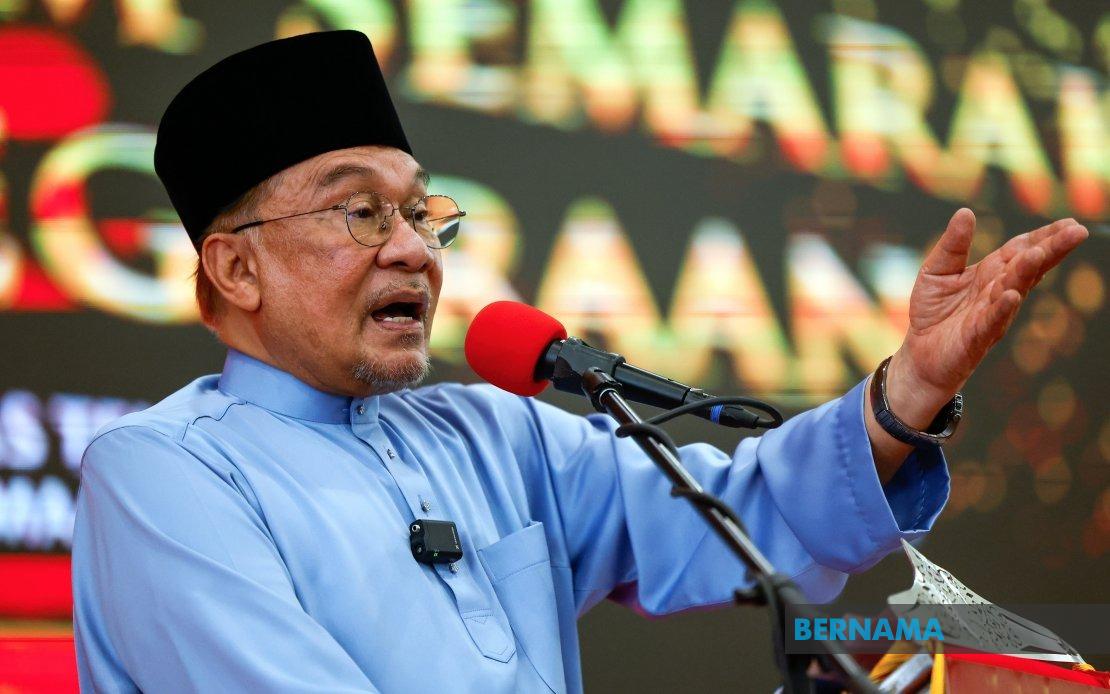
Malaysia's government will move to entirely repeal the Universities and University Colleges Act (AUKU) 1971, a landmark shift aimed at restoring democratic freedoms to the nation's student population. Prime Minister Datuk Seri Anwar Ibrahim made the announcement during his keynote address at the 2026 PKR National Congress held at the Melaka International Trade Centre in Ayer Keroh on August 15, signalling a decisive break from decades-old restrictions on campus activism and student expression.
The decision represents a substantial response to sustained pressure from student leaders and youth activists who have long viewed AUKU as an anachronistic relic constraining their right to organise, protest, and participate in political discourse. Anwar indicated that the government had received a formal memorandum from student representatives laying out their grievances and calling for sweeping legislative reform. Rather than pursuing incremental amendments, the Prime Minister opted for complete abolition, a choice that underscores the administration's commitment to reshaping university governance alongside its broader education transformation agenda.
While previous governments had enacted sporadic amendments to AUKU that nominally expanded student participation opportunities, Anwar acknowledged that these piecemeal reforms had failed to satisfy campus constituencies or address fundamental concerns about institutional autonomy. The Act, originally enacted in 1971, has historically imposed severe restrictions on student political activity, including prohibitions on membership in political parties, public demonstrations, and statements on national affairs. Student leaders have repeatedly contended that these constraints are incompatible with democratic principles and hinder the intellectual development of future national leaders.
Anwar's framing of the repeal as part of Malaysia's education reform programme suggests the government views expanded student rights not merely as a matter of civil liberties, but as integral to modernising the nation's tertiary institutions. By permitting greater campus engagement, the reasoning goes, universities can function more effectively as spaces for critical thinking, civic participation, and the development of engaged citizens. This aligns with international best practices and the educational philosophies of leading universities worldwide, where student voice is regarded as essential to institutional vitality.
The repeal carries significant implications for Malaysia's political culture and generational dynamics. University students represent a strategically important demographic, wielding considerable soft power in shaping public opinion and establishing political preferences that often persist throughout adulthood. For decades, restrictions on campus activism have marginalised student voices from mainstream political discourse, potentially contributing to civic disengagement among educated young Malaysians. Dismantling AUKU could reverse this trajectory, enabling universities to function as genuine spaces for democratic deliberation and political education.
The move also reflects shifting attitudes within the ruling coalition regarding state control over civil society. Anwar's administration has positioned itself as committed to reversing authoritarian governance practices from previous eras. The decision to repeal rather than further amend AUKU demonstrates that the government is willing to undertake substantive legal reform, not merely cosmetic adjustments, to fulfil its democratic commitments. This stands in contrast to earlier approaches that sought to accommodate competing interests through limited concessions.
However, the repeal will likely prompt broader questions about how Malaysian campuses should be governed in the absence of AUKU's prescriptive framework. Universities will need to develop their own policies governing student conduct, political activity, and institutional discipline. This devolution of authority to individual institutions could create a patchwork of regulations, potentially generating inconsistency across Malaysia's higher education system. Some universities may embrace expansive freedoms, while others adopt more conservative interpretations of permissible student conduct.
The announcement also intersects with ongoing debates within Malaysian society about the pace and scope of democratic reform. Progressive constituencies will likely view the repeal as overdue validation of student demands and a welcome expansion of democratic space. Conversely, conservative voices may express concern about potential campus disruptions or worry that unfettered student activism could destabilise institutional order. The government will need to navigate these tensions carefully during implementation.
For Southeast Asian observers, Malaysia's decision carries regional significance. Across the region, student activism remains a contested terrain, with some governments maintaining tight restrictions while others have gradually liberalised policies. Malaysia's move could influence discussions in neighbouring countries about the relationship between democratic values and university governance. It may prompt other administrations to reconsider their own regulatory frameworks and consider whether restrictions on campus activism align with contemporary democratic norms.
The practical implementation of the repeal will determine its ultimate impact. Simply abolishing AUKU without establishing alternative governance frameworks could create uncertainty about permissible conduct and institutional authority. The government and higher education ministry will need to work with universities, student organisations, and other stakeholders to develop coherent policies that protect institutional integrity while respecting expanded student freedoms. This process will test the administration's commitment to meaningful reform versus purely symbolic gestures.
Anwar's announcement also carries personal and political dimensions. As an alumnus of the University of Malaya who has long positioned himself as a champion of youth empowerment and democratic reform, the repeal aligns with his political identity and rhetoric. For younger voters and student constituencies, the move may reinforce perceptions of his administration as genuinely committed to generational change and expanded freedoms, strengthening political support among this strategically important demographic.
Looking forward, the repeal of AUKU will likely reshape Malaysian campus culture in ways both foreseeable and unexpected. Students will gain opportunities to organise politically, establish campus media, and engage in activism that was previously prohibited or restricted. Universities may experience increased political debate and demonstrations, potentially creating both enriched civic discourse and occasional institutional tensions. The ultimate success of this reform will depend on how all stakeholders—government, universities, student organisations, and the broader public—adapt to the new freedoms and responsibilities that accompany AUKU's abolition.

