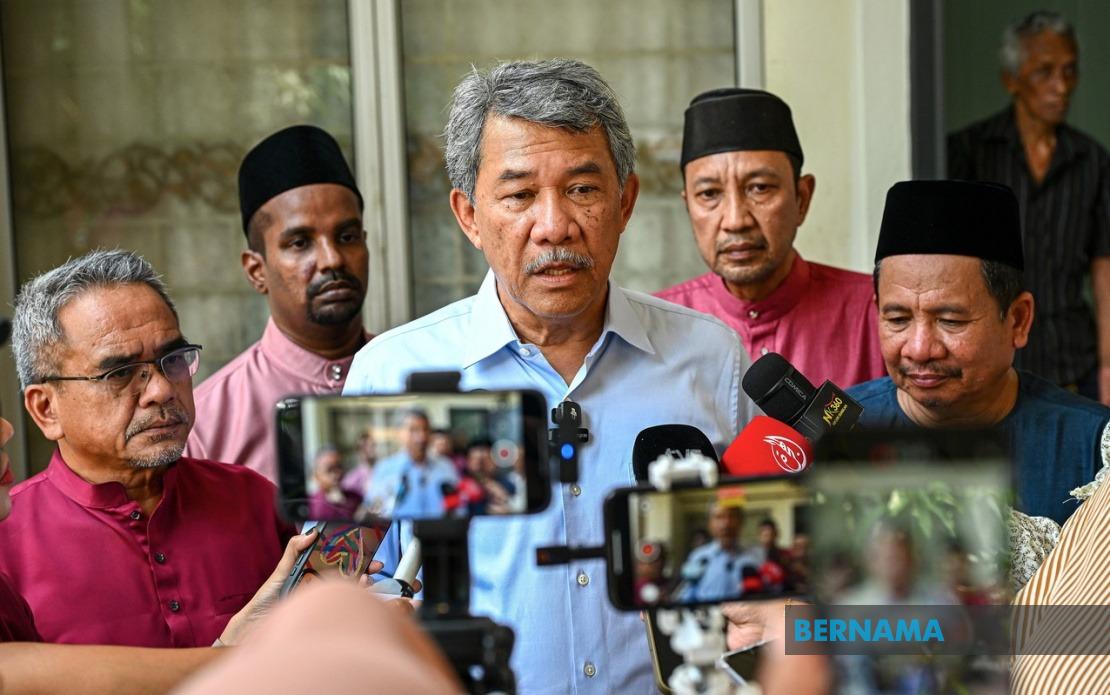
Malaysia intends to place the wellbeing and security of Myanmar refugees at the centre of any repatriation process, Foreign Minister Datuk Seri Mohamad Hasan has declared, signalling a measured approach to returning nationals from the conflict-affected country. The statement comes amid reports that Myanmar's government has proposed repatriating around 5,000 of its citizens currently in Malaysia by sea, a proposal the Malaysian government appears willing to accommodate but on its own terms and timeline.
The Foreign Minister made clear that before any large-scale movement of people occurs, Malaysia intends to work closely with international bodies and neighbouring authorities to ensure returnees will not face persecution or danger upon arrival. The cooperation between the United Nations High Commissioner for Refugees and Malaysia's Home Ministry will be crucial in verifying the legal status of individual refugees and determining what security conditions they would encounter in Myanmar, particularly given the country's ongoing political instability and armed conflict.
Mohamad Hasan's approach reflects a pragmatic assessment of the repatriation challenge. Rather than waiting to process all 5,000 individuals simultaneously, the government plans to return groups in phases, beginning with those whose documentation and status have already been cleared. This staged methodology allows Malaysia to maintain tighter oversight of each return operation while reducing the logistical burden that would accompany shipping thousands of people across the Andaman Sea at once.
The government has tasked the Secretary-General of the Ministry of Foreign Affairs with establishing direct channels with Myanmar through its diplomatic mission in Malaysia. These communications are intended to facilitate the gradual movement of verified refugees back to their homeland while ensuring that both nations maintain aligned expectations throughout the process. Such bilateral dialogue is essential given that Myanmar itself must prepare reception facilities and verify the identities of those returning.
For Malaysia, this issue carries significant weight given that the country hosts one of Southeast Asia's largest refugee populations. The influx has created strain on local resources, housing, and social services, particularly in urban centres. At the same time, Malaysia remains bound by humanitarian obligations and its commitment to the UNHCR framework, requiring it to balance domestic pressures with international refugee protection standards.
The regional dimension to Myanmar's displacement crisis cannot be overlooked. Mohamad Hasan emphasised that ASEAN as a bloc recognises the severity of the refugee situation and maintains that member states must address it collectively rather than unilaterally. This collective approach reflects the organisation's principle of non-interference while acknowledging that the Myanmar crisis transcends borders and demands coordinated regional action.
Central to ASEAN's framework for addressing Myanmar's turmoil remains the Five-Point Consensus, a diplomatic mechanism adopted following the military coup in February 2021. The consensus calls for an immediate cessation of violence, constructive dialogue, humanitarian aid, and mediation by an ASEAN envoy. Malaysia's insistence that this mechanism remains the cornerstone of ASEAN engagement suggests the country sees repatriation as a long-term process intertwined with broader political resolution in Myanmar.
The refugee repatriation challenge also reflects Malaysia's wider role as a Southeast Asian anchor nation. Unlike some countries in the region, Malaysia has demonstrated willingness to engage directly with Myanmar's government on sensitive issues, though always through diplomatic channels and with international oversight. The current approach—cautious, verification-led, and gradual—demonstrates how Malaysia navigates between humanitarian responsibilities and geopolitical pragmatism.
For the roughly 5,000 Myanmar nationals in Malaysia, many of whom fled violence, persecution, or economic collapse, the repatriation process represents both hope and uncertainty. While some may wish to return home, others face legitimate concerns about their personal security or political affiliation. Malaysia's insistence on case-by-case verification serves to protect those whose return could endanger them, even as it provides a pathway for those who can safely go home.
The staged repatriation model also has practical advantages for Myanmar itself. A sudden influx of 5,000 returnees could overwhelm local authorities in border regions already struggling with conflict-related displacement and humanitarian needs. Spreading returns over time allows receiving communities to integrate returnees more sustainably and allows Myanmar's government to allocate resources more effectively.
Moving forward, Malaysia's position suggests a template that other Southeast Asian nations grappling with Myanmar refugee populations might consider. By prioritising verification and security assessment, Malaysia demonstrates that compassion for displaced persons need not mean rushing returns or overlooking individual circumstances. The approach acknowledges that repatriation is ultimately about restoring people to their homes safely, not merely relocating problems across borders.

