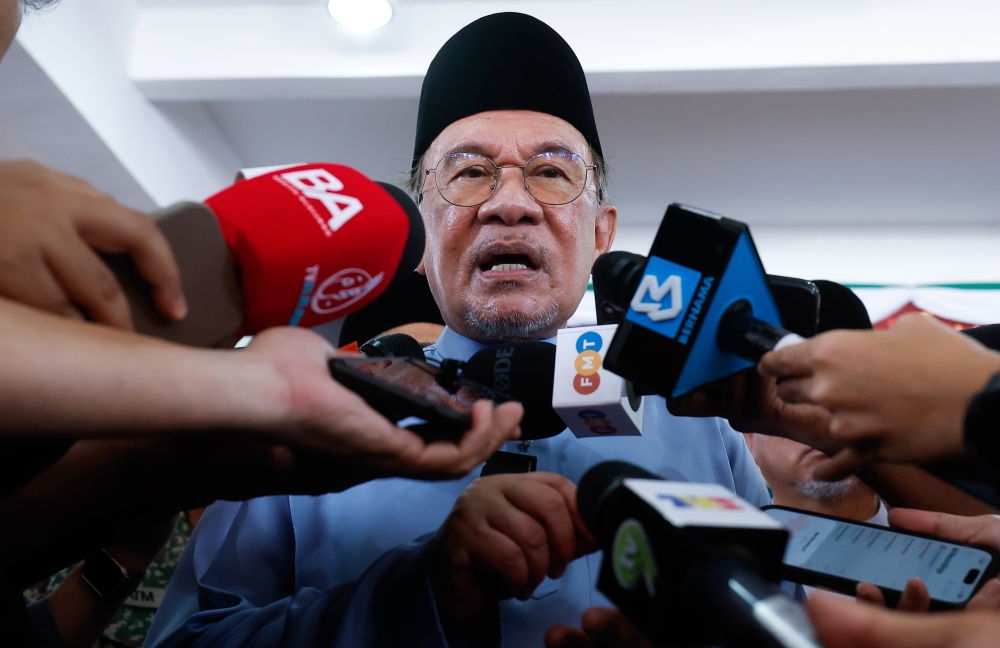
Prime Minister Datuk Seri Anwar Ibrahim has reaffirmed Malaysia's determination to sustain bilateral trade discussions with the United States, striking a cautiously optimistic tone regarding the tariff framework currently in place. Speaking in Port Dickson on July 24, Anwar indicated that Kuala Lumpur views the existing tariff level as manageable compared to more punitive alternatives that could have been imposed, signalling that the government sees room for continued diplomatic engagement to shape the outcome of ongoing negotiations.
The Malaysian leader's remarks come at a critical juncture in US-Asia trade relations, where Washington has begun implementing new tariff regimes across multiple trading partners following shifts in its commercial policy framework. For Malaysia, which counts the United States among its largest export markets and relies heavily on electronics, semiconductors, and petrochemical shipments to American consumers, the trajectory of tariff policy carries substantial implications for manufacturing employment, foreign investment inflows, and economic growth prospects. Anwar's assessment suggests the government is neither capitulating to pressure nor adopting an adversarial stance, instead positioning negotiations as a dynamic process amenable to adjustment.
The significance of Malaysia's approach extends beyond bilateral commerce to encompass the broader Southeast Asian region, which has observed varying responses to American tariff increases. Unlike some neighbours who have responded with public recrimination or retaliatory measures, Malaysia appears to be adopting a strategy grounded in sustained dialogue and technical engagement with Washington trade officials. This diplomatic posture reflects calculations about Malaysia's leverage and the importance of maintaining constructive relations with the world's largest economy at a time when geopolitical competition between major powers is reshaping regional trade architecture.
From an economic standpoint, the electronics and semiconductor sectors represent particularly vulnerable points for Malaysian exporters. These industries, concentrated heavily in the northern states and the Klang Valley, employ hundreds of thousands of workers directly and millions more across supply chains. A severe escalation of US tariffs could trigger waves of plant relocations, reduced production orders, and compressed profit margins for Malaysian firms operating within American tariff zones. Conversely, Anwar's characterisation of current rates as tolerable suggests either that the initial tariffs do not substantially disrupt existing supply agreements or that government analysis indicates further negotiation can yield more favourable terms.
The Prime Minister's relief at the initial tariff level also carries implicit signals to Malaysia's business community and foreign investors. By publicly expressing satisfaction with current arrangements, Anwar seeks to project stability and predictability, deterring firms from hastily relocating operations to competitors such as Vietnam or Thailand. This messaging function is crucial for maintaining foreign direct investment flows, which remain essential to Malaysia's development trajectory and employment creation objectives. Businesses making long-term capital allocation decisions take cues from official government statements about the trajectory of bilateral trade relations.
The decision to continue negotiations rather than accept tariffs as a fait accompli reflects a lesson learned from regional trade disputes over the past decade. Malaysia has observed that sustained technical engagement with American negotiators can yield modifications to initially-announced tariff schedules, particularly when Malaysian officials present evidence of supply chain interconnections and the disruption costs imposed on American manufacturers who depend on Malaysian inputs. Semiconductors, rare earth processing, and automotive components represent sectors where Malaysian output integrates deeply into American production networks, providing leverage in discussions.
Geopolitically, Malaysia's approach also contrasts with more confrontational stances adopted by some regional actors. Beijing has responded to American tariff increases with retaliatory tariffs and nationalist rhetoric, while some Southeast Asian governments have aligned more closely with either Washington or Beijing. Malaysia's middle-path approach reflects its strategic hedging posture, seeking to maintain beneficial relationships with both the United States and China while avoiding entanglement in great-power competition that could jeopardise economic interests. Trade negotiations thus become an extension of Malaysia's broader balancing act in navigating major power relations.
The implications for Malaysian policymakers extend to longer-term industrial strategy questions. Current tariff negotiations may prompt renewed focus on economic diversification, reducing dependence on American markets by expanding regional trade frameworks, particularly the Regional Comprehensive Economic Partnership and potential expansion of ASEAN-focused trade mechanisms. However, such pivots require time and capital investment that cannot be rapidly mobilised, meaning near-term management of US tariff relations remains a priority for government economic agencies.
Anwar's public statements also reflect consultation with affected industries. The Malaysian Employer Federation, electronics manufacturers, and petrochemical exporters have all signalled concerns about tariff escalation, and government comments suggesting satisfaction with current arrangements likely reflect their input and recommendations. Business groups understand that inflammatory rhetoric from Kuala Lumpur could provoke American retaliation, whereas measured diplomatic language keeps the negotiating door open and allows for technical adjustments that might not be publicly announced.
The trajectory of Malaysia-US tariff relations will likely depend on broader American trade policy evolution over coming months. Should the Trump administration intensify tariffs on Chinese goods, secondary effects on Malaysian exporters might occur, as companies redirect supply chains and production. Conversely, if American policy stabilises at current levels, the business environment for Malaysian exporters becomes more predictable, allowing investment and employment planning to proceed with less uncertainty.
Moving forward, Malaysia's negotiating objectives likely centre on exemptions for strategically important sectors, clarifications on tariff classifications that create compliance uncertainty, and phase-in periods that allow businesses time to adjust sourcing and production arrangements. These technical negotiations, conducted at the level of trade ministry officials rather than political leaders, can yield meaningful outcomes without requiring dramatic public announcements or policy reversals by either government.

