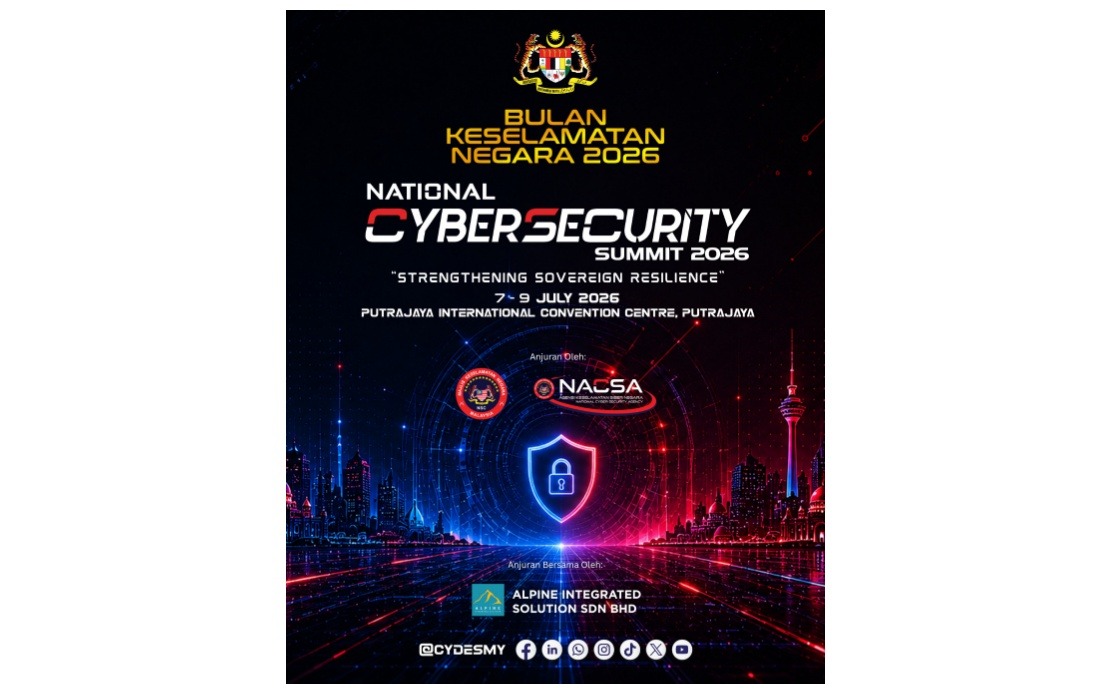
Malaysia will convene the National Cyber Security Summit 2026 at the Putrajaya International Convention Centre from July 7 to 9, bringing together government officials, corporate executives, security practitioners and technology specialists to chart the nation's evolving cyber defence strategy. The event, organised by the National Cyber Security Agency under the National Security Council within the Prime Minister's Department, comes at a critical juncture as the country implements comprehensive legislative and policy reforms to combat digital threats.
The timing of the summit reflects Malaysia's proactive approach to institutional cyber governance. The Cybercrimes Bill 2026 received parliamentary approval on July 1, establishing fresh legal frameworks for addressing online criminal activity and malicious digital conduct. This legislative milestone directly supports implementation of the Malaysian Cyber Security Strategy 2025-2030, a five-year roadmap that establishes the country's digital security priorities and operational directives across all sectors.
Under the banner "Strengthening Sovereign Resilience," the summit prioritises construction of a cohesive national cyber ecosystem characterised by enhanced trust, security standards and institutional preparedness. The conference programme encompasses 41 substantive sessions spanning multiple domains: strategic policy forums aligned with the broader Malaysian Cyber Security Strategy, dedicated discussions on cyber criminality, specialist tracks for information and communications technology security officers, and initiatives highlighting women's participation in the cyber security profession.
The gathering will feature participation from 96 speakers and panel members representing diverse constituencies—government departments, private sector organisations, law enforcement agencies, telecommunications and technology firms, university research centres, and professional cyber security associations. This multisectoral representation underscores recognition that effective cyber defence requires coordinated action across institutional boundaries. The private sector footprint includes 122 participating companies: 78 headquartered in Malaysia and 44 international firms drawn from seven countries, reflecting both domestic capacity and the global nature of cyber threats.
Participant numbers demonstrate substantial stakeholder engagement with the agenda. The organisers anticipate attendance from 250 senior figures and dignitaries, complemented by approximately 3,000 delegates encompassing conference participants, trade exhibitors and specialist visitors. This scale of gathering provides essential networking infrastructure, facilitating relationship-building between government agencies, commercial technology providers, security practitioners and academic researchers whose coordinated efforts prove essential for effective cyber defence.
The summit agenda extends beyond sectoral discussions to encompass formal policy announcements of strategic significance. Prime Minister Datuk Seri Anwar Ibrahim will formally launch three major initiatives through the National Security Council and National Cyber Security Agency. The National Security Policy 2026-2030 provides the overarching security framework within which cyber operations function. The National Cryptography Policy, branded as MyKriptografi, alongside its associated action plan for 2026-2030, addresses encryption standards and cryptographic implementation across government and critical infrastructure. The Artificial Intelligence Systems Cybersecurity Framework represents a forward-looking instrument tackling security risks emerging from artificial intelligence deployment.
The summit operates in conjunction with National Security Month, a broader public awareness campaign emphasising collective responsibility for national security. This alignment ensures the cyber security summit functions not merely as an industry gathering but as a visible demonstration of governmental commitment to defending the digital domain—a message amplified through simultaneous focus on national security dimensions across multiple channels and communities.
For Malaysia and the Southeast Asian region, this summit carries implications beyond national boundaries. Cyber threats operate across geographic limits; cybercriminal networks target businesses and government institutions throughout Southeast Asia irrespective of territorial jurisdiction. Malaysia's emphasis on sovereign cyber resilience simultaneously reflects practical necessity and strategic positioning. The regional technology sector increasingly recognises that countries demonstrating robust cyber security governance attract foreign investment and become preferred partners for cross-border digital commerce and data management.
The multilateral participation—with international companies and representatives from multiple countries attending—suggests Malaysia's cyber security framework development occurs within international dialogue. Cybercrime transcends borders; effective response requires standards convergence, information sharing protocols and mutual recognition of institutional capacity. By convening this diverse gathering, Malaysia positions itself as a regional voice in establishing cyber security norms and practices applicable throughout Southeast Asia.
The legislative and policy foundations being established through the Cybercrimes Bill 2026 and accompanying strategic frameworks address real vulnerabilities. Malaysia's economic digitalisation accelerates continuously; financial services increasingly operate through digital channels, government service delivery migration to online platforms continues, and industrial operations depend heavily on interconnected systems vulnerable to cyber interference. Without corresponding security infrastructure investments and regulatory frameworks, this digital expansion creates systemic risk.
The summit's emphasis on partnership and information sharing acknowledges that cyber threats require defensive responses exceeding any single institution's capacity. Government agencies, private sector entities, telecommunications providers and academic researchers collectively possess knowledge, capabilities and resources necessary for effective cyber security. Formalised mechanisms for sharing threat intelligence, coordinating defensive responses and developing joint technical solutions represent essential infrastructure for national cyber resilience.
Looking forward, the NCSS 2026 summit establishes momentum for sustained cyber security development. The policy initiatives launched during the event—particularly MyKriptografi and the Artificial Intelligence Systems Cybersecurity Framework—provide reference standards applicable across sectors. They establish expectations for organisational practice, guide procurement decisions and shape investment priorities throughout the digital economy. For Malaysian companies competing regionally and globally, adherence to these frameworks enhances credibility and demonstrates commitment to international best practices in digital security governance.

