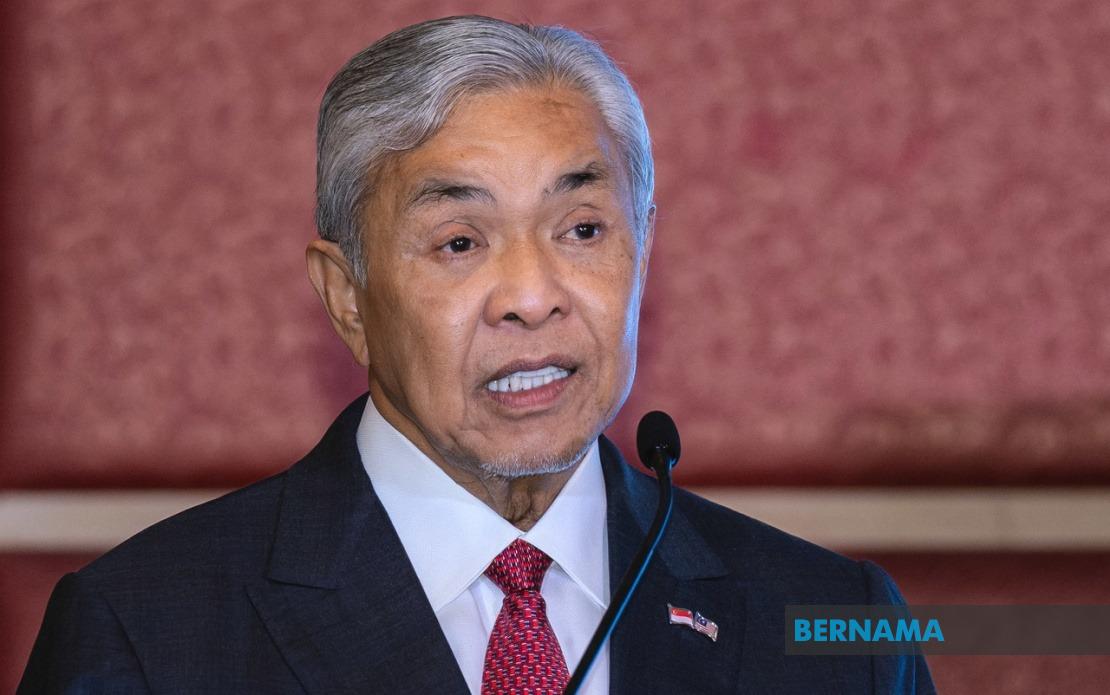
Malaysia is charting an independent course in refugee management, announcing plans to develop its own integrated system for handling asylum seekers and refugees without depending on foreign frameworks or international bodies. Deputy Prime Minister Datuk Seri Dr Ahmad Zahid Hamidi disclosed the strategy during recent parliamentary proceedings, emphasizing that the approach represents a significant shift toward domestically-led solutions tailored to Malaysia's unique circumstances and security requirements.
The framework draws its authority from National Security Council Directive No. 23 on the Policy and Mechanism for the Management of Refugees and Asylum Seekers, which was formally adopted in its 2023 revision following approval by Prime Minister Datuk Seri Anwar Ibrahim on June 14, 2023. This directive represents the culmination of collaborative efforts involving the NSC operating under the Prime Minister's Department, alongside numerous government ministries and agencies tasked with coordinating refugee-related policies and implementation.
According to Ahmad Zahid, who additionally serves as Rural and Regional Development Minister, the new mechanism will prioritize three interconnected objectives: establishing efficient administrative processes and enforcement capabilities, coordinating policy across multiple government bodies, and maintaining Malaysia's national security and sovereignty throughout the management process. The approach acknowledges that managing refugee populations involves complex administrative challenges requiring synchronized action across different sectors of government.
A critical component of the emerging framework involves expanding access to essential services for refugees deemed eligible under Malaysia's assessment procedures. Healthcare, educational opportunities, and employment pathways represent key pillars of the strategy, recognizing that vulnerable populations require foundational support to integrate productively within host communities. This dimension reflects acknowledgment that purely restrictive approaches carry social and humanitarian costs that ultimately complicate rather than resolve displacement challenges.
Ahmad Zahid stressed that effective refugee management demands nuanced equilibrium between rigorous enforcement of national legislation and recognition of community responsibilities toward vulnerable groups. This balancing act proves particularly important in preventing the emergence of exploitative parallel economies that often develop around undocumented or unregulated migrant populations. The government has identified a persistent challenge: local residents who facilitate unauthorized employment or housing arrangements, motivated by rental income, cheap labor access, or other financial incentives, frequently undermine official enforcement strategies.
The timing of Malaysia's initiative reflects practical realities in Southeast Asia's refugee landscape. Malaysia currently hosts over 126,000 registered Rohingya refugees, predominantly from Myanmar, representing one of the region's largest displaced populations. The introduction of the Refugee Registration Document (DPP) has provided formal identification mechanisms, enabling better tracking and service delivery while simultaneously creating clearer documentation for administrative purposes. This substantial population requires coordinated management spanning security screening, service provision, and community integration challenges.
The parliamentary inquiry from Datuk Shamshulkahar Mohd Deli (BN-Jempol) specifically prompted discussion of whether Malaysia's existing refugee policies constitute a genuinely comprehensive framework. Ahmad Zahid's response indicated that NSC Directive No. 23 was designed precisely to address such gaps by establishing clear functional roles and responsibilities for each participating government entity. Clarity regarding institutional responsibilities represents a foundational requirement for coherent policy implementation, particularly when multiple agencies hold overlapping jurisdiction.
Malaysia's decision to develop independent management mechanisms rather than defaulting to international frameworks reflects broader regional trends toward national sovereignty in migration governance. While international humanitarian conventions provide overarching standards, individual countries increasingly assert autonomous authority over refugee determination and management processes. This approach allows Malaysia to calibrate policies according to local labor market conditions, security assessments, and fiscal capacity considerations that generic international frameworks cannot adequately address.
The coordination challenge inherent in the NSC Directive No. 23 implementation should not be underestimated. Effective refugee management requires seamless cooperation between immigration authorities responsible for border enforcement, health ministries overseeing medical services, educational institutions providing schooling, labor departments monitoring employment regulations, and security agencies conducting background assessments. Weak coordination among these entities has historically generated policy inconsistencies and implementation failures in comparable jurisdictions throughout the region.
For Malaysia specifically, the framework's emphasis on balancing enforcement with humanitarian provision reflects acknowledgment that refugee populations are unlikely to depart voluntarily without addressing root causes of displacement in origin countries. Myanmar's ongoing political turmoil suggests Rohingya populations will remain for extended periods, requiring sustainable rather than exclusively temporary management approaches. Educational and employment access, while raising short-term fiscal costs, may reduce long-term social tensions and dependency on informal economy participation.
The emergence of local economic interests opposing official enforcement deserves particular attention from policymakers. Property owners benefiting from informal rental arrangements, employers enjoying unregulated labor markets, and traders operating parallel supply chains all gain financially from maintaining regulatory ambiguity. Addressing this dynamic requires either increasing enforcement capacity or, counterintuitively, providing formal employment pathways that reduce economic incentives for informal arrangements. Malaysia's framework appears oriented toward the latter strategy, recognizing that enforcement alone cannot overcome financial motivations embedded within local economic structures.
Moving forward, implementation success will depend substantially on resource allocation and inter-agency coordination mechanisms. Developing centralized registration systems, establishing service delivery infrastructure, and training personnel across multiple institutions represents substantial undertaking. Regional neighbors facing comparable refugee populations will likely monitor Malaysia's experience closely, potentially adopting successful elements while avoiding implementation pitfalls. The approach signals that Malaysia intends shaping Southeast Asian refugee governance patterns rather than merely responding to international pressure.

