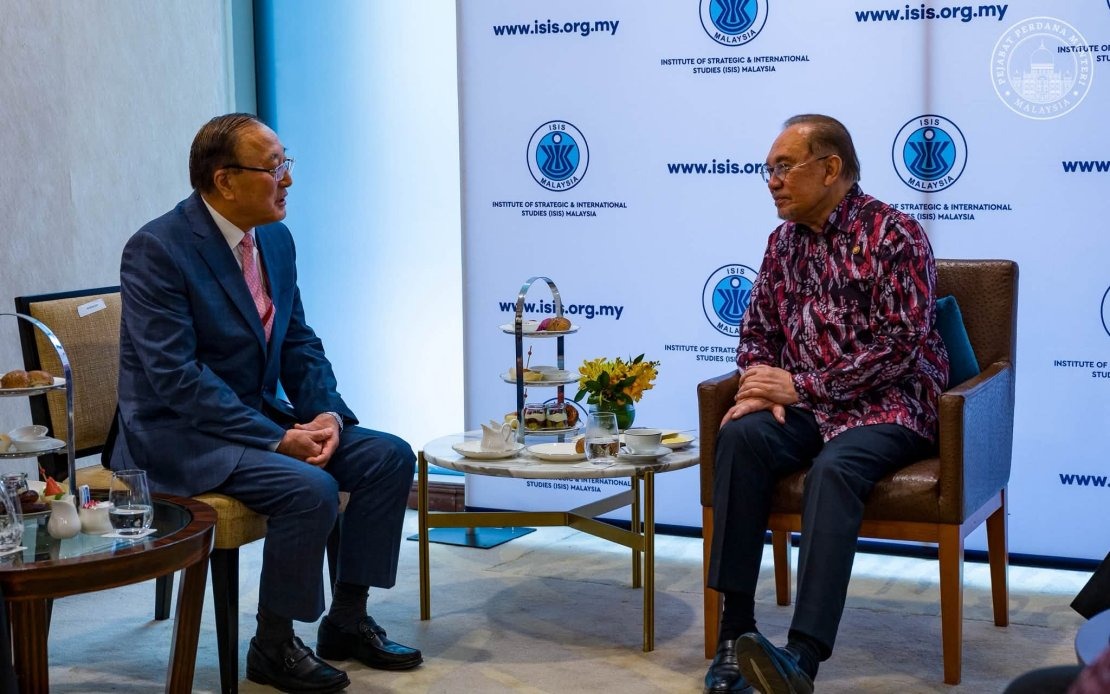
Prime Minister Datuk Seri Anwar Ibrahim has announced Malaysia's intention to deepen engagement with the Boao Forum for Asia (BFA) across a broad spectrum of developmental and economic domains. The commitment emerged during a discussion with BFA secretary-general Zhang Jun, who visited Malaysia to assess opportunities for regional collaboration in an increasingly complex global environment. Anwar outlined the partnership's potential to address contemporary challenges ranging from investment promotion to technological advancement, positioning the initiative as central to the nation's medium-term strategic objectives.
The cooperation framework encompasses several critical areas that reflect Malaysia's development priorities. Trade and investment facilitation stand at the forefront, with both parties recognising the importance of expanding cross-border business ties within Asia's dynamic economies. This dimension is particularly relevant given Malaysia's position as a regional trading hub and the nation's reliance on sustained foreign direct investment to fuel economic growth. Digital transformation and artificial intelligence development represent the second pillar, acknowledging the irreversible shift toward digital-first business models and the competitive necessity of building local AI capabilities. Energy transition constitutes a third strategic focus, aligning with Malaysia's commitments under global climate agreements and the nation's ongoing shift toward renewable energy infrastructure.
Education and talent development round out the partnership agenda, reflecting recognition that human capital remains fundamental to long-term prosperity. Food security, included as a standalone cooperation area, carries particular weight for Southeast Asia given regional vulnerability to supply-chain disruptions and climate impacts on agricultural production. This multifaceted approach suggests Malaysia views the BFA engagement not merely as ceremonial diplomacy but as a vehicle for addressing substantive development challenges that transcend national borders.
Anwar's framing of the initiative emphasises regional resilience as the overarching objective. His assertion that "closer regional cooperation, inclusiveness and dialogue-based cooperation remain the key to stability, prosperity and shared well-being" reflects a diplomatic philosophy oriented toward multilateral problem-solving rather than zero-sum competition. This positioning is particularly significant given the geopolitical tensions that have characterised the Indo-Pacific in recent years, with great-power competition increasingly affecting smaller nations' policy space and economic options. Malaysia, through this engagement, seeks to demonstrate that regional frameworks like the BFA can serve as stabilising forces.
The timing of this announcement warrants scrutiny. Global economic headwinds—including persistent inflation in developed economies, fragmented supply chains, and divergent monetary policies—have intensified competition for investment capital and market access. Within this context, Malaysia's pivot toward formalised cooperation with the BFA signals an attempt to position the nation as an attractive destination for Asian investment flows while simultaneously strengthening ties with other regional economies. The emphasis on AI and digital transformation particularly reflects the reality that technological capability increasingly determines competitive advantage in global markets.
The BFA itself has evolved into an influential platform for Asian voices, offering smaller and medium-sized economies a forum to articulate collective concerns and coordinate responses to transnational challenges. By emphasising cooperation through this institution, Malaysia subtly signals its commitment to multilateralism as distinct from bilateral power politics. This approach carries implications for how Malaysia navigates relationships with larger regional powers while maintaining strategic autonomy.
Anwar's dual role as both Prime Minister and Finance Minister suggests that economic considerations underpin this diplomatic initiative. The Finance Ministry portfolio indicates direct involvement in Malaysia's fiscal strategy and international economic negotiations, implying that the BFA partnership carries measurable economic objectives rather than remaining purely in the realm of soft diplomacy. Investment promotion, trade facilitation, and technology transfer would naturally fall under the ambit of coordinated economic policy across government agencies.
The food security dimension deserves particular attention for Malaysian readers. Southeast Asia's agricultural sector faces mounting pressure from climate change, population growth, and shifting consumption patterns. Regional cooperation on food systems—including supply-chain coordination, technology sharing for sustainable agriculture, and collective approaches to price stabilisation—directly affects household affordability and consumer welfare. Malaysia's inclusion of this sector in the BFA framework suggests recognition that isolated national responses prove insufficient for managing food-system risks.
Energy transition cooperation carries implications for Malaysia's industrial competitiveness and long-term energy security. As the region moves toward renewable energy adoption, opportunities emerge for Malaysian companies in renewable technology manufacturing, energy storage, and grid modernisation. Regional coordination through the BFA could facilitate technology sharing, standardisation of renewable energy systems, and identification of regional complementarities in energy resources and capabilities.
The emphasis on dialogue-based cooperation responds implicitly to the polarisation characterising contemporary global affairs. Rather than allowing geopolitical divides to fragment regional economic integration, Malaysia through this framework advocates for pragmatic cooperation on shared challenges. This position reflects smaller nations' interests in maintaining economic relationships across geopolitical divides and accessing development support regardless of great-power alignments.
For Malaysian businesses and civil society, the expanded BFA partnership creates potential avenues for international engagement. Educational institutions may benefit from enhanced collaboration on curriculum development and student exchange. Technology companies operating regionally could access networks for innovation partnerships and market expansion. Agricultural enterprises might participate in food-security initiatives addressing production challenges across Southeast Asia.
The sustainability of this commitment depends on translating announced intentions into concrete projects delivering measurable outcomes for participating nations. Previous regional frameworks have faltered when cooperation remained rhetorical rather than institutional. Malaysian policymakers will need to ensure that BFA engagement produces tangible results—whether through investment inflows, technological advancement, or enhanced policy coordination—to justify continued resource allocation and political priority. The coming months will reveal whether this partnership evolves into substantive collaboration or remains primarily diplomatic engagement.

