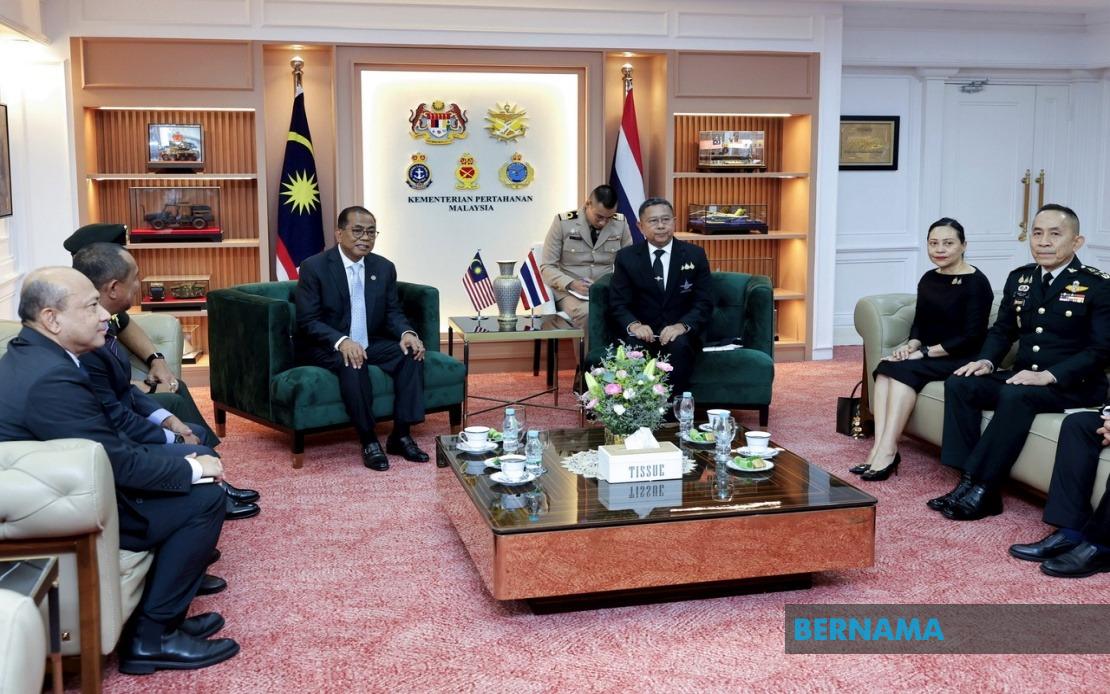
Malaysia has committed to strengthening its partnership with Thailand's freshly appointed Peace Dialogue Panel chief, signalling renewed momentum in regional efforts to stabilise the conflict-affected southern provinces. Defence Minister Datuk Seri Mohamed Khaled Nordin made the announcement during a visit by his Thai counterpart, Lieutenant General Adul Boonthumjaroen, underscoring the importance both nations place on resolving the decade-long insurgency through dialogue and diplomatic channels.
The appointment of Thanut Suvarnananda to lead Thailand's peace negotiations represents a significant development for the troubled region. Mohamed Khaled expressed Malaysia's full support for the change in leadership, framing it as an opportunity to reinvigorate peace talks that have experienced mixed results over the years. The Defence Minister emphasised that Malaysia views the transition as a positive step that could accelerate progress toward the mutual objectives both countries have established for southern Thailand's future.
Malaysia's role in this complex diplomatic arrangement remains carefully circumscribed. Datuk Rabin Basir, serving as Malaysia's official facilitator, operates within strict parameters that respect Thailand's sovereignty over its internal security affairs and military operations. This distinction is crucial for understanding the regional balance: while Malaysia provides neutral ground and mediation services, responsibility for counterinsurgency operations and domestic law enforcement remains exclusively Thailand's domain. Such clarity of roles helps prevent regional tensions and maintains the credibility of Malaysia's intermediary position.
The security situation in southern Thailand, encompassing Pattani, Yala, and Narathiwat provinces, has long been a flashpoint for Southeast Asia. Decades of separatist violence have claimed thousands of lives and displaced countless families. The insurgency, rooted in historical grievances and ethnic-religious tensions, has resisted military solutions, making dialogue increasingly essential. Malaysia's geographic proximity and historical ties to the region position it uniquely to facilitate conversations between the Thai government and various armed groups.
Beyond the peace process itself, Malaysia and Thailand have identified smuggling and cross-border security as pressing concerns requiring coordinated action. The two defence ministers agreed to intensify anti-smuggling operations and prevent the illicit movement of subversive elements across their shared border. To formalise these commitments, both nations intend to leverage the Malaysia-Thailand General Border Committee, a longstanding mechanism for addressing transnational security challenges. Malaysia will host the 57th GBC Meeting later this year, providing an opportunity to address border security comprehensively alongside joint military operations, economic development in frontier areas, and disaster management protocols.
The upcoming GBC gathering assumes particular importance given the porous nature of the Malaysia-Thailand frontier and the potential for armed groups to exploit border areas. Regional smuggling networks—whether trafficking weapons, narcotics, or precursor chemicals—depend on permeable boundaries and inadequate surveillance. By elevating cooperation through this committee structure, both governments signal determination to deny transnational criminals and militants the operational freedom they currently enjoy. Enhanced joint patrols, information-sharing systems, and coordinated enforcement would disrupt established trafficking routes and undermine financing mechanisms for insurgent operations.
Thailand's separate border disputes with Cambodia have also drawn Malaysia's diplomatic attention. Mohamed Khaled affirmed Malaysia's backing for Thailand's preference to resolve territorial disagreements through bilateral negotiations rather than internationalised mechanisms. This position aligns with the ASEAN Way, the regional community's longstanding commitment to peaceful settlement of disputes through dialogue without external pressure. By voicing this support publicly, Malaysia reinforces ASEAN solidarity while discouraging third-party intervention in intra-regional matters.
The Philippines, assuming the ASEAN chairmanship in 2026, has been apprised of Malaysia's and Thailand's preference for bilateral solutions to the Cambodia border issue. This forward-looking diplomatic positioning ensures that the incoming chair understands the regional consensus and can facilitate constructive engagement rather than confrontation. Such preventive diplomacy reflects Southeast Asian maturity in managing disputes that could otherwise escalate tensions across the broader region.
Malaysia and Thailand's coordination also extends to the multilateral defence architecture. Both nations aligned their positions ahead of the ASEAN Defence Ministers' Meeting and the expanded ADMM-Plus forum, scheduled for the Philippines. This internal alignment strengthens ASEAN's collective voice on regional security matters and prevents individual member states from advancing competing agendas that might fracture the bloc. For maritime security, terrorism prevention, and non-traditional security challenges affecting the entire region, a unified ASEAN position carries considerably more weight in international forums.
The planned Memorandum of Understanding on defence cooperation demonstrates ambitions extending beyond immediate security concerns. By coordinating industrial development strategies for defence manufacturing, Malaysia and Thailand position themselves to reduce dependence on external suppliers while building indigenous capacity. This approach fosters technological advancement, generates employment, and strengthens long-term strategic autonomy. Joint defence projects also deepen military-to-military relationships, building trust and understanding that prove invaluable during crises.
For Malaysian readers, these developments carry particular significance. Malaysia's facilitation role in southern Thailand's peace process offers opportunities for regional stability that directly benefits Malaysian border communities and national security. Cross-border refugee flows, militant infiltration, and criminal networks all diminish when southern Thailand enjoys greater stability. Moreover, Malaysia's diplomatic elevation through its peacekeeping efforts enhances its standing as a responsible regional actor and potential mediator in other disputes.
The broader implications suggest that Southeast Asia's traditional conflict-resolution mechanisms remain viable when nations commit genuine resources and political will. The southern Thailand conflict, while intractable through military means alone, may finally yield to sustained diplomatic pressure and structural economic development. Malaysia's continued engagement, enhanced by Thailand's new peace dialogue leadership, offers a realistic pathway to reducing violence and creating conditions where sustainable political settlements become possible.
Moving forward, success will depend on whether Thanut Suvarnananda can build trust with insurgent factions and whether Malaysia's facilitation produces tangible progress toward negotiated agreements. The appointment itself signals Thai government commitment to dialogue, but translating that commitment into actual policy concessions remains the true test. Regional observers will watch closely as this renewed partnership develops.

