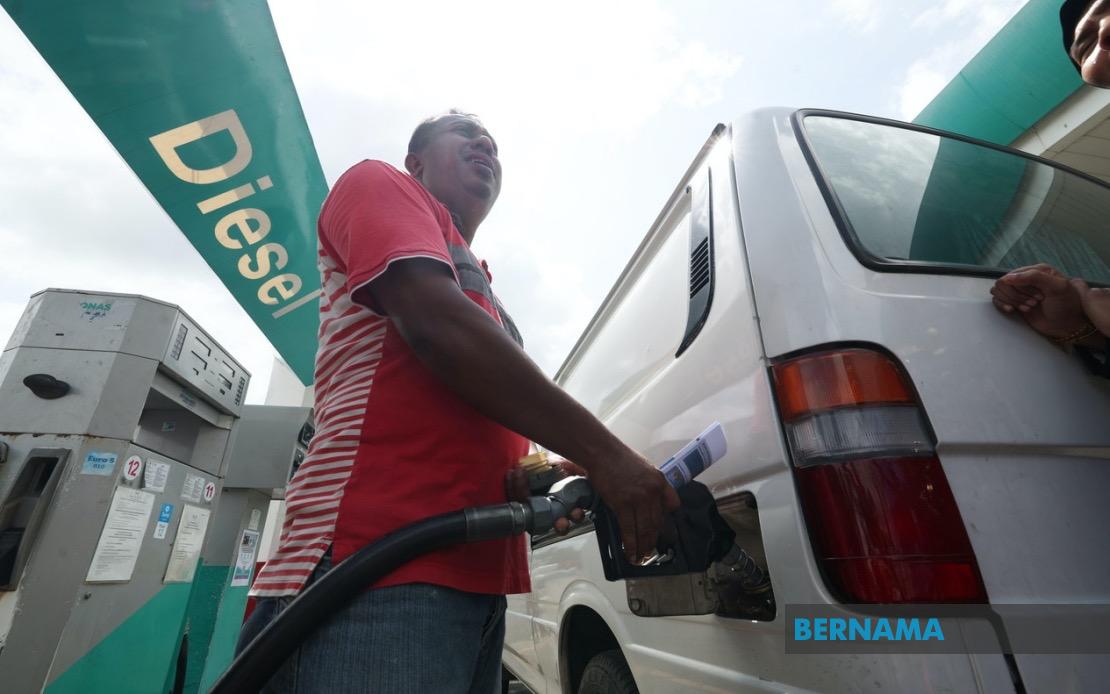
The MADANI Government will lower the price of subsidised diesel to RM2.10 per litre beginning in July 2026, Prime Minister Datuk Seri Anwar Ibrahim announced during an official ceremony in Bintulu on June 21. The reduction marks another step in the administration's broader fiscal restructuring strategy, shifting away from blanket fuel subsidies toward more precisely targeted programmes that direct benefits to those most in need.
The initiative represents a continuation of the government's systematic approach to subsidy reform, mirroring the structure already established through the BUDI MADANI RON95 programme for petrol. Under this targeted framework, only Malaysian citizens who meet specific criteria will qualify for the reduced diesel price. Verification will occur through MyKad checks, ensuring that subsidies reach intended beneficiaries rather than being broadly distributed across the population. This mechanism reduces fiscal leakage and increases the efficiency of government spending on fuel support.
Finance Minister II Datuk Seri Amir Hamzah Azizan will brief media representatives in Kuala Lumpur with detailed information regarding implementation procedures for the new diesel pricing structure. These specifics will likely address eligibility requirements, the registration process, and how MyKad verification will function at petrol stations and fuel retailers nationwide. The timing of the announcement and the subsequent briefing suggests the government is preparing the administrative infrastructure and public communication strategy ahead of the July 2026 rollout.
For Malaysian motorists and commercial operators dependent on diesel, this development carries significant implications. Diesel remains crucial for long-haul transportation, logistics operations, and agricultural machinery across the country. A reduction in subsidised diesel costs could lower operating expenses for trucking companies, bus operators, and farmers, potentially easing supply chain costs and consumer prices for transported goods. However, the targeted nature of the subsidy means that not all diesel consumers will automatically benefit; eligibility criteria will determine who qualifies for the RM2.10 per litre rate.
The shift toward targeted subsidies reflects international best practices in fiscal management and represents a departure from the earlier model of universal fuel price controls that significantly burdened government budgets. Malaysia has long grappled with the fiscal weight of fuel subsidies, which consume substantial budget allocations that might otherwise support healthcare, education, or infrastructure development. By concentrating subsidies on verified Malaysian citizens, the government attempts to balance social welfare concerns with economic sustainability. This approach recognises that indiscriminate subsidies can inflate consumption patterns and create market distortions while benefiting wealthier segments of society who consume more fuel overall.
The BUDI95 petrol programme, which serves as the template for this diesel initiative, has operated with reasonable success in controlling costs while maintaining support for ordinary citizens. The programme's experience in MyKad verification, managing retailers' compliance, and preventing misuse provides valuable lessons for rolling out the diesel subsidy structure. Both programmes demonstrate the government's commitment to modernising subsidy delivery through technology and identity verification rather than relying on historical price-fixing mechanisms.
Regionally, Malaysia's approach to fuel subsidy reform aligns with broader trends across Southeast Asia. Countries throughout the region have progressively moved toward targeted rather than universal subsidies, recognising that fiscal constraints require more strategic allocation of resources. Indonesia, Thailand, and the Philippines have implemented similar verification-based systems, though with varying degrees of success. Malaysia's experience will contribute to the regional dialogue on optimal subsidy design and implementation.
The announcement occurs alongside significant economic policy decisions, including the conversion of Bintulu Port from federal to state port status, signalling broader structural changes within Malaysia's economic governance. These concurrent initiatives suggest the government is pursuing comprehensive reforms across multiple sectors, from subsidy mechanisms to port management. The cumulative effect aims to improve economic efficiency and fiscal responsibility across various domains of state operations.
Business operators in the transport and logistics sector will likely scrutinise the implementation details closely, particularly regarding which categories of commercial diesel users qualify for the subsidy. Heavy vehicle operators, agricultural businesses, and small-scale transportation enterprises depend substantially on fuel cost certainty for financial planning. The government's communication regarding eligibility categories and application procedures will be critical in allowing businesses to prepare for the transition. Any ambiguity in implementation could create operational uncertainty and market distortions during the transition period.
The July 2026 timeline provides approximately one year for the government to establish necessary infrastructure, train fuel retailers, implement verification systems, and conduct public education campaigns. This lead time appears deliberate, allowing for thorough preparation and phased integration of MyKad verification systems at filling stations nationwide. Prior to the official launch, pilot programmes in selected locations may test the mechanism's functionality and identify potential implementation challenges.
For ordinary Malaysian consumers concerned about living costs, the subsidised diesel price offers some relief in transport-related expenses. Public transportation costs, which feed into consumer prices for goods and services, may stabilise or decrease as operators benefit from lower fuel costs. However, the targeted nature of the programme means that non-qualifying citizens will pay market rates for diesel, potentially facing higher costs than under previous universal subsidy arrangements. This creates equity considerations that the government will need to address in public communications and policy framing.
Looking forward, the success of this diesel subsidy reform will likely influence future government decisions regarding other subsidised commodities and services. The programme's efficiency metrics, cost savings, and public satisfaction will provide evidence regarding the viability of scaling targeted subsidy approaches across other economic sectors. Should the initiative prove successful, it may establish a template for modernising other aspects of Malaysia's social support systems, gradually shifting the welfare model toward technology-enabled, means-tested, or identity-verified distribution mechanisms.
%22%2F%3E%3C%2Fpattern%3E%3C%2Fdefs%3E%3Crect%20width%3D%22100%25%22%20height%3D%22100%25%22%20fill%3D%22url(%23ph2cg2vg)%22%2F%3E%3Crect%20width%3D%22100%25%22%20height%3D%22100%25%22%20fill%3D%22url(%23ph2cg2vp)%22%2F%3E%3Ctext%20x%3D%2250%25%22%20y%3D%2250%25%22%20text-anchor%3D%22middle%22%20dominant-baseline%3D%22central%22%20fill%3D%22rgba(255%2C255%2C255%2C0.95)%22%20font-family%3D%22Georgia%2C%20'Times%20New%20Roman'%2C%20serif%22%20font-weight%3D%22700%22%20font-size%3D%22226%22%20letter-spacing%3D%22-0.02em%22%3ELegacy%3C%2Ftext%3E%3C%2Fsvg%3E)

%22%2F%3E%3C%2Fpattern%3E%3C%2Fdefs%3E%3Crect%20width%3D%22100%25%22%20height%3D%22100%25%22%20fill%3D%22url(%23ph4q903g)%22%2F%3E%3Crect%20width%3D%22100%25%22%20height%3D%22100%25%22%20fill%3D%22url(%23ph4q903p)%22%2F%3E%3Ctext%20x%3D%2250%25%22%20y%3D%2250%25%22%20text-anchor%3D%22middle%22%20dominant-baseline%3D%22central%22%20fill%3D%22rgba(255%2C255%2C255%2C0.95)%22%20font-family%3D%22Georgia%2C%20'Times%20New%20Roman'%2C%20serif%22%20font-weight%3D%22700%22%20font-size%3D%22320%22%20letter-spacing%3D%22-0.02em%22%3E24%3C%2Ftext%3E%3C%2Fsvg%3E)