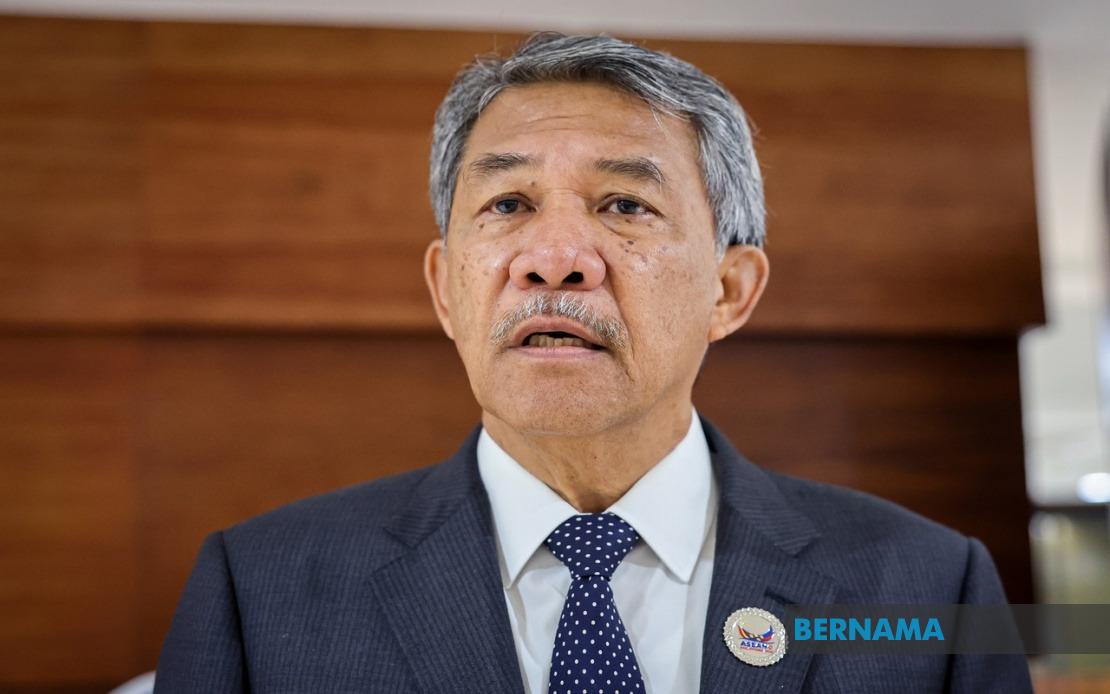
Malaysia has been designated as the country coordinator for ASEAN-Turkiye relations following ASEAN's formal acceptance of Turkiye as a new Dialogue Partner at the 59th ASEAN Foreign Ministers' Meeting held in Manila on July 21. The decision underscores Malaysia's diplomatic role within the regional bloc and reflects the strategic importance both ASEAN and Malaysia place on strengthening ties with key international actors beyond the traditional sphere of Southeast Asian engagement.
Foreign Minister Datuk Seri Mohamad Hasan announced the twin developments during a plenary session that brought together ASEAN's diplomatic leadership. The acceptance of Turkiye culminated a deliberative process initiated when Malaysia held the ASEAN Chair in 2025, during which the country had championed Turkiye's admission as a dialogue partner. The proposal underwent rigorous examination at multiple institutional levels, including scrutiny by the ASEAN secretariat, foreign ministers, and working officials, reflecting the regional organisation's cautious approach to expanding its external engagement framework.
The vetting process revealed ASEAN's commitment to maintaining stringent standards for new partnerships. Mohamad emphasised that the bloc operates under a moratorium regarding the acceptance of new member states and dialogue partners, a safeguard designed to preserve the quality and strategic coherence of ASEAN's international relationships. The criteria established for evaluating prospective dialogue partners were subjected to collective scrutiny, with all member states ultimately endorsing both the benchmarks themselves and their application to Turkiye's candidacy. This consensus-based validation demonstrates that the admission represented a measured expansion rather than a rushed diplomatic initiative.
The designation of Malaysia as country coordinator carries practical implications for ASEAN-Turkiye engagement. In ASEAN's institutional framework, the country coordinator role typically encompasses responsibility for facilitating dialogue, coordinating policy positions among member states, and serving as a primary point of contact for bilateral and multilateral engagement. Malaysia's appointment reflects confidence in its capacity to nurture this nascent relationship and positions Kuala Lumpur as the custodian of ASEAN's strategic interests in developing ties with Ankara. The role assumes particular significance given Turkiye's geopolitical weight as a transcontinental power bridging Europe, Asia, and the Middle East.
Beyond the Turkiye decision, ASEAN moved to expand the ASEAN Regional Forum framework by accepting the United Kingdom as a new member. The ARF, which provides a mechanism for dialogue on security and political issues, welcomed London's participation at a moment when regional security architecture faces mounting pressures. The UK's admission into the ARF represents continued Western engagement with ASEAN through institutionalised channels, complementing existing partnerships and offering opportunities for dialogue on issues ranging from maritime security to counterterrorism and technological cooperation.
Discussions at the 59th Foreign Ministers' Meeting, chaired by Philippine Foreign Affairs Secretary Ma. Theresa P. Lazaro, also prioritised the implementation of ASEAN Community Vision 2045. This long-term strategic blueprint outlines ASEAN's collective ambitions across economic integration, social development, and political-security cooperation over the next two decades. ASEAN Secretary-General Dr Kao Kim Hourn presented an updated status report on progress toward achieving the vision's objectives, allowing foreign ministers to assess implementation velocity and identify areas requiring accelerated effort or renewed focus.
A central theme animating the ministerial discussions concerned ASEAN's navigation of an increasingly turbulent geopolitical and geo-economic landscape. The regional bloc faces mounting pressures from great power competition, evolving trade dynamics, supply chain vulnerabilities, and transnational security challenges. Against this backdrop, Mohamad articulated a core organisational principle: the preservation of ASEAN centrality. This concept, fundamental to ASEAN's strategic doctrine, holds that the bloc should remain the primary driver of regional diplomacy and the central platform through which major powers engage Southeast Asia, rather than permitting external actors to dictate regional outcomes through bilateral arrangements or competing spheres of influence.
Mohamad's emphasis on safeguarding ASEAN centrality reflects growing concern within the regional bloc about potential erosion of its agency in an era of intensifying external power projection. Various powers have sought to establish parallel frameworks or bilateral relationships that could circumvent ASEAN-led mechanisms, potentially fragmenting regional unity. The foreign minister explicitly cautioned against permitting such efforts to undermine ASEAN's institutional integrity, signalling that member states remain committed to collective decision-making and maintaining the bloc as the fulcrum of regional diplomacy. Preserving centrality requires continuous reinforcement, particularly as geopolitical pressures mount and external actors seek advantageous positioning.
The meetings collectively underscore ASEAN's calibrated approach to external engagement. While the bloc maintains openness to deepening relationships with dialogue partners and expanding institutional frameworks through mechanisms like the ARF, it proceeds with deliberation and consensus-building. The careful vetting of Turkiye's admission, the establishment of strict criteria, and the multi-tiered examination process demonstrate institutional discipline. Simultaneously, the acceptance of new dialogue partners and ARF members signals ASEAN's recognition that regional stability and prosperity increasingly depend on constructive engagement with diverse global actors, provided such engagement occurs within frameworks that respect ASEAN principles and preserve the bloc's collective voice.
For Malaysia, the appointment as ASEAN-Turkiye coordinator carries both opportunity and responsibility. As the designated point of contact, Malaysia will shape the initial trajectory of this new partnership, potentially fostering cooperation in areas ranging from trade and investment to defence collaboration and cultural exchange. The role also elevates Malaysia's profile within ASEAN's diplomatic hierarchy, acknowledging its diplomatic acumen and regional standing. The successful nurturing of ASEAN-Turkiye relations under Malaysian stewardship could establish a model for engaging other non-traditional partners, particularly those situated at the intersection of multiple geopolitical regions.
Looking ahead, the expansion of ASEAN's dialogue partnership and forum membership reflects the bloc's enduring relevance in a multipolar world. Despite external pressures and internal challenges, ASEAN continues to attract partners seeking legitimate platforms for regional engagement. The admission of Turkiye and the UK represents a deliberate broadening of ASEAN's diplomatic ecosystem, one that enhances the bloc's capacity to address transnational challenges while maintaining the institutional integrity and decision-making autonomy that have historically defined the regional organisation. Malaysia's central coordinating role in managing this expanded relationship network underscores the continuing evolution of ASEAN's institutional mechanisms and the ongoing importance of ASEAN member states in navigating an uncertain international environment.

