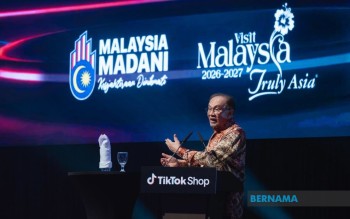
Malaysia will implement a more rigorous assessment framework for incoming foreign investment to ensure that new business operations deliver measurable economic returns and employment opportunities for the nation, Prime Minister Datuk Seri Anwar Ibrahim announced on Tuesday. Speaking after opening the TikTok Shop Summit 2026 in Kuala Lumpur, Anwar revealed that the Ministry of Investment, Trade and Industry has flagged a troubling pattern where certain enterprises operate through warehouse facilities and logistics hubs while generating minimal local employment or contributing negligibly to the economy.
The decision to tighten investment vetting comes as Malaysia confronts a multifaceted challenge within its digital commerce landscape. Anwar acknowledged that while Malaysia's position as an open economy presents substantial commercial opportunities, the proliferation of online trading platforms has created pathways for businesses to establish minimal local presence while flooding the domestic market with imported goods. This distinction between formal business establishment and actual economic contribution has emerged as a critical governance issue for policymakers navigating the tension between trade liberalisation and domestic economic protection.
Among the practices drawing government scrutiny are operations where foreign investors lease warehouse space at strategic logistics hubs such as Port Klang without any corresponding obligation to source local labour or integrate Malaysian-made products into their supply chains. Anwar specifically highlighted instances where substantial international capital flows into Malaysia's warehousing sector, yet produces zero downstream demand for domestic workers or locally manufactured goods. This model, while technically legal under existing frameworks, represents what officials now view as value extraction rather than value creation within the Malaysian economy.
Equally concerning to authorities are shell operations registered under ostensibly local business identities that obscure the entirely foreign nature of their product sourcing. The Prime Minister cited examples where enterprises register under traditional local business names—suggesting coffee shops or neighbourhood retailers—while their actual inventory consists entirely of imported goods such as tea, coffee, and biscuits. This practice not only misrepresents the origin of products to consumers but effectively displaces genuine local merchants who cannot compete with imported goods sold under deceptively local branding.
The rising tide of ultra-low-cost imports from cross-border e-commerce platforms represents another dimension of this challenge. Anwar explicitly referenced platforms including Temu and Pinduoduo as vectors through which cheap overseas merchandise flows into Malaysia, often at prices that undercut domestic producers fundamentally. The Prime Minister characterised this pricing strategy as a form of modern dumping designed to capture market share through unsustainable pricing rather than operational efficiency. For Malaysian small and medium enterprises already grappling with rising costs and competitive pressures, this influx poses an existential threat to their viability.
The government's enforcement response has already begun, with officers undertaking targeted inspections and interventions. However, Anwar stressed that reactive enforcement alone proves insufficient; the underlying investment screening apparatus itself requires fundamental restructuring. By establishing more stringent criteria for investment approval, Malaysia aims to prevent problematic business models from establishing themselves in the first instance, thereby avoiding the need for costly retroactive enforcement actions.
This policy reorientation reflects a broader recalibration of Malaysia's economic strategy. Rather than maximising raw inbound investment figures, policymakers now prioritise the quality and sustainability of capital flows. An investment generating ten warehouse jobs while importing all inventory contributes less to national development than one creating equivalent employment while integrating with local supply chains and manufacturing ecosystems. This qualitative emphasis signals a maturation of Malaysia's approach to foreign direct investment after decades of pursuing volume-based targets.
The timing of this announcement carries particular significance given Malaysia's position as a regional hub for digital commerce and logistics. Singapore, Thailand, and Vietnam all compete aggressively for foreign investment capital, yet Malaysia's announcement suggests confidence that selective screening will not deter genuinely productive investors. Instead, authorities believe that transparent criteria favouring businesses that generate authentic economic participation will ultimately attract investors seeking sustainable operations rather than regulatory arbitrage.
For Southeast Asian observers, Malaysia's approach offers a template for reconciling trade openness with domestic economic protection. The region has struggled with balancing liberalisation commitments—whether through ASEAN frameworks or bilateral agreements—against pressure to shield local businesses from destabilising competition. Malaysia's distinction between welcoming foreign capital and requiring tangible local contribution provides a potential middle path that other governments may examine closely.
Implementing these stricter investment criteria will require coordination across multiple agencies beyond MITI, including customs authorities, labour regulators, and tax officials. Anwar's statement indicates that such interagency mechanisms are now mobilising. The challenge lies in establishing transparent, consistent standards that investors can understand and comply with while avoiding protectionist measures that violate trade obligations or discourage legitimate foreign participation in the Malaysian economy. Success will require careful calibration between openness and selectivity.

