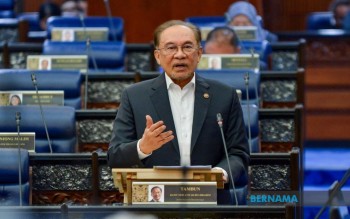
The Malaysia-Thailand Border Economic Zone represents a significant shift in regional trade dynamics, with Prime Minister Datuk Seri Anwar Ibrahim signalling that the initiative will fundamentally reshape how Malaysian goods reach Indochina's expanding consumer markets. Speaking in parliament on July 14, Anwar explained that the zone addresses a persistent trade friction that has constrained Malaysian exporters for years, particularly those dealing in perishable goods where timing and customs procedures directly impact competitiveness.
Thailand's willingness to streamline customs requirements marks a breakthrough that reflects deepening bilateral cooperation at the highest levels. Anwar noted that Bangkok has committed to easing restrictions that previously complicated the transit of Malaysian fisheries and agricultural products destined for Laos, Cambodia and Vietnam. This concession addresses a chronic irritant for Malaysian businesses, many of which have absorbed significant costs due to delays and bureaucratic processes at Thai border crossings. The relaxation of these requirements effectively creates a smoother commercial corridor, allowing goods to transit through standard customs procedures rather than facing additional scrutiny.
The economic implications extend well beyond bilateral trade figures. Access to Indochina markets—particularly Vietnam's rapidly developing economy, Cambodia's growing consumer base, and Laos's emerging industrial zones—represents substantial growth opportunities for Malaysian exporters. The fisheries sector stands to gain considerably, given Southeast Asia's growing demand for protein products and Malaysia's competitive advantages in marine extraction and processing. Agricultural goods, from processed foods to fresh produce, similarly face robust demand across the Mekong region, especially as incomes rise and urbanisation accelerates in Vietnam and Cambodia.
Anwar's emphasis on unlocking development beyond the initial Sadao and Bukit Kayu Hitam zones indicates the initiative's scope transcends mere customs facilitation. The partnership with Thai Prime Minister Anutin Charnvirakul, formalised just days before the parliamentary disclosure, reflects a strategic realignment that could reshape the entire northern corridor. By extending the zone's framework to include Rantau Panjang in Kelantan—with what Anwar described as cooperation from the state government—Malaysia positions itself to leverage its geography as a gateway between Thailand and the Indochina region.
The inclusion of Rantau Panjang carries particular significance for East Coast development. Long overshadowed by peninsular corridor initiatives, the East Coast has historically struggled to translate its geographic advantages into sustained economic growth. The BEZ concept potentially reverses this dynamic by making the region's border location an asset rather than a peripheral characteristic. This recalibration aligns with broader aspirations to develop the East Coast economically and reduce regional disparities, addressing a political priority for the federal government.
Small and medium-sized enterprises feature prominently in Anwar's articulation of the scheme's benefits, a recognition that border prosperity requires inclusive mechanisms rather than concentration of advantages among large corporations. The government has committed to prioritising SME participation, skills training, and employment generation for local border communities. Such commitments matter because border regions often experience economic marginalisation despite their strategic location, with local populations seeing trade benefits accrue mainly to external actors. By embedding community development and workforce training into the BEZ framework, Malaysia signals intent to distribute gains more equitably.
The East Coast Rail Link emerges as critical infrastructure underpinning the entire economic zone concept. Anwar's announcement that the federal government has decided to extend the ECRL to Rantau Panjang transforms the railway from a domestic connectivity project into a transnational economic corridor. More ambitiously, preliminary discussions with Anutin have explored extending the railway into Thailand along the same route. If realised, such cross-border rail infrastructure would constitute a transformative regional connectivity project, fundamentally altering logistics and transportation economics throughout the corridor.
The proposed Thai extension of rail infrastructure carries geopolitical undertones beyond commerce. Transport infrastructure development often serves as vehicle for deeper regional integration, establishing patterns of interdependence that encourage broader cooperation. A Malaysia-Thailand rail connection would anchor both countries' commitment to northern region development and potentially catalyse further infrastructure integration with Indochina countries. Such developments typically proceed incrementally, but their cumulative effect can substantially reshape regional trade patterns and investment flows.
Thailand's receptiveness to these initiatives reflects its own strategic interests in developing border regions and strengthening ties with Malaysia. Bangkok faces similar pressures to develop its northeastern provinces and create employment opportunities, making bilateral border development mutually advantageous. The alignment of interests creates conditions for sustained cooperation, moving beyond transactional agreements toward institutionalised partnership. This dynamic suggests the BEZ could evolve beyond initial trade facilitation into a more comprehensive development framework.
For Malaysia, successful realisation of the BEZ concept could yield multiple returns. Immediate benefits include enhanced export competitiveness for fisheries and agricultural sectors facing constrained market access. Medium-term gains emerge through employment generation in border communities and skills development aligned with emerging regional supply chains. Longer-term, a functioning border economic zone establishes Malaysia as a key logistics hub connecting Thailand with Indochina markets, attracting value-added manufacturing and distribution activities. This positioning reflects strategic thinking about Malaysia's role in Southeast Asian supply chains as global manufacturing dynamics shift.
The challenge ahead centres on implementation mechanics and ensuring that commitments translate into operational realities. Customs cooperation, while formalised at ministerial levels, requires sustained coordination between agencies in both countries. Investment in border infrastructure, particularly the ECRL extension to Rantau Panjang, demands substantial capital outlays and requires careful project management. Most critically, SME participation requires deliberate government support through capacity building, financing mechanisms, and market intelligence systems that enable smaller businesses to capitalise on new opportunities.
Regional observers will watch closely whether this initiative succeeds in meaningfully expanding trade and investment or remains largely symbolic. The framework's success hinges on whether the Thai government sustains implementation commitments as administration changes, whether Malaysia's northern states proactively support the concept, and whether private sector actors—particularly exporters—view the zone as offering genuine competitive advantages over existing trade routes. Given Malaysia's historical reliance on major shipping hubs and established supply chains, shifting trade patterns toward the northern corridor requires demonstrating clear cost and efficiency benefits.
The Malaysia-Thailand BEZ ultimately represents an attempt to convert geographic proximity into economic advantage through coordinated development and regulatory alignment. If successful, it offers a template for regional cooperation that extends beyond Malaysia and Thailand, potentially attracting Indochina countries into deeper supply chain integration. The coming months will prove decisive in determining whether this vision translates into measurable economic outcomes for Malaysian exporters and border communities.

