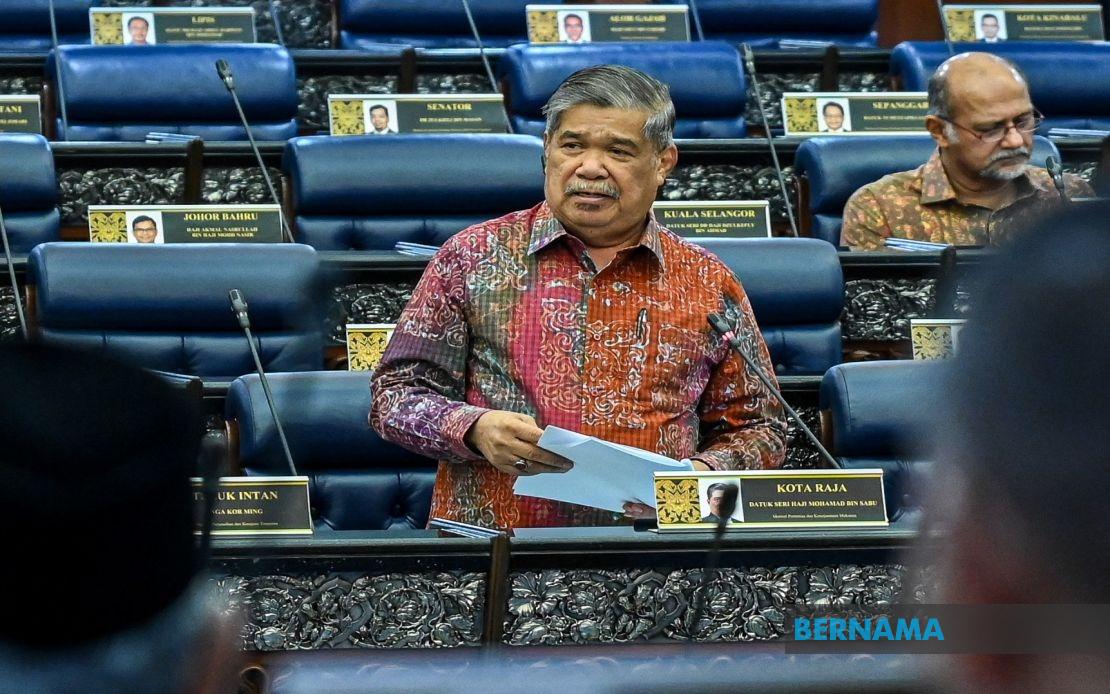
The Malaysian government is mobilising a comprehensive strategy to shield its agricultural sector from the mounting pressures of El Niño, with particular focus on preserving rice supply chains and supporting farming communities across the nation. Datuk Seri Mohamad Sabu, the Minister of Agriculture and Food Security, outlined during parliamentary question time that multiple layers of intervention are being deployed simultaneously to cushion the agro-food system against climate-related disruptions that could threaten the country's food self-sufficiency.
At the core of the government's approach lies a modernisation of water infrastructure and management practices designed to stretch existing supplies further. Continuous surveillance of dam levels and catchment area conditions now underpins planning decisions, while integrated water resource management frameworks coordinate usage across different sectors. The adoption of smart irrigation monitoring systems represents a shift toward precision agriculture, allowing farmers to apply water with greater accuracy and minimise wastage. Drip irrigation technology deployment is being expanded as authorities recognise that traditional flooding methods cannot sustain productivity during prolonged dry spells that El Niño events trigger across Southeast Asia.
Breeding programmes have become equally critical to the defensive strategy. The Malaysian Agricultural Research and Development Institute is accelerating its work to develop rice varieties with enhanced drought tolerance, a task the Prime Minister's Food Security Meeting has prioritised for additional funding and research capacity. These new strains are intended to maintain yields even when rainfall patterns become erratic and water availability contracts. Cloud seeding operations, undertaken whenever atmospheric conditions permit, represent another tool aimed at coaxing precipitation from uncertain skies, though this remains a supplementary measure rather than a primary solution.
Financial assistance to affected producers has already flowed substantially. In the initial phase of support, RM45.24 million reached 8,224 rice farmers from 2024 onwards. A second disbursement wave, extending through June 2026, channelled RM38.53 million to 55,058 farmers managing 16,933 hectares across the drought-stricken regions of the northern and eastern Peninsula. This targeted relief acknowledges that even with technological improvements, individual farming households require direct compensation when disaster strikes their operations. The cumulative commitment now exceeds RM84 million, signalling serious government intent to prevent rural economic collapse during climate stress periods.
Rice inventory management remains another pillar of the security framework. Malaysia maintains strategic reserves sufficient for approximately six months of domestic consumption, providing a buffer against supply disruptions. Import channels remain active and ready to supplement domestic production whenever shortfalls emerge, though the government views expanded local cultivation as the preferred long-term direction. This dual approach—maintaining stocks while simultaneously boosting imports—reflects the reality that no single source of supply can be entirely reliable during global climate anomalies.
Expanding the physical footprint of rice cultivation represents perhaps the most ambitious component of the strategy. Large-scale rice farming developments are being encouraged across Sarawak, Pahang, and other states where geography and water availability permit intensification. By dispersing production across wider regions, the government hopes to reduce systemic vulnerability that concentrating output in traditional growing areas would entail. Controlled environment agriculture—encompassing techniques from greenhouse farming to hydroponics—is also receiving promotion as a method to insulate crops from weather volatility and strengthen the livestock sector against climatic fluctuations.
The food security question intersects with broader economic concerns, particularly regarding price stability and farmer incomes. When production surges create oversupply situations, as recently occurred in the durian sector, market mechanisms alone often fail to prevent ruinous price collapses that devastate grower returns. The minister indicated that government strategy extends beyond drought management to include export market development, with particular emphasis on China as an expanding destination for Malaysian agricultural products. Current penetration of Chinese cities remains concentrated in major urban centres, leaving vast potential in smaller towns and secondary markets where demand remains largely untapped.
Logistical enhancements aimed at facilitating shipments to China form part of this export expansion effort. Negotiations are progressing to streamline customs procedures and reduce bottlenecks in fresh fruit and frozen product delivery chains. Successfully opening these pathways could help absorb surplus domestic production during abundant harvest periods, thereby stabilising prices domestically while generating foreign exchange earnings for farming communities. This outward-looking dimension to food security policy acknowledges that Malaysian agriculture increasingly operates within regional and global markets rather than in isolation.
The convergence of El Niño preparation, climate adaptation, and market development reflects recognition that food security in contemporary Malaysia cannot rely on any single intervention. Rather, it demands coordinated action spanning technology adoption, financial support, breeding innovation, trade facilitation, and infrastructure investment. As climate patterns grow increasingly unpredictable across the equatorial and tropical regions where Southeast Asia sits, nations that build these layered defensive systems are likely to prove more resilient than those depending on traditional approaches. Malaysia's current positioning suggests policymakers understand that protecting the food supply ultimately requires protecting farmers themselves, ensuring their viability through multiple pathways of support rather than expecting market forces alone to sustain agricultural livelihoods during periods of climatic stress.

