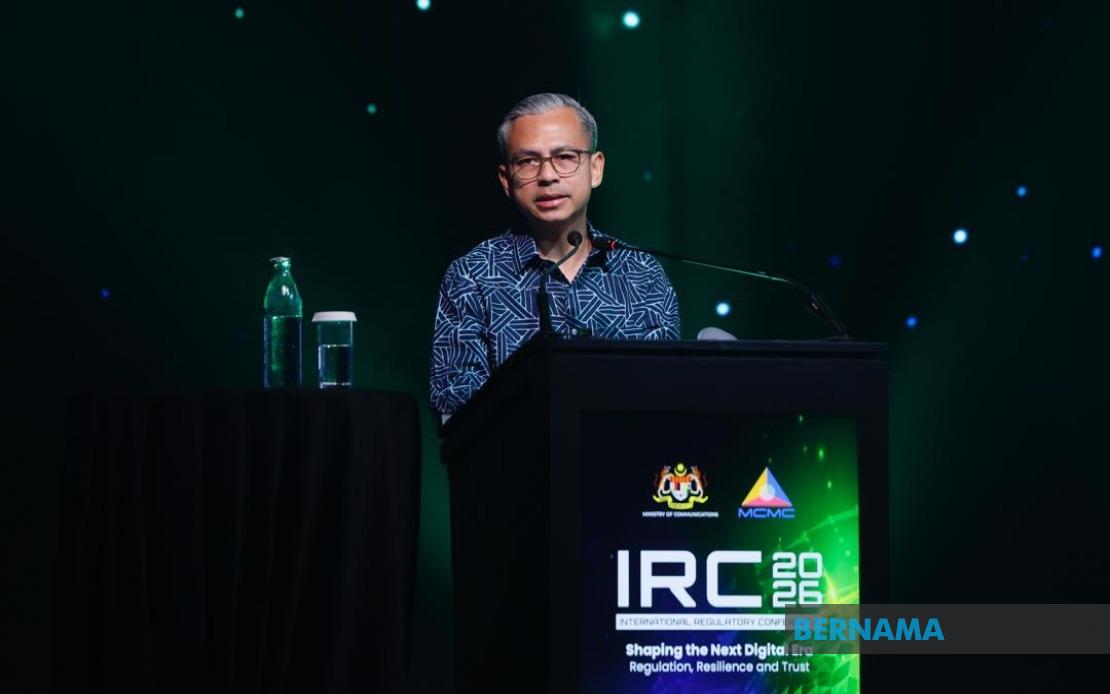
Malaysia is accelerating efforts to establish a robust digital governance framework that prioritises security, resilience and public confidence in technological systems, even as the nation pursues rapid innovation across its digital landscape. Communications Minister Datuk Seri Fahmi Fadzil highlighted the delicate balancing act required, stressing that regulatory frameworks must keep pace with technological change while maintaining accountability standards and encouraging industry investment. Speaking at the opening of the International Regulators Conference (IRC) 2026 in Kuala Lumpur, Fahmi underscored that trust—not merely technological capability—has become the critical determinant of the next phase of digital transformation across the region and globally.
The minister pointed to a suite of strategic initiatives demonstrating Malaysia's commitment to this multifaceted approach. The National Digital Network Plan (Jendela) serves as the overarching blueprint for digital infrastructure expansion, while the nationwide 5G rollout represents a significant investment in next-generation connectivity. Complementing these efforts are investments in submarine cable infrastructure, which strengthen Malaysia's position within regional and international digital networks and reduce dependence on terrestrial cross-border links. Collectively, these initiatives establish the physical and technological foundation upon which secure digital services can flourish. The Online Safety Act 2025 (ONSA) represents the regulatory complement to this infrastructure-focused strategy, introducing new legal protections and accountability mechanisms for digital platforms operating within Malaysian jurisdiction.
Fahmi framed the challenge facing modern governance with a fundamental question: can citizens genuinely trust the platforms they interact with daily, have confidence in the information they receive online, and rely on digital systems that increasingly mediate essential aspects of their lives? This question carries particular resonance for Malaysia and Southeast Asia, where rapid digital adoption has outpaced institutional capacity to regulate effectively. The minister acknowledged that technology has advanced at a pace far exceeding the evolution of governance frameworks designed to manage it, creating regulatory gaps that leave citizens vulnerable to misinformation, data exploitation, and online harm. This temporal mismatch between technological innovation and policy development has become a defining feature of the digital era across the region.
The Online Safety Act 2025 marks a strategic pivot in Malaysia's approach to managing digital harms. Rather than adopting a purely reactive model—responding to incidents after they occur—the legislation emphasises prevention through strengthened platform accountability mechanisms. By placing greater responsibility on digital service providers to proactively identify and mitigate harmful content and activities, ONSA attempts to shift the burden of digital safety from individual users and government authorities toward the platforms themselves. The act explicitly prioritises protection for vulnerable populations, particularly children and other at-risk communities who may lack the digital literacy to navigate contemporary online threats independently. This reflects growing global recognition that generic digital literacy campaigns prove insufficient against sophisticated exploitation tactics.
Fahmi emphasised that effective regulation must retain sufficient agility to respond to emerging technological challenges without becoming so prescriptive that it stifles legitimate innovation and deters legitimate investment. This principle of proportionate regulation has become central to contemporary digital policy discourse, particularly among nations competing for technology sector investment and talent. Overly rigid regulatory frameworks risk pushing digital innovation and investment to more permissive jurisdictions, potentially placing domestic citizens under less protective regimes. Conversely, regulatory vacuums create opportunities for harmful actors to exploit gaps with impunity. Malaysia's approach attempts to navigate this tension by establishing clear baseline protections while creating sufficient flexibility for evolving business models and emerging technologies to flourish within a predictable legal environment.
The IRC 2026, now in its third year, has evolved from a relatively niche gathering into a significant international forum addressing digital governance challenges. The conference originated when Malaysia transitioned its 5G infrastructure deployment from a Single Wholesale Network model to a Dual Network arrangement, drawing international regulatory attention to Malaysia's unique approach. Regulators and policymakers from other jurisdictions sought to understand how Malaysia's institutional framework managed this complex transition while maintaining service quality and investment certainty. The ongoing success of the IRC reflects broader recognition that digital governance challenges transcend national borders, requiring multilateral dialogue and coordinated approaches. Regulators increasingly recognise that unilateral regulatory action proves inadequate when addressing challenges posed by globally networked digital platforms and borderless information flows.
The conference programme encompasses a deliberately expansive agenda reflecting the complexity of contemporary digital ecosystem challenges. Discussions spanning online safety, data governance, artificial intelligence, quantum communications, autonomous systems and the future of regulation collectively acknowledge that digital policy cannot be compartmentalised into discrete domains. These challenges interact in complex ways: artificial intelligence systems process personal data; autonomous systems require robust communications networks; quantum computing will fundamentally alter data security assumptions. By creating a forum that addresses this interconnected landscape, the IRC positions Malaysia as a thoughtful participant in global digital policy development rather than a jurisdiction passively adopting frameworks developed elsewhere. This positioning carries economic significance for Malaysia's digital sector and broader technology industry ambitions.
Fahmi emphasised the practical value of drawing regulatory lessons from neighbouring countries and more distant jurisdictions. By understanding how other nations have addressed digital governance challenges, Malaysian policymakers can identify gaps in existing domestic legislation and anticipate emerging regulatory needs before they generate crises. This comparative regulatory analysis proves particularly valuable for smaller or developing digital markets, which can potentially avoid regulatory mistakes made by earlier-adopting nations. Singapore's experience managing digital platform regulation, Thailand's approach to cybersecurity governance, and Indonesia's efforts to balance content moderation with free expression principles all provide relevant reference points for Malaysian policy development. Such cross-regional learning has become institutionalised through forums like the IRC, replacing ad-hoc bilateral exchanges with systematic multilateral dialogue.
The international cooperation framework that the IRC facilitates extends to the International Telecommunication Union (ITU), of which Malaysia serves as a Council Member. This participation positions Malaysia within the formal United Nations institutional framework governing telecommunications development and digital governance standards. The ITU historically focused on technical standards and spectrum management; contemporary ITU activities increasingly address regulatory policy, cybersecurity, and digital rights protection. By ensuring that outcomes from forums like the IRC feed into ITU deliberations, Malaysia amplifies its influence over international digital governance standards that increasingly shape national regulatory frameworks. This institutional engagement proves particularly important for middle-income Southeast Asian economies seeking to influence global digital governance trajectories rather than merely adapting to standards developed by larger or more technologically advanced nations.
The presence of senior officials including Deputy Communications Minister Teo Nie Ching, Communications Ministry secretary-general Datuk Abdul Halim Hamzah and Malaysian Communications and Multimedia Commission chairman Tan Sri Mohamad Salim Fateh Din at the conference opening signalled the Malaysian government's prioritisation of digital governance as a strategic concern meriting high-level attention. The MCMC, Malaysia's primary telecommunications and multimedia regulator, maintains responsibility for implementing frameworks discussed at forums like the IRC. By hosting the conference, the MCMC establishes itself as a professional regulatory institution capable of engaging meaningfully with international peers, enhancing its institutional standing and technical capacity. This institutional development matters for Malaysia's broader digital economy ambitions, as investors and international partners have greater confidence in markets regulated by competent, internationally-engaged regulatory bodies.
The timing of the IRC 2026 reflects Malaysia's recognition that digital governance decisions made over the coming years will shape technological development trajectories for the next decade or longer. Emerging technologies including advanced artificial intelligence systems, quantum computing, and immersive digital environments will present governance challenges that current regulatory frameworks inadequately address. By convening international dialogue now, Malaysia and other participating nations attempt to develop proactive regulatory responses rather than adopting panic-driven measures after problems emerge. This forward-looking approach aligns with Malaysia's broader positioning as a thoughtful participant in global technology governance rather than a jurisdiction perpetually playing catch-up with disruptive technological change. The Conference represents an investment in Malaysia's capacity to shape the digital future rather than merely react to it.

