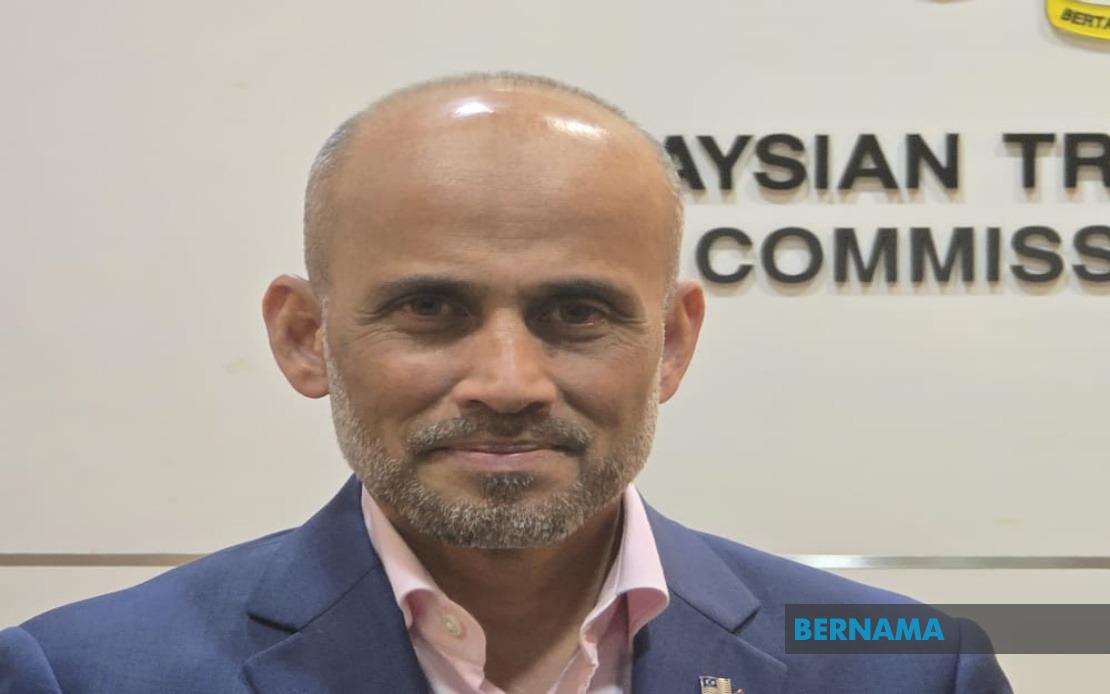
Datuk Dr Azfar Mohamad Mustafar, Malaysia's High Commissioner to Singapore, has emphasised the substantial progress made in bilateral relations during his tenure, pointing to a partnership that has matured through shared problem-solving and consistent diplomatic engagement. His five-year posting, which concludes as he transitions to the role of High Commissioner to the United Kingdom effective July 1, provides a vantage point from which to assess how Malaysia and Singapore have navigated an exceptionally challenging period while maintaining and expanding their collaborative frameworks.
The journey has not been without obstacles. When Azfar assumed office in June 2021, the region was gripped by the height of the COVID-19 pandemic, which presented immediate and complex hurdles for both nations. The closure of land borders, a necessary public health measure, created significant disruptions for the substantial population of Malaysian workers who cross into Singapore daily to earn their livelihoods. This movement of people, numbering in the hundreds of thousands, is fundamental to both economies and reflects the deep integration between the two neighbours. Beyond the logistical complications, the pandemic generated consular pressures as administrative systems struggled to accommodate the volume of Malaysians seeking assistance, requiring rapid governmental responses to prevent the situation from undermining bilateral goodwill.
Yet despite these immediate pressures, the economic relationship has demonstrated resilience. Trade and investment flows between Malaysia and Singapore have rebounded decisively to match pre-pandemic levels, demonstrating the structural strength of their commercial ties. Singapore maintains its position as one of Malaysia's most significant trading partners, a relationship built over decades of complementary economic interests and geographic proximity. More notably, Singapore continues to function as a crucial source of foreign direct investment into Malaysia, channelling capital into Malaysian enterprises and development projects that might otherwise lack access to such funding.
The emergence of the Johor-Singapore Special Economic Zone represents the most tangible manifestation of this deepening integration. This initiative, which creates a formally designated corridor for enhanced economic cooperation, signals ambitions that extend beyond traditional bilateral trade. For Malaysian policymakers, particularly those focused on developing Johor as an economic engine, Singapore's investment and expertise are viewed as catalysts for industrial transformation. Azfar's commentary suggests that this zone is expected to attract even greater Singapore capital, potentially reshaping the economic landscape of southern Peninsular Malaysia and creating employment opportunities across multiple sectors.
Beyond commercial considerations, Malaysia has positioned itself as a constructive partner as Singapore prepares to assume the ASEAN chairmanship in the coming year. This regional role carries significant weight, as the chair shapes the agenda for the bloc and coordinates responses to transnational challenges ranging from trade disputes to maritime security. Malaysia's commitment to support Singapore's leadership reflects a broader understanding that the stability and effectiveness of ASEAN mechanisms benefit all member states, including Malaysia itself. The two countries have identified economic integration as a priority area for Singapore's chairmanship, and Malaysia's willingness to align its efforts with this objective demonstrates a pragmatic approach to regional multilateralism.
The ASEAN Power Grid initiative exemplifies this spirit of collaboration. This ambitious project seeks to interconnect electricity networks across Southeast Asia, creating a more resilient and efficient energy system for the region. The initiative carries profound implications for Malaysia, which possesses significant energy generation capacity but also faces growing demand from rapid industrialisation. A functioning regional power grid would allow Malaysia to export surplus capacity to neighbouring countries while importing electricity during periods of domestic shortage, thereby optimising resource allocation across the peninsula and reducing the necessity for expensive new generation facilities. Singapore, as a densely populated city-state with limited space for power generation, has particular strategic interest in securing reliable energy supplies through regional cooperation.
Azfar's career trajectory reflects the calibre of diplomatic personnel Malaysia deploys to senior postings. His appointment as an Administrative and Diplomatic Officer in 1996 preceded his formal integration into the Foreign Ministry five years later, providing him with foundational experience in government administration before specialising in international relations. His previous ambassadorial role in France from 2018 to 2021 positioned him well for the Singapore posting, as European diplomatic experience often requires navigating complex relationships with long historical roots and multiple layers of interaction—skills directly transferable to Malaysia-Singapore relations. The Singapore posting, while substantial in its own right, now functions as a stepping stone toward his appointment to London, suggesting that the Foreign Ministry views his diplomatic acumen as sufficiently developed for postings to major global capitals.
The transition from pandemic-era management to stability-focused cooperation marks a qualitative shift in how Malaysia and Singapore approach their partnership. Where the initial period of Azfar's tenure demanded crisis response and emergency protocols, the latter portion has allowed both governments to focus on strategic deepening of ties through infrastructural projects and regional initiatives. This evolution reflects broader regional stability, though it occurs against a backdrop of genuine global uncertainties. Geopolitical tensions between major powers, trade fragmentation, and shifting alliances create an environment where smaller nations benefit significantly from maintaining robust regional partnerships that can provide both economic resilience and diplomatic coherence.
For Malaysia specifically, the relationship with Singapore represents more than bilateral friendship; it embodies a commitment to managed regionalism and pragmatic cooperation despite historical complexities. The two nations share a maritime border, overlapping economic interests, and populations with deep cultural and familial connections. Potential flash points—water supplies, port operations, air space—persist, yet they are managed through established institutional frameworks and regular high-level dialogue. This maturity in handling sensitive issues while simultaneously expanding cooperation across multiple domains represents a model of regional stability worth sustaining.
Azfar's departure marks a transition point rather than a conclusion. His successor will inherit a partnership structure that has proven capable of adaptation and growth, tested by extraordinary circumstances and refined through consistent engagement. The foundation laid over recent years, particularly the Special Economic Zone framework and commitments to ASEAN leadership support, provides momentum that should carry the relationship forward. Whether these gains can be consolidated and expanded will depend partly on the diplomatic skill and commitment of subsequent high commissioners, but also on the consistent political will of both governments to prioritise the partnership as a cornerstone of their respective national interests.

