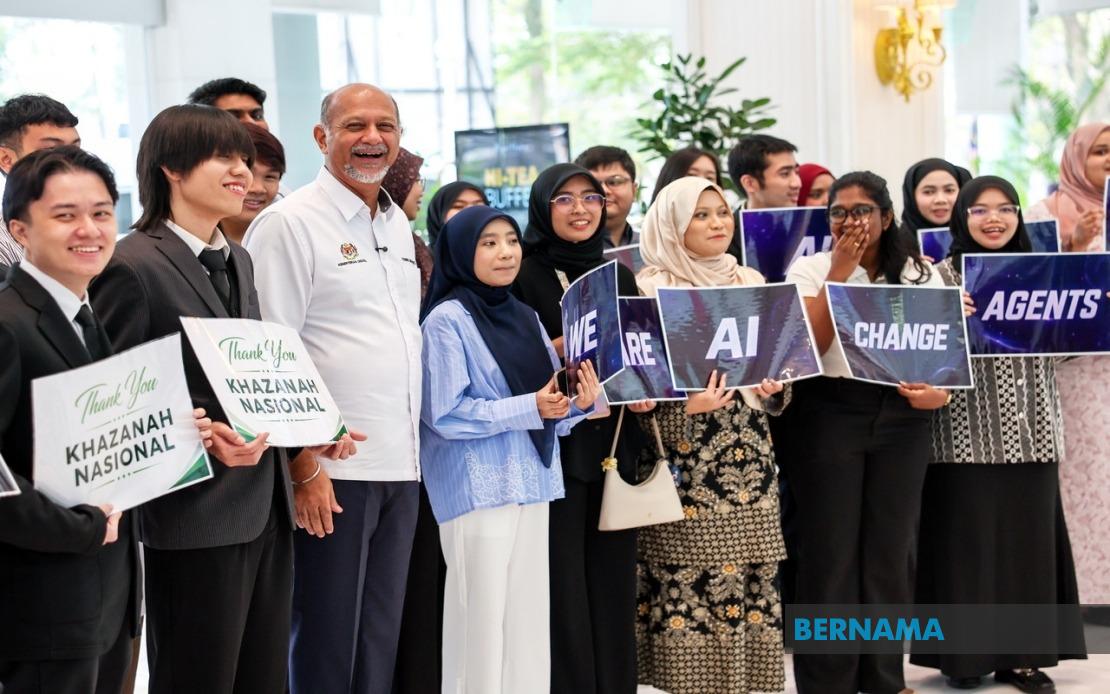
Malaysia's government has committed to fundamentally restructuring how it engages with rapid technological change, signalling a decisive shift away from the reactive posture that has historically characterised policy development. Digital Minister Gobind Singh Deo unveiled this strategic reorientation at the AI-Ready Malaysia Summit 2026 in Petaling Jaya on August 14, emphasising that traditional approaches—wherein government response follows the emergence of problems—are now obsolete in an era of accelerating innovation. The minister's comments reflect growing recognition within Malaysian policymaking circles that waiting for issues to materialise before developing solutions leaves the nation perpetually behind the technological curve.
The government's pivot centres on establishing AI Malaysia, a dedicated institutional body tasked with shepherding the country toward its ambitious target of becoming a self-identified AI nation by 2030. This represents more than bureaucratic reorganisation; it embodies a philosophical reordering of how government anticipates and manages technological disruption. Rather than relying on ad-hoc legislative responses triggered by crisis points, AI Malaysia functions as a forward-operating centre capable of identifying emerging challenges across key economic sectors and preparing regulatory and operational frameworks before those challenges crystallise into problems requiring emergency intervention. This anticipatory model aligns with how leading technology-competitive nations structure their innovation governance.
Gobind elaborated that the proactive approach encompasses concurrent development of legislation and policy infrastructure designed to serve as preparatory scaffolding for future technological integration. Rather than rushing to legislate after technological incidents occur—a pattern that invariably produces outdated or poorly calibrated rules—the government now intends to construct the legal and regulatory architecture in advance of widespread adoption. This prospective legislating permits more considered deliberation and reduces the likelihood of policies that inadvertently stifle beneficial innovation while failing to address genuine risks. The minister framed this not as bureaucratic overreach but as responsible stewardship of a complex technological transition.
The strategic priorities under AI Malaysia's purview deliberately target sectors with significant economic and social ramifications. Agriculture, transportation, and healthcare represent three domains where artificial intelligence deployment could substantially enhance productivity and service delivery across Malaysia. These sectors also encompass both urban and rural constituencies, touching employment patterns and citizen welfare across the nation's economic geography. By concentrating AI readiness efforts on these high-impact areas, Malaysian policymakers are ensuring that technological advancement translates into tangible benefits for citizens rather than concentrating capability within narrow sectors or urban enclaves. This sectoral approach also permits the government to identify and address potential disruptions—such as agricultural workforce displacement or transportation infrastructure vulnerabilities—with some lead time before implementation pressures accelerate.
Yet the government's technological ambitions remain contingent on addressing a fundamental prerequisite: genuine public understanding and confidence in new technologies. Gobind underscored that awareness precedes adoption, and that sustained public engagement with emerging innovations requires more than technical competence. Citizens must comprehend not merely how technologies function but, critically, how these tools address their particular circumstances and generate meaningful value. Without this comprehension, market adoption stalls regardless of technological merit or government encouragement. This recognition positions education and transparent communication as foundational policy pillars, equally essential to legislative frameworks or institutional capacity.
Accessibility constitutes the second pillar of the government's adoption strategy, and here Gobind identified cost and practical availability as primary barriers. Technology benefits that remain inaccessible to lower-income segments or rural populations effectively create a tiered society wherein technological enhancement accrues primarily to affluent urban populations. Malaysia's commitment to ensuring that the AI ecosystem remains affordable and practically obtainable across socioeconomic strata reflects awareness that technological inequality carries long-term political and economic costs. This imperative becomes particularly acute in Malaysia's context, where urban-rural disparities and income stratification already generate significant social tensions. Affordable, accessible technology deployment could theoretically ameliorate these divides, but only if policymakers actively prevent technology from becoming a mechanism of further exclusion.
The minister's emphasis on ensuring that technological adoption delivers concrete daily benefits underscores a pragmatic rather than utopian framing of Malaysia's AI ambitions. Rather than pursuing AI integration for its own sake or to signal technological sophistication, the government positions artificial intelligence as instrumental—a tool deployed to solve specific problems and enhance capabilities across agriculture, transport, and healthcare. This results-oriented approach contrasts with technology enthusiasm that emphasises innovation for its own sake. For Malaysian stakeholders across government, business, and civil society, this suggests that technology investments will be evaluated against demonstrable outcomes rather than permitted to proliferate unchecked.
The 2030 timeline for achieving AI nation status sets a concrete measurable goal against which the government's progress can be assessed. This compressed timeframe—roughly four years from the August 2026 summit announcement—necessitates accelerated implementation across multiple concurrent workstreams. Policy development, infrastructure investment, workforce training, and public education must proceed simultaneously, each feeding into and reinforcing the others. For Malaysian businesses, particularly small and medium enterprises, this timeline creates both opportunity and pressure; the government's commitment to sectoral AI integration creates potential market openings, but competitive advantages accrue to early movers capable of positioning themselves within the emerging ecosystem.
Malaysia's proactive technology strategy also carries important regional implications. As Southeast Asian nations grapple with technological governance challenges, Malaysia's experiment in anticipatory policy development provides a case study worthy of regional attention. Thailand, Indonesia, the Philippines, and Vietnam face similar pressures to develop artificial intelligence capacity while managing integration risks. Malaysia's institutional approach and policy sequencing could inform how other regional economies structure their own technology governance. Conversely, Malaysian policymakers can benefit from observing how regional peers address comparable challenges, potentially avoiding missteps whilst adopting promising innovations.
The government's explicit commitment to inclusive technology adoption reflects awareness that AI advancement divorced from equitable distribution generates social friction that ultimately impedes the technological transition itself. Public resistance to transformative technologies frequently stems not from technological incomprehension but from justified concerns that benefits accrue narrowly while disruption is broadly distributed. By prioritising accessibility, affordability, and tangible benefits across society, Malaysia's government is attempting to build legitimacy for technological change rather than imposing it through top-down mandates. Whether this inclusion-focused approach ultimately succeeds in generating sustained public support for accelerated AI adoption across agriculture, transport, and healthcare will substantially shape not only Malaysia's technological trajectory but potentially the template other developing economies follow.

