When geopolitical tensions between the United States and Iran threatened to disrupt critical shipping routes through the Strait of Hormuz, Malaysia faced a potential crisis. The conflict posed a direct threat to the nation's food security, as disruptions to oil supplies — essential for fertiliser production — and plastic packaging materials could ripple through the entire supply chain. Consumers across Southeast Asia braced for shortages and soaring prices, tightening household budgets in anticipation of a food inflation spike. Yet in Malaysia's case, a proactive government response and well-timed policy interventions have largely shielded the public from the worst effects of global uncertainty.
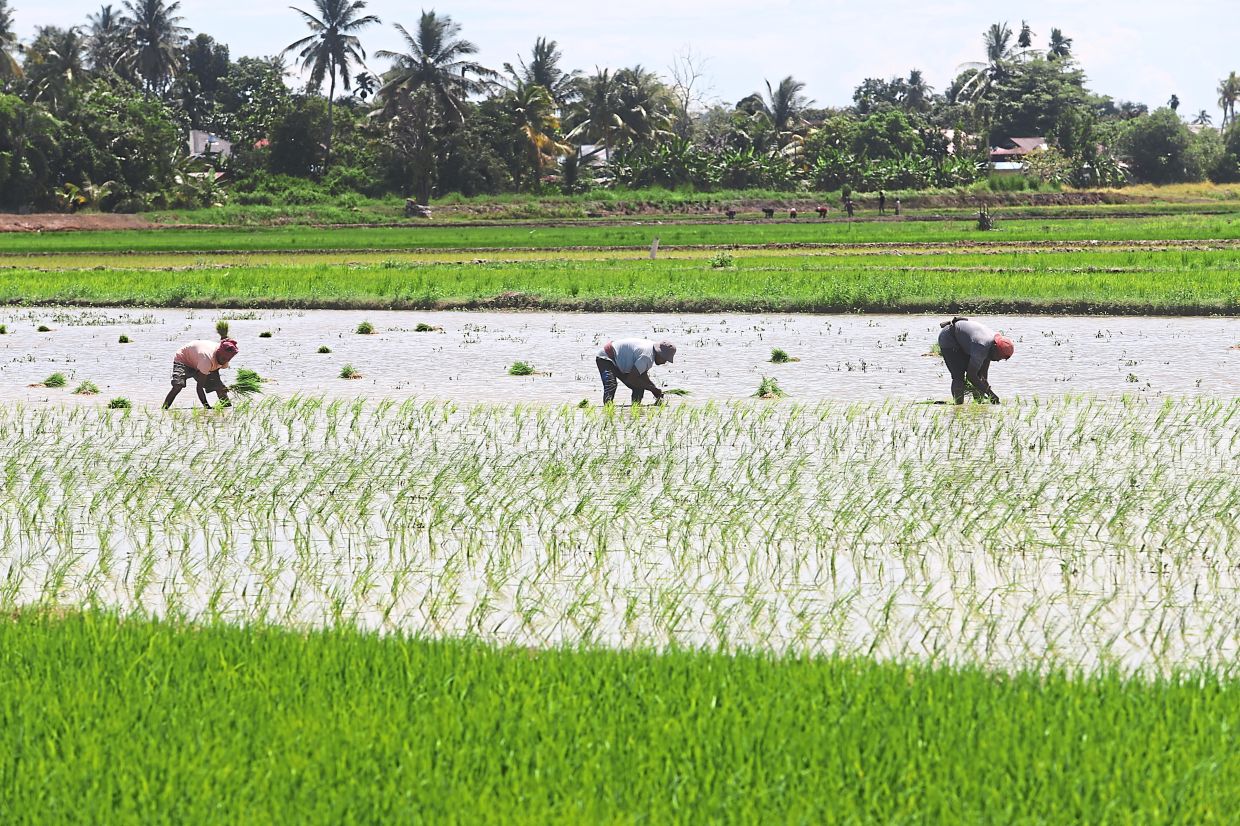
The Malaysian government's strategy rested on directly supporting farmers and agricultural producers through a combination of enhanced subsidies and production incentives designed to offset rising input costs. In April 2026, the Ministry of Finance significantly expanded the Budi Agri-Komoditi diesel subsidy programme, increasing monthly support from RM300 to RM400 — a substantial 33 percent jump that has directly benefited agricultural machinery operators struggling with elevated fuel expenses. Complementing this initiative, the government also restructured the ploughing incentive scheme known as Insentif Pembajakan kepada Pesawah, nearly doubling it from RM160 to RM300 per hectare for the 2026 planting season, with advance payments of RM200 per hectare to Peninsular Malaysian farmers to facilitate land preparation.
These interventions proved strategically valuable in allowing farmers to absorb rising production costs without passing the full burden to consumers. Agricultural economists credit the programmes with sustaining output levels and moderating price pressures at the farm gate. Prof Datuk Dr Nasir Shamsudin, an agricultural economist at Putra Business School and professor emeritus at Universiti Putra Malaysia's Faculty of Agriculture, explained that the RM400 monthly assistance under Budi Agri-Komoditi directly offset diesel and transportation cost pressures, while the enhanced ploughing incentive improved farmers' cash position before the critical planting season. By strengthening agricultural profitability during a period of elevated global energy costs, these measures effectively cushioned the sector from external shocks.
The effectiveness of Malaysia's approach becomes evident when examining actual inflation figures. Food price inflation remained remarkably subdued at 1.4 percent year-on-year in May 2026, only marginally higher than April's 1.2 percent, suggesting that the government's interventions successfully prevented the price escalations that other nations experienced. This stability reflects a broader acknowledgement by policymakers that short-term cost relief measures, while necessary to address immediate pressures, represent only part of a comprehensive food security strategy. Prime Minister Datuk Seri Anwar Ibrahim publicly framed the subsidy extensions as recognition of mounting living cost pressures and global economic uncertainty, positioning government support for smallholders and agricultural entrepreneurs as central to maintaining economic stability.
Beyond immediate relief measures, Malaysia's 2026 budget allocated RM2.62 billion across multiple agricultural support mechanisms, including subsidies for paddy prices, crop cultivation, fertiliser, seeds, and production incentives. The fishing sector received RM160 million to provide living allowances of up to RM300 monthly and catch incentives, while domestic fruit growers benefited from RM55 million in support directed towards strategic crops including pineapples, soursop, water apples, and pomelos. This diversified approach demonstrates governmental commitment to stabilising prices across multiple food categories rather than relying on any single policy lever. The breadth of these allocations suggests recognition that food security encompasses multiple production systems and regional economies.
Critically, Malaysia maintained substantial strategic food reserves that provided additional insulation against supply disruptions. Government assessments confirmed sufficient stocks of essential protein sources — chicken, eggs, and fish — to cover at least one month of national consumption, while dairy and fruit supplies remained adequate. Rice reserves, including strategic national buffer stocks, stretched to five or six months of consumption, and fertiliser supplies covered approximately nine months of anticipated demand. These reserve levels effectively gave policymakers breathing room to manage supply chain disruptions without precipitating panic or sudden price spikes that could destabilise household budgets across the income spectrum.
Longer-term sustainability of Malaysia's food security, however, depends on structural improvements rather than indefinite subsidy expansion. Prof Nasir highlighted that the full benefits of government support hinge on how effectively those cost savings transmit through the entire supply chain, a process requiring sustained improvements in agricultural productivity and logistics efficiency. The economist emphasised that permanent price stability ultimately requires moving beyond subsidy dependence towards productivity-enhancing investments. Mechanisation programmes, precision agriculture technologies, climate-smart farming practices, high-yield seed varieties, efficient irrigation systems, post-harvest facilities, and integrated supply chain logistics can durably reduce unit production costs while simultaneously enhancing the sector's competitive position and reducing reliance on continuous government transfers.
Recognising this imperative, the government has begun shifting the agricultural sector towards greater sustainability and reduced input cost volatility. The Agriculture and Food Security Ministry actively promotes transitions towards organic fertilisers, biofertilisers, and Effective Microorganisms (EM) products, reducing vulnerability to global chemical fertiliser price fluctuations. A RM5.5 million project approved under the 13th Malaysia Plan focuses on strengthening the circular economy through conversion of agri-food waste into compost and organic fertilisers, simultaneously addressing waste management challenges while reducing imported input dependence.
Yet these efforts, however promising, confront Malaysia's fundamental structural challenge: the nation remains a net food importer with substantial dependence on global agricultural inputs. In 2024, Malaysia's agri-food trade deficit reached RM39.34 billion, reflecting the scale of import reliance across critical categories including rice, wheat, dairy products, and meat. This structural position inevitably exposes Malaysian consumers and producers to external price shocks triggered by global logistics disruptions, currency volatility, or geopolitical events. Even sectors appearing self-sufficient in domestic production often depend heavily on imported intermediate inputs, meaning that external supply chain pressures transmit readily into domestic costs.
The convergence of Malaysia's successful short-term price management with longer-term structural vulnerabilities reveals both the effectiveness of well-targeted policy interventions and their limitations. Government subsidies and strategic reserves have proven capable of buffering the immediate impacts of global supply chain disruptions, maintaining affordability during a period when other nations experienced food inflation spikes. However, sustaining this stability across successive global shocks requires complementary investments in domestic agricultural productivity, supply chain modernisation, and reduced import dependency. The current Middle East tensions illustrate how geopolitical events thousands of kilometres distant can threaten domestic food security in import-dependent economies.
Moving forward, Malaysia faces a dual imperative: maintaining the targeted support that has prevented food inflation from destabilising household budgets while systematically building the productive capacity and supply chain resilience that can reduce reliance on continuous government assistance. The RM2.62 billion agricultural budget represents substantial commitment, yet the RM39.34 billion trade deficit underscores that incremental improvements in domestic production cannot be deferred. Regional cooperation within ASEAN on agricultural trade, investment in climate-resilient farming technologies, and strategic diversification of import sources could complement domestic productivity gains in creating a genuinely resilient food system less vulnerable to the kinds of geopolitical disruptions that prompted this year's precautionary measures.

