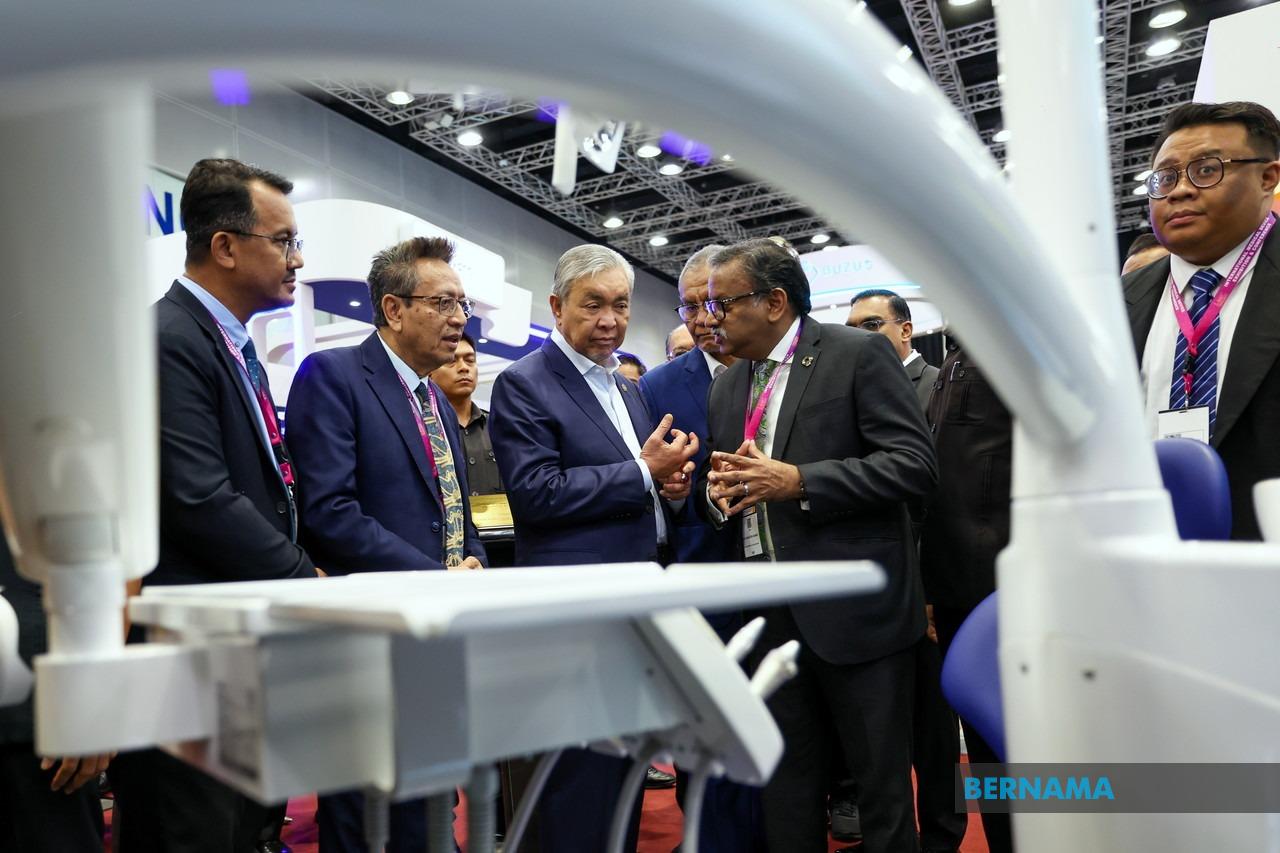
Malaysia is preparing an aggressive expansion strategy for its medical device sector, with Deputy Prime Minister Datuk Seri Dr Ahmad Zahid Hamidi unveiling three transformative ambitions designed to cement the nation's position as a regional medical technology powerhouse by the end of this decade. Speaking at the closing ceremony of the International Medical Device Exhibition and Conference (IMDEC) 2026 in Kuala Lumpur on August 28, Ahmad Zahid articulated a vision that extends far beyond incremental growth, positioning medical devices as a cornerstone of Malaysia's high-value manufacturing future.
The centrepiece of this strategy is achieving export revenues surpassing RM50 billion by 2030, representing a significant leap from the RM34.54 billion recorded in the previous year. This trajectory reflects confidence that Malaysia possesses the foundational elements necessary for accelerated expansion. The nation already boasts an established manufacturing infrastructure, proven market access to international buyers, and a reputation built through years of reliable production partnerships. However, Ahmad Zahid emphasised that sustaining momentum requires a decisive shift in approach. Future growth cannot rely solely on manufacturing volume or conventional products; instead, the industry must increasingly concentrate on developing and exporting sophisticated, high-margin medical devices where Malaysia can command premium pricing and exercise greater control over supply chains.
The second pillar of Malaysia's ambition addresses a critical gap in the regional competitive landscape: the absence of homegrown medical technology champions capable of rivalling established global players. Ahmad Zahid set a specific target of nurturing at least ten Malaysian MedTech companies that can operate effectively on both regional and international stages. This aspiration reflects understanding that while Malaysia has successfully attracted multinational corporations seeking manufacturing locations, the nation has yet to develop a cohort of indigenous firms that design proprietary technologies, hold valuable intellectual property portfolios, and compete as exporters rather than merely as contract manufacturers. The government signalled its commitment to supporting local enterprises while continuing to welcome leading international corporations, recognising that competition between domestic and foreign firms ultimately strengthens the ecosystem.
Yet perhaps the most revealing facet of Malaysia's strategy addresses employment quality—a dimension often overlooked in manufacturing export discussions. Ahmad Zahid pointed to the medical device sector's managerial, technical, and supervisory (MTS) employment index, which stood at merely 33.1 per cent in 2025. The government is now targeting that at least half of all jobs created through new MedTech investments by 2030 should fall into these high-value categories. This shift reflects a fundamental philosophical repositioning: rather than accepting whatever employment structure foreign investors impose, Malaysia intends to condition future investment approvals on commitments to build capability and expertise domestically. The logic underlying this approach recognises that low-value assembly work generates limited spillover benefits and leaves Malaysia vulnerable to relocation if labour costs rise elsewhere.
The philosophy guiding this employment target challenges the traditional sequence by which investment precedes workforce development. Ahmad Zahid explicitly urged international investors to engage with Malaysia's educational and vocational institutions years before establishing operations, rather than arriving only once labour shortages materialise. This proactive model would enable Malaysian institutions to design curricula aligned with industry needs, embed industrial experience into training programmes, and expand apprenticeship pathways. By reshaping the relationship between investors and educators, the government hopes to ensure that when companies arrive, they find a ready supply of technically proficient workers rather than expensive expatriates or inexperienced trainees requiring extensive on-the-job instruction.
Recent investment performance suggests the strategy is gaining traction. During 2025, Malaysia approved RM4 billion in new medical device sector investments spanning 46 separate projects, collectively generating nearly 3,400 employment opportunities. These figures demonstrate substantive investor interest even as the government recalibrates its expectations regarding job quality and technology transfer. The concentration of approvals across numerous projects rather than a handful of mega-investments indicates a diversified growth pattern less vulnerable to disruption from any single company's decisions.
Placing Malaysia's ambitions within the global context reveals both opportunity and urgency. The worldwide medical device industry, valued at more than USD572 billion in the most recent year, is projected to surge beyond USD1 trillion by 2034. This doubling reflects accelerating healthcare spending in ageing populations, rising chronic disease prevalence, and technological innovation enabling new treatment possibilities. Southeast Asia, with its growing middle class and improving healthcare infrastructure, represents one of the highest-growth regions within this expanding market. Malaysia's geographic position, established manufacturing capabilities, and skilled workforce position it advantageously to capture a disproportionate share of this expansion, provided the nation successfully transitions from commodity manufacturing toward innovation and design.
The IMDEC 2026 exhibition itself underscored the sector's gathering momentum. The event attracted more than 160 exhibitors and hosted over 50 regional and international speakers addressing themes spanning regulation, innovation, and healthcare transformation. Such concentration of industry participation signals both Malaysia's perceived importance within the regional medical technology landscape and the sophistication of discussions occurring around production, quality standards, and market access.
For Malaysian policymakers, the challenge ahead involves translating ambitious targets into concrete outcomes. Achieving RM50 billion in exports requires not merely growing existing production but fundamentally upgrading the industry's technology content and design capabilities. Developing ten local MedTech champions demands sustained public investment in research infrastructure, intellectual property protection, and perhaps targeted venture capital support. Ensuring high-value employment requires genuine partnership between government, educational institutions, and corporations—relationships notoriously difficult to sustain when commercial incentives and policy objectives diverge.
Regionally, Malaysia's strategic recalibration carries implications for neighbouring economies competing for similar investments. Thailand, Vietnam, and Indonesia possess overlapping manufacturing capabilities and lower labour costs, creating a genuinely competitive environment. Malaysia's emphasis on higher-value products, indigenous innovation, and quality employment implicitly positions it as the premium option within Southeast Asia's medical device landscape—a positioning that can succeed only if execution matches rhetoric. The next decade will reveal whether Malaysia's ambitions represent realistic targets grounded in genuine competitive advantages or aspirational targets ultimately constrained by institutional capacity and global market forces beyond the nation's control.

