Malaysia's agricultural sector has reached a milestone with Laman Padi's paddy art installation earning recognition from the Malaysia Book of Records as 'The Largest Paddy Art Formation'. Unveiled during the Malaysia Agriculture, Horticulture and Agrotourism Exhibition (MAHA) 2026 at Malaysia Agro Exposition Park Serdang (MAEPS), the unprecedented artwork combines patriotic symbolism with innovative farming techniques, signalling a transformative approach to how the nation's rice industry can generate value beyond traditional grain production.
The paddy art formation showcases the Jalur Gemilang national flag alongside heart and hand motifs, with the word 'Jati' incorporated into the design. Rather than relying on conventional art materials, the entire piece was constructed using the MR284 paddy variety, strategically planted at different times to create natural colour variations as the crops matured. This sophisticated approach demonstrates the intersection of agricultural science and creative expression, offering a template for how farmers nationwide might reimagine their land use.
Minister of Agriculture and Food Security Datuk Seri Mohamad Sabu framed the achievement as evidence of the agricultural sector's capacity for innovation. Speaking at the Laman Padi opening, he emphasised that this recognition validates how paddy cultivation can transcend its primary function as a grain-producing activity. The initiative emerged through strategic partnership between government agencies and private-sector stakeholders, reflecting a broader ecosystem approach to agricultural development rather than government-driven initiatives alone.
The minister articulated a vision where rice fields become multifunctional landscapes serving educational, technological, and economic purposes simultaneously. This perspective carries particular significance for Malaysia's agricultural policy, which has historically focused on yield maximisation and food security. Mohamad's remarks suggest a policy shift toward viewing paddy fields as platforms for experiential tourism, community engagement, and supplementary income generation—an approach increasingly relevant as younger Malaysians and urbanites demonstrate growing disconnection from agricultural realities.
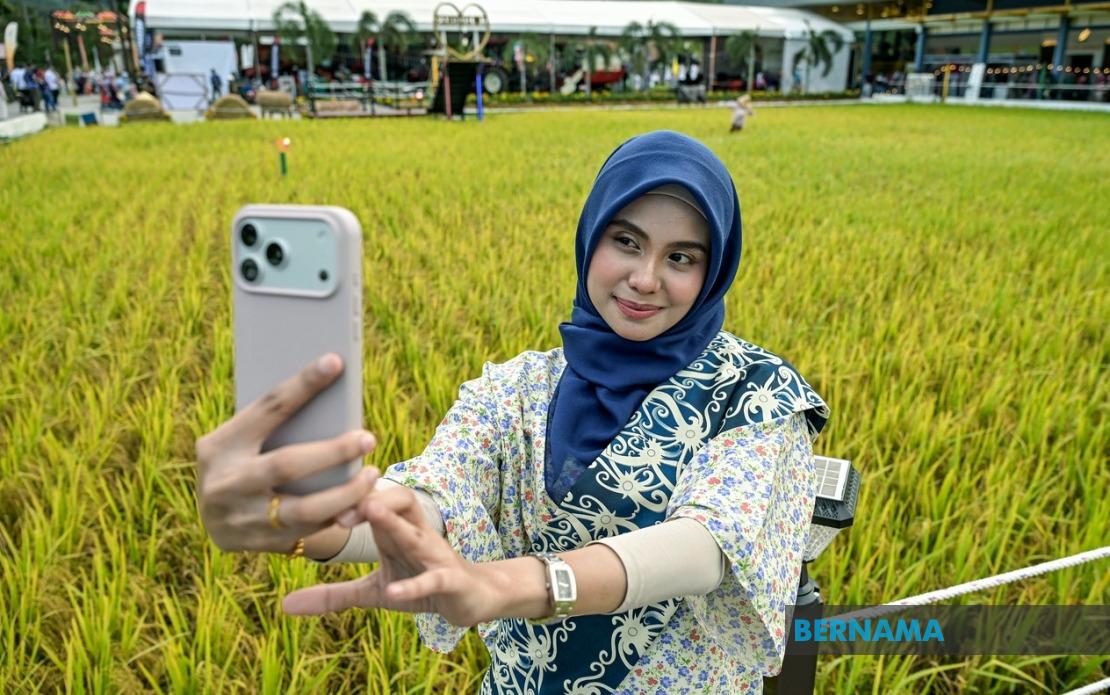
Laman Padi occupies a seven-hectare site featuring seven distinct paddy plots alongside two information centres and galleries, each designed to narrate different aspects of rice cultivation and industry evolution. The spatial arrangement itself constitutes a pedagogical approach, where physical movement through the landscape becomes an educational experience. This integration of storytelling within working agricultural space reflects contemporary trends in agritourism, where visitors increasingly seek authentic engagement with food production systems.
Visitor projections reveal ambitious targets, with the Paddy Industry Development Division aiming to attract approximately 10,000 daily visitors throughout MAHA 2026's ten-day run. Early results proved encouraging, with 4,000 visitors recorded on the opening day alone. These numbers suggest significant public appetite for agricultural experiences, particularly when presented through modern interpretive frameworks that blend entertainment with education.
The attraction deliberately integrates traditional and contemporary elements, visually demonstrating the rice industry's historical evolution alongside present-day practices. This curatorial approach acknowledges that visitors—particularly younger generations—benefit from contextual frameworks positioning agriculture not as historical practice but as dynamic, evolving sector. The infotainment methodology combines information dissemination with participatory activities, demonstrations, and interactive showcases, recognising that passive observation generates less lasting engagement than hands-on experience.
Educational programming forms a cornerstone of Laman Padi's strategy, with approximately ten schools participating in paddy-related activities providing students direct experience in planting techniques. This emphasis on youth engagement addresses a critical challenge facing Malaysian agriculture: generational disconnection and declining interest in farming careers. By introducing students to contemporary, creative applications of paddy cultivation, the initiative potentially repositions farming from perceived tradition-bound activity toward innovative, technology-enabled profession.
Laman Padi functions simultaneously as a commercial showcase platform, enabling BERNAS and other private-sector participants across the paddy and rice value chain to promote products and services directly to engaged audiences. This hybrid model—combining public education with commercial opportunity—attracts private investment while ensuring infrastructure and programming sustainability beyond government funding cycles. The approach reflects emerging agribusiness paradigms where farmer-centric value chains integrate directly with consumer engagement.
The wider implications for Southeast Asian agriculture merit consideration. As regional nations grapple with climate change, competing land uses, and youth migration from rural areas, Malaysia's Laman Padi model demonstrates how creative repositioning of traditional sectors can generate economic activity while strengthening cultural connections to food systems. The record-breaking paddy art serves as tangible symbol that agricultural innovation need not conflict with heritage preservation—rather, creative presentation of farming practices can enhance both cultural pride and economic opportunity.
Culinary offerings spanning Malaysian regional cuisines further position Laman Padi as comprehensive destination rather than specialised agricultural showcase. This multi-sensory approach—combining visual art, hands-on activities, education, and gastronomy—maximises visitor dwell time and spending potential. For surrounding communities and farmers, diversified economic returns from single agricultural sites represent significant departure from commodity-dependent models historically characterising Malaysian rice farming.
The Malaysia Book of Records recognition carries symbolic weight extending beyond Laman Padi itself. It validates government and private-sector collaboration in agricultural innovation, provides measurable evidence supporting agritourism policy development, and establishes Malaysia as leader in creative agricultural presentation within Southeast Asia. As other nations consider similar initiatives, the record serves as benchmark and proof-of-concept for transforming productive agricultural land into experiential attractions.
Moving forward, Laman Padi's success metrics will extend beyond visitor numbers to encompass farmer income diversification, youth career interest, technological adoption, and sustainability practices. If the initiative demonstrates that agritourism generates competitive returns against commodity production, it could catalyse broader landscape transformation across Malaysia's rice-growing regions, ultimately reshaping how agricultural land contributes to both food security and economic development.

