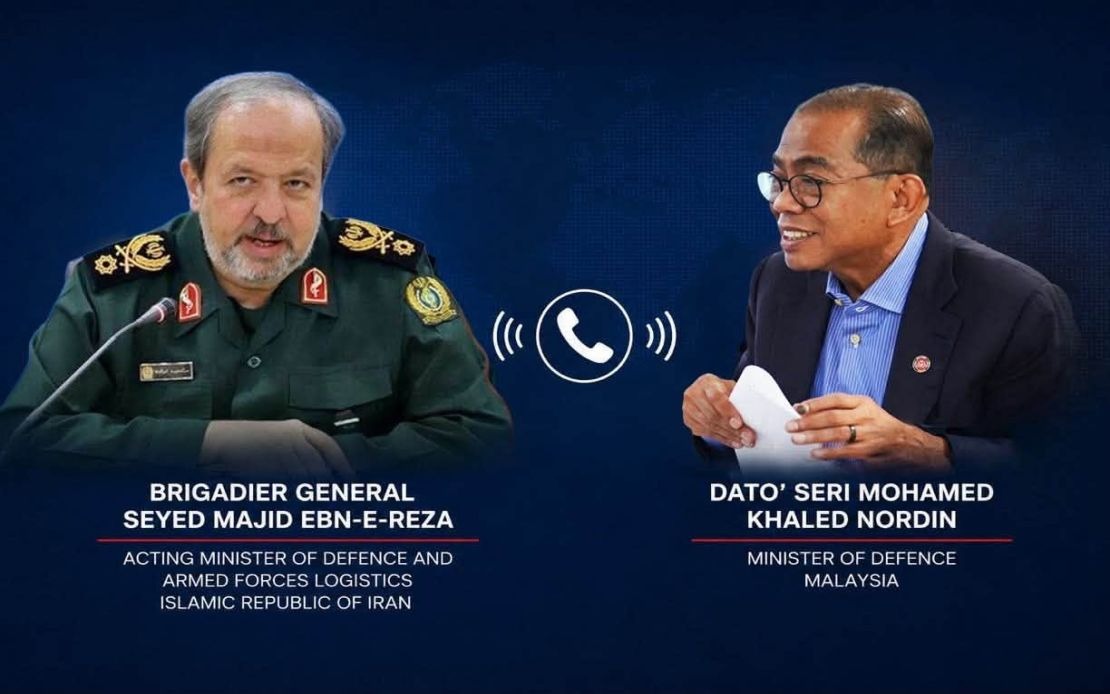
Malaysia has signalled its willingness to deepen defence relationships with Iran, with Defence Minister Datuk Seri Mohamed Khaled Nordin stating that both nations are positioned to pursue more substantial military and strategic cooperation grounded in their established diplomatic ties. The announcement comes following direct high-level engagement between Malaysia's defence establishment and Iran's Acting Minister of Defence and Armed Forces Logistics, Brigadier General Seyed Majid Ebn-e-Reza, highlighting the significance both nations place on bilateral security matters in an increasingly complex regional environment.
A formal Memorandum of Understanding on defence cooperation represents the centerpiece of Kuala Lumpur's strategy to institutionalize its relationship with Tehran. Currently in advanced stages of negotiation, the MoU would serve as a binding framework through which both countries can coordinate military activities, conduct joint exercises, and facilitate technology transfers in defence-related fields. For Malaysia, such an agreement reflects a deliberate policy choice to expand its strategic partnerships beyond traditional Western alignments, positioning the country as an independent actor capable of cultivating diverse security relationships across geopolitical blocs.
The inclusion of Iran in next year's Langkawi International Maritime and Aerospace Exhibition underscores Malaysia's commitment to leveraging commercial defence platforms for deepening state-to-state connections. LIMA, held biennially on the island of Langkawi, attracts military delegations, defence contractors, and equipment manufacturers from across the globe. By formally inviting Iranian participation, Malaysia demonstrates confidence in expanding defence dialogue and creates structured opportunities for Iranian military representatives to engage with their Malaysian counterparts and explore potential defence procurement or technological cooperation arrangements.
Beyond the transactional elements of defence cooperation, Mohamed Khaled's remarks reveal Malaysia's nuanced approach to regional conflicts and maritime security concerns. The Minister conveyed Malaysia's sympathies regarding casualties among Iranian military personnel, government officials, and civilians caught in broader West Asian conflicts, reflecting the country's commitment to humanitarian principles regardless of geopolitical considerations. This diplomatic gesture acknowledges shared regional interests and positions Malaysia as a nation capable of engaging constructively with all parties, even amid wider international tensions.
Malaysia's emphasis on ceasefire maintenance and diplomatic channels carries particular weight given the country's geographical proximity to crucial shipping lanes and its economic dependence on stable maritime trade routes. The Strait of Hormuz, through which approximately one-third of globally traded petroleum passes, remains critical to Malaysian energy security and regional commerce. By explicitly highlighting the importance of safeguarding maritime security in the Strait, Malaysia signals that it views Iranian cooperation as essential to protecting international shipping and maintaining the unimpeded flow of commercial vessels through these strategically vital waterways.
The acknowledgement of Iran's independently developed defence capabilities suggests Malaysia's respect for Tehran's technological achievements and self-sufficiency in military matters. This recognition carries implicit significance in a region where military modernization and domestic weapons production capabilities are viewed as markers of national sovereignty and technological advancement. For Malaysia, respecting Iranian defence autonomy may facilitate deeper engagement on technical matters and create conditions for mutually beneficial knowledge-sharing in specific military disciplines where Iran has developed particular expertise.
Malaysia's appreciation for Iran's cooperation in facilitating maritime passage during regional conflicts demonstrates practical security interests that transcend ideological considerations. The statement implies that Iran has demonstrated willingness to ensure safe passage for commercial and civilian vessels through contested waters, a responsibility that Malaysia views favorably and seeks to encourage through diplomatic and defence engagement. This pragmatic approach reflects Malaysia's overriding priority of protecting its economic interests and citizens while maintaining constructive relationships with regional powers.
The timing of this defence engagement initiative reflects Malaysia's broader strategic recalibration in response to shifting regional dynamics and power competitions. Southeast Asia, including Malaysia, faces pressures from multiple directions: great power rivalry between the United States and China, instability in the Indian Ocean region, and various maritime security challenges. By strengthening defence cooperation with Iran, Malaysia expands its security options and reduces asymmetric dependencies on any single strategic patron, thereby enhancing its strategic autonomy.
From Iran's perspective, deepening ties with Malaysia represents an opportunity to strengthen relationships with an important Southeast Asian voice and gain legitimacy within regional forums. Malaysia's position within ASEAN and broader diplomatic networks makes it a valuable partner for Tehran seeking to build coalitions and expand its regional influence. The MoU negotiations signal Iran's interest in positioning itself as a reliable, capable partner for nations seeking diversified defence partnerships.
The defence cooperation framework also carries implications for Malaysia's approach to regional institution-building and diplomatic architecture. As ASEAN seeks to maintain centrality and foster inclusive regional dialogue, Malaysia's bilateral defence engagement with Iran demonstrates the country's comfort with multi-stakeholder regional engagement and its belief that expanding partnerships need not contradict ASEAN principles of non-alignment and constructive engagement with all major powers.
Looking forward, the formalization of defence ties through the MoU could catalyze broader institutional cooperation, potentially including military training exchanges, joint maritime security exercises, and coordination on naval operations in shared waters. Such arrangements would benefit both nations by building professional relationships between military officers and creating mechanisms for crisis communication during periods of heightened regional tension.
Malaysia's initiatives reflect a sophisticated understanding that modern defence partnerships encompass not merely weapons procurement but institutional relationships, technical collaboration, and strategic trust-building. The emphasis on dialogue, diplomacy, and ceasefire maintenance, even while expanding military cooperation, demonstrates Malaysia's commitment to balancing national security interests with regional stability concerns—a balancing act that will remain central to Malaysian foreign policy as regional complexities continue to evolve.

