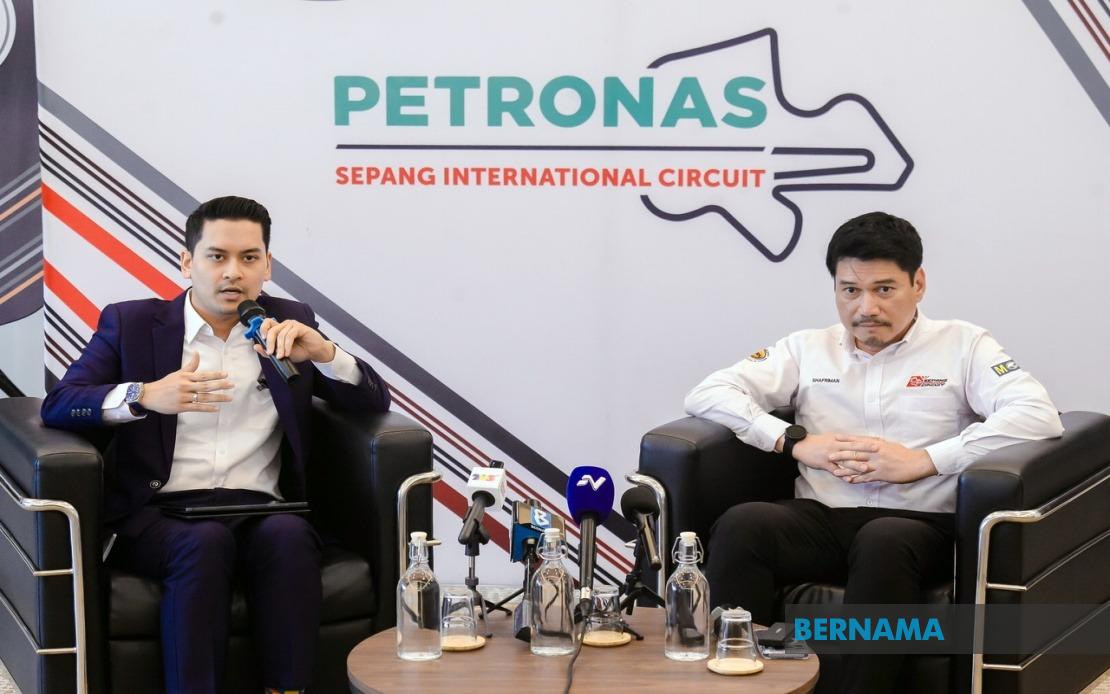
Malaysia has locked in its position as a premier motorsport destination by extending its hosting agreement for the Motorcycle Grand Prix until 2031, Youth and Sports Minister Dr Mohammed Taufiq Johari announced at the Sepang International Circuit. The five-year renewal, approved by the Cabinet, commences in 2025 and represents a strategic commitment to maintaining Malaysia's competitive edge in the global racing calendar at a time when many nations vie for prestigious sporting events.
The decision carries significant implications beyond the racetrack itself. Dr Mohammed Taufiq characterised the contract renewal not simply as the continuation of an international sporting spectacle, but rather as a deliberate government strategy to reinforce Malaysia's standing within the worldwide motorsport ecosystem. This framing reflects a broader acknowledgement that major sporting events function as economic and cultural anchors capable of projecting national influence and attracting international investment flows.
The economic dimensions of hosting MotoGP have become increasingly central to Malaysia's rationale for renewing the agreement. According to an impact assessment of the 2024 edition, the event generated approximately RM694 million in direct and indirect economic benefits across multiple sectors. The multiplier effect extended to job creation, with the single event responsible for establishing more than 4,400 employment opportunities, albeit many of these are temporary positions linked to the racing calendar and associated festivities.
Beyond headline figures, the return on investment metric reveals why government officials view MotoGP as economically efficient use of public resources. The 6.3-fold return demonstrates that every ringgit invested in hosting produces substantially more value in economic activity. This ratio positions MotoGP favourably when compared to other major sporting events and infrastructure projects, making renewal financially defensible within budget constraints and competing spending priorities.
The tourism sector emerges as perhaps the most direct beneficiary of Malaysia's MotoGP hosting arrangement. The international racing calendar brings together wealthy enthusiasts, team personnel, media representatives, and sporting executives who require accommodation, dining, transportation, and entertainment services. For Malaysia's hotel chains, restaurants, ground transportation providers, and retail establishments, particularly those clustered around the Sepang area and greater Kuala Lumpur region, the event represents a concentrated period of high-value customer engagement.
Small and medium enterprises occupy a crucial position within this economic ecosystem. The hospitality, catering, logistics, and support services sectors depend significantly on the steady volume of visitors and operational demands that accompany international sporting events. SMEs lack the scale and capital reserves of larger corporations to weather extended revenue droughts, making seasonal economic boosts from events like MotoGP proportionally more valuable to their survival and growth trajectories.
Beyond immediate economic returns, Malaysia's motorsport development agenda increasingly intertwines with national sporting aspirations and talent cultivation. The Malaysian Motorsport Development programme has created structured pathways enabling domestic riders to develop technical skills and gain international competitive experience. Hakim Danish and Qabil Irfan exemplify this development model, both having emerged from Malaysian talent systems to compete successfully on the world stage, demonstrating that hosting global events can catalyse homegrown excellence.
This talent pipeline carries strategic significance for Malaysia's sporting identity and soft power positioning. A nation producing internationally competitive riders in prestigious disciplines like MotoGP generates prestige and inspires participation across the broader motorsport sector. Young Malaysians witnessing compatriots competing at the highest levels develop aspirations to pursue careers in racing, engineering, and motorsport management, gradually building domestic expertise and infrastructure that extends far beyond individual sporting achievements.
The historical trajectory of Malaysian MotoGP demonstrates the nation's evolution as a motorsport destination. Malaysia first hosted the event in 1991, predating the construction of the Sepang International Circuit. The 1999 relocation to SIC represented a significant infrastructure investment that established a purpose-built, world-standard racing facility capable of hosting repeated major events. This permanent facility transformed Malaysia's capacity from hosting ad-hoc events to establishing consistent, predictable relationships with international sporting bodies.
Sepang International Circuit itself has become embedded within Malaysia's sporting infrastructure portfolio, much like other iconic facilities that define national sporting identity. The circuit's existence and international credentials facilitate not only MotoGP but also other motorcycle racing championships and automotive events, creating diversified revenue streams and operational efficiency that justify ongoing capital investment and maintenance.
Regional competition for major sporting events has intensified considerably in recent years, with neighbouring countries and emerging economies investing substantially in racing facilities and hosting infrastructure. Thailand's pursuit of Formula One hosting rights, Indonesia's developing motorsport ambitions, and Singapore's entrenched Formula One position all demonstrate that Southeast Asian nations view motorsport as strategic development opportunity. Malaysia's contract extension through 2031 secures its position within this competitive landscape and prevents rival claimants from capturing the prestige and economic benefits associated with premier international racing.
Looking forward, the extended contract provides predictability that encourages supporting investments from tourism operators, hospitality providers, and transportation companies. When hosting agreements stretch a decade into the future, ancillary businesses can justify capital investments in facilities and services with confidence that demand will materialise. This ripple effect of investment extends throughout Malaysia's economy in ways that simple attendance figures cannot capture, supporting employment and economic development in communities proximate to racing venues and throughout the country's tourism infrastructure.
The Cabinet approval process for the contract renewal reflects institutional recognition that motorsport hosting aligns with broader national development objectives encompassing tourism promotion, employment generation, and global competitiveness positioning. As Malaysia navigates an increasingly competitive global economy and diversifies away from traditional economic dependencies, events like MotoGP function as catalysts for demonstrating technological capability, infrastructure quality, and organisational sophistication to international audiences and potential investors across multiple sectors.

