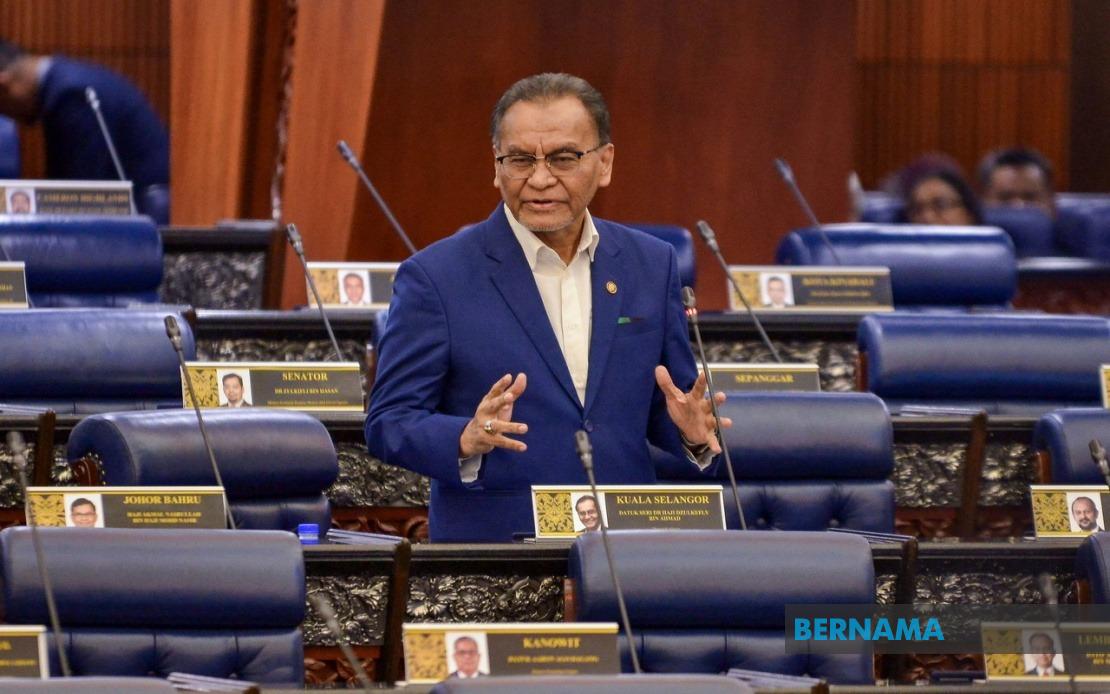
The Malaysian government is pursuing a multipronged approach to healthcare accessibility, with Health Minister Datuk Seri Dr Dzulkefly Ahmad announcing that MediAsas represents a significant pillar of its strategy to expand protection for both middle-income and lower-income populations. Speaking in Parliament on July 14, Dzulkefly emphasised that the initiative responds to mounting pressures within the private healthcare sector, where costs have become increasingly burdensome for families outside the highest income brackets.
MediAsas functions as a medical insurance and takaful product engineered with affordability as its cornerstone principle. By offering premium rates substantially lower than conventional private health insurance, the scheme targets the M40 group—those earning between RM4,850 and RM10,959 monthly—who fall between the safety net of public healthcare and the expense of traditional private insurance. The plan's design acknowledges a critical demographic reality in Malaysia: many middle-income households postpone or forgo private medical care due to cost barriers, yet earn enough to disqualify them from subsidised public healthcare benefits available to the B40 population.
A defining feature of MediAsas is its intended integration of Diagnosis Related Group (DRG)-based payment mechanisms at private hospitals. This structural innovation aims to standardise billing practices across participating private facilities, reducing the opacity and variability that have historically plagued Malaysian private healthcare pricing. By anchoring payments to predetermined diagnostic categories rather than permitting unlimited facility charges, the scheme creates predictability for both insurers and patients, potentially moderating inflationary pressures within the sector. This represents a deliberate effort to introduce market discipline where none previously existed.
Crucially, the minister stressed that MediAsas does not constitute a replacement for Malaysia's public healthcare system but rather a complementary layer. This distinction matters considerably for policy architecture. The government remains committed to Universal Health Coverage delivered through public facilities, which continues drawing funding from general taxation. Rather than eroding this foundational commitment, MediAsas expands the ecosystem of protection options, allowing individuals greater choice while preserving the state's role as healthcare provider of last resort. This positioning reflects international best practice, where complementary insurance schemes enhance rather than supplant universal systems.
The rollout strategy begins cautiously with a pilot phase in the Klang Valley region, scheduled to commence at month's end with participation from six insurance and takaful operators. This gradualist approach permits real-world testing of premium calculations, claims processing, hospital coordination, and consumer uptake before nationwide expansion commences in January 2027. The Klang Valley pilot location is strategically logical, given the region's high concentration of private healthcare facilities and its demographic diversity spanning income levels, allowing for robust data collection across target populations.
Parallel to MediAsas, the government has strengthened protections for lower-income Malaysians through expanded B40-specific schemes. The Healthcare Scheme for the B40 Group (PeKa B40) continues expanding its footprint, while the MADANI Healthcare Scheme and MySalam provide additional coverage layers. These initiatives collectively ensure that approximately 40 percent of the population—those earning below RM4,850 monthly—maintain access to comprehensive healthcare through public networks comprising 154 hospitals and exceeding 3,000 public health facilities nationwide. This multi-tiered architecture reflects recognition that healthcare protection cannot operate on a one-size-fits-all basis across Malaysia's diverse socioeconomic landscape.
The RESET framework undergirding these initiatives extends beyond insurance innovation to address structural inefficiencies plaguing Malaysia's healthcare ecosystem. Electronic medical records interoperability represents a particularly significant component, as redundant diagnostic testing and imaging have long constituted a source of unnecessary healthcare expenditure. By enabling seamless information sharing across public and private providers, the framework reduces wasteful duplication while improving clinical outcomes through more complete patient histories. Similarly, restructuring private hospital billing practices addresses long-standing complaints about opaque charges and unexpected out-of-pocket expenses that have deterred middle-income patients from seeking private care.
For middle-income households, MediAsas addresses several dimensions of healthcare vulnerability that traditional insurance products have historically overlooked. Pre-existing condition coverage, often restricted or excluded in conventional policies, forms part of the design, recognising that many M40 families include members with chronic conditions requiring ongoing management. Non-communicable diseases such as diabetes and hypertension, which burden Malaysia's healthcare system disproportionately, receive explicit consideration within the scheme's architecture. Mental health coverage likewise reflects contemporary understanding that psychological wellbeing constitutes an integral component of holistic healthcare, addressing a historically neglected dimension of medical protection in Malaysia.
The initiative also carries implications for regional healthcare patterns. As private healthcare inflation accelerates across Southeast Asia, Malaysia's experimental approach to moderating costs through managed pricing mechanisms and structured insurance products may offer replicable lessons for neighbouring economies. Countries throughout the region grapple with similar pressures as growing middle classes demand private healthcare alternatives while governments struggle to fund expanding public systems. MediAsas and its supporting framework represent a pragmatic middle path that neither abandons public healthcare nor surrenders entirely to unregulated private markets.
For Malaysian consumers, the practical implications of MediAsas remain contingent upon execution details still being finalised. Premium pricing, covered benefits, network hospital breadth, and claims approval timelines will ultimately determine whether the scheme achieves its dual objectives of affordability and accessibility. The pilot phase will generate critical evidence regarding consumer demand, claims experience, and hospital participation rates. Success hinges not merely on policy design but on stakeholder buy-in, particularly from private hospitals and takaful operators who must accept lower revenue margins in exchange for expanded patient volume and more predictable reimbursement patterns.
The comprehensive healthcare protection architecture announced by Minister Dzulkefly reflects an acknowledgment that Malaysia's healthcare system requires innovation across multiple dimensions to remain sustainable and equitable. Rather than pursuing a single legislative solution, the government has opted for a diversified portfolio approach targeting specific population segments with tailored mechanisms. Whether this pluralistic strategy successfully expands coverage while controlling costs will likely determine healthcare policy trajectory throughout the remainder of this decade.

