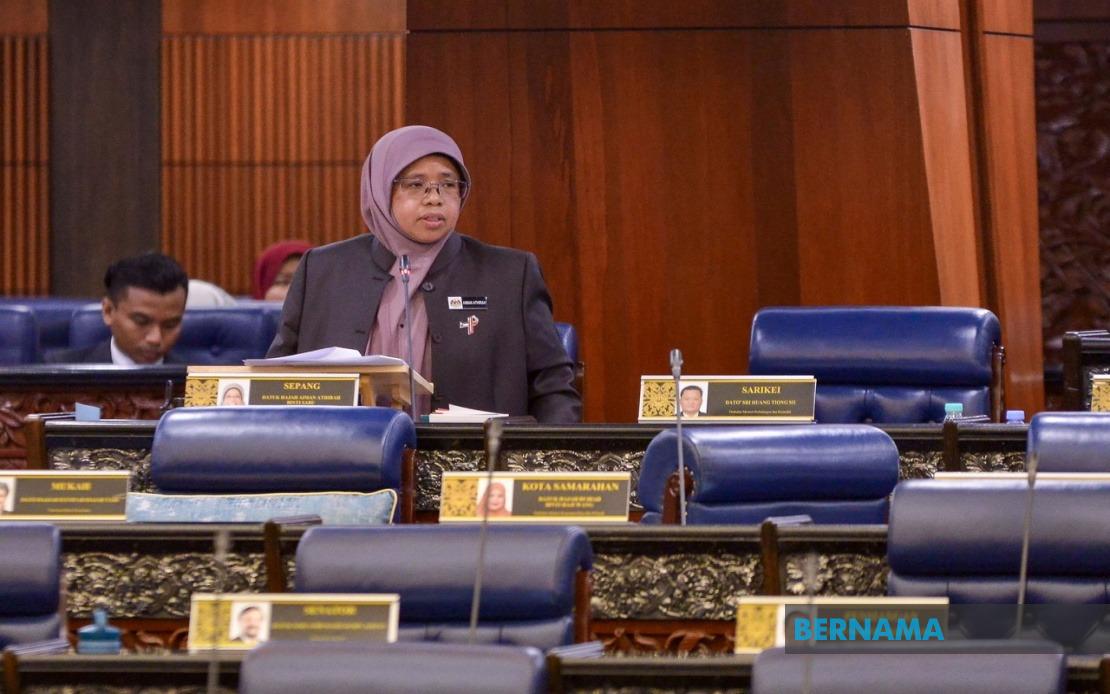
Malaysia's government is making substantial strides in tackling the nation's persistent housing affordability crisis through a sophisticated data-driven approach that matches residential supply to actual community needs. Deputy Housing and Local Government Minister Datuk Aiman Athirah Sabu revealed that authorities are leveraging statistical intelligence from multiple sources—including the Department of Statistics Malaysia, the National Property Information Centre, and the Malaysian Urban Observatory—to guide development decisions at state and local levels. This represents a fundamental shift from the traditional ad-hoc approach to housing policy, recognising that the mismatch between what is built and what people can afford remains one of Malaysia's most pressing social challenges.
The evidence-based planning strategy goes beyond merely tracking figures; it fundamentally reshapes how planners determine which types of homes should be constructed, where they should be located, and in what quantities. By examining granular data broken down by state and district, authorities can now tailor housing supply to reflect local economic conditions, demographic patterns, and income distribution. This localised approach acknowledges that affordability thresholds differ dramatically between Kuala Lumpur and rural Johor, or between Penang and Sabah's interior towns. The methodology also incorporates household income surveys and market demand assessments, ensuring that the homes built align with what residents can realistically finance rather than what developers find most profitable to construct.
Overseen by the National Affordable Housing Council chaired by the Prime Minister, this coordinated framework attempts to align federal and state housing initiatives while resolving jurisdictional bottlenecks that have historically fragmented Malaysia's housing landscape. The council structure demonstrates official recognition that housing requires whole-of-government coordination rather than siloed ministry operations. By establishing a high-level oversight body, policymakers hope to break down territorial disputes between federal and state authorities and create unified standards for affordability benchmarks across the country.
A particularly noteworthy achievement involves the government's Special Task Force on Delayed, Sick and Abandoned Private Housing Projects, established in December 2022. According to Aiman Athirah, this intervention has successfully resurrected 1,615 housing projects representing 190,422 units with a combined gross development value of RM150.8 billion as of May 2026. The scale of this revival effort underscores how severely Malaysia's construction sector had deteriorated, with thousands of projects left in limbo—devastating for purchasers who had invested life savings in properties that were never completed. These stalled projects represented not merely financial losses but also contributed to supply constraints that artificially inflated prices across the broader market.
The comprehensive National Housing Policy 2026-2035 currently in finalisation represents the government's most ambitious attempt yet to institutionalise affordability considerations into long-term planning. Rather than relying on static affordability definitions applied uniformly nationwide, the policy adopts dynamic pricing benchmarks calibrated to local median household income data derived from the 2024 Household Income and Basic Amenities Survey. This approach recognises economic realities: a home considered affordable in Kelantan based on local incomes might be prohibitively expensive by the same definition in Selangor. By anchoring affordability to regional income distributions, policymakers aim to create sustainable housing markets reflecting genuine purchasing capacity rather than aspirational price-points disconnected from reality.
The government has simultaneously expanded financial accessibility through the Housing Credit Guarantee Scheme, which provides guarantees covering up to 120 per cent of property valuations. This structure proves particularly valuable for first-time homebuyers who typically struggle not merely with down payments but with subsequent renovation and maintenance costs that can substantially exceed initial borrowing capacities. By extending guarantees to cover an additional 20 per cent beyond the property value itself, the scheme acknowledges that housing affordability encompasses lifecycle costs beyond the purchase price. This innovation addresses a frequently overlooked dimension of housing accessibility—the hidden expenses that render nominal affordability figures misleading.
For Malaysian readers, these developments carry significant implications. The housing crisis has persisted partly because supply responses lagged demand shifts, with developers often constructing properties in locations convenient to their operations rather than where populations actually lived and worked. Young families, first-time purchasers, and lower-income households have particularly suffered, priced out of markets where their employment opportunities concentrated. The new planning approach promises to reorient development toward genuine need, potentially distributing housing supply more efficiently across the nation and moderating price escalation in overheated markets.
The successful revival of 1,615 projects also provides psychological and financial relief to purchasers trapped in limbo since the pandemic disrupted construction timelines and contractor finances. These individuals endured years of uncertainty regarding project completion and investment recovery. Their situations illustrate how infrastructure projects depend not only on appropriate planning but also on contractor viability and project financing stability—factors the task force has had to navigate to revive stalled developments.
Speaking in parliamentary question time, Deputy Minister Aiman Athirah responded to MUDA parliamentarian Syed Saddiq Syed Abdul Rahman, who sought clarification on government mechanisms to prevent uncontrolled construction and rising prices. This parliamentary scrutiny reflects broader public concern that housing remains unaffordable despite nominal policy commitments. The government's detailed response, encompassing data infrastructure, council coordination, and financing schemes, suggests serious intent to address structural deficiencies rather than merely announce aspirational targets.
However, challenges remain substantial. The Housing Credit Guarantee Scheme, while expanding access, requires participating financial institutions to approve loans—meaning creditworthiness still excludes many lower-income applicants. Data-driven planning, however sophisticated, cannot overcome fundamental supply constraints in highly desirable locations where land availability remains finite. The mapping of affordable housing prices to household income data works only if developers view such pricing as commercially viable; otherwise, they may redirect development toward higher-margin projects. Moreover, the durability of these initiatives depends on consistent political commitment and sustained funding across electoral cycles.
Regionally, Malaysia's experience offers lessons for Southeast Asian neighbours confronting similar affordability crises. Thailand, Indonesia, and the Philippines struggle with comparable supply-demand mismatches and price inflation. Malaysia's experiment with data-driven planning and centralised coordination of stalled projects may provide replicable models, though each nation's different regulatory structures, financing systems, and land-tenure frameworks would require contextualisation.
The government's multifaceted approach—combining statistical planning, project revival, policy modernisation, and enhanced financing—represents recognition that housing affordability requires simultaneous intervention across supply, demand, and financial accessibility dimensions. No single policy lever suffices; rather, coordinated action across planning, project management, and lending institutions offers the most promising path forward. Whether this comprehensive strategy ultimately succeeds in moderating price growth and expanding homeownership opportunities for lower-income Malaysians will become evident over the next several years as revived projects complete and the new housing policy framework takes effect.

