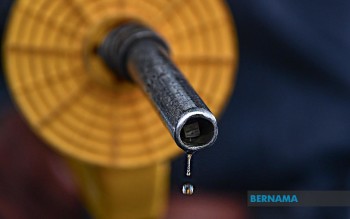
The Ministry of Finance has moved to dispel concerns that fiscal savings from Malaysia's targeted RON95 petrol subsidy mechanism introduced in April 2026 are being accumulated as government surplus rather than deployed for public benefit. In a parliamentary response to Senator Datuk Koh Nai Kwong, the ministry outlined how revenues freed up through the subsidy rationalisation have been systematically redirected toward bolstering social protection systems and ensuring adequate food supplies for the population.
The government's approach represents a deliberate policy choice to use efficiency gains from subsidy restructuring as a lever for broader economic and social objectives. Rather than allowing savings to simply reduce the fiscal deficit, officials have committed to channelling these funds into targeted assistance programmes designed to reach the majority of Malaysians who depend on government support. This reflects a shift in how policymakers view the outcomes of subsidy reform—not merely as a cost-cutting exercise, but as an opportunity to reshape the distribution of government resources toward those most in need.
Central to this redirection strategy are initiatives aimed at food security and agricultural support. The government has launched the Ploughing Incentive for Paddy Farmers (IPKP) and the Paddy Harvesting Incentive to strengthen domestic rice production capacity and provide direct support to farming communities. These programmes address long-standing concerns about Malaysia's reliance on imported rice and the vulnerability of the food supply chain. By investing subsidy savings into agricultural incentives, the government is attempting to create a more resilient domestic food system while simultaneously supporting rural livelihoods that remain economically fragile in many regions.
The food security dimension carries particular weight for Malaysian policymakers given regional vulnerabilities. Southeast Asia's agricultural sector faces mounting pressure from climate variability, land constraints, and competition for resources. Malaysia's domestic rice production has struggled to meet full consumption needs, creating dependency on imports from neighbouring countries whose policies can shift unexpectedly. By allocating subsidy savings to incentivise local paddy cultivation, the government is attempting to reduce this vulnerability while providing income support to farmers who have experienced declining returns over recent years.
Beyond agriculture, the ministry indicated that subsidy savings have enabled expansion of targeted assistance programmes designed to create a more comprehensive social protection framework. This suggests a recognition that Malaysia's welfare system, while improving, still contains gaps that leave vulnerable populations exposed to economic shocks. The government appears to be using the fiscal space created by subsidy rationalisation to fill these gaps rather than viewing the savings as discretionary budget flexibility. This approach has implications for how future subsidy reforms might be received—if savings are genuinely deployed for social benefit, public acceptance of similar measures may increase.
The ministry's response also touched on business-related measures that indirectly benefit the broader economy. The government has extended the implementation timeline for Phase 4 of the e-invoice system until the end of 2027, providing additional adjustment time for small businesses with annual sales up to RM5 million. This flexibility recognises that smaller enterprises, which form the backbone of Malaysia's SME sector, require more time to adapt to digital compliance requirements. The decision reflects an implicit acknowledgment that rushing digitalisation could strain businesses still recovering from post-pandemic challenges.
The e-invoice rollout itself demonstrates significant progress toward Malaysia's digital tax administration goals. More than 230,000 taxpayers have already adopted the system since Phase 1 commenced on August 1, 2024, with 1.5 billion e-invoices issued across the economy. This adoption rate exceeds typical expectations for such transformative initiatives and suggests strong voluntary compliance among Malaysian businesses. The phased approach—beginning with large companies exceeding RM100 million in annual sales, then progressively including mid-sized and smaller enterprises—has apparently succeeded in managing implementation challenges while minimising disruption to businesses.
The government has also introduced an interim import duty exemption for re-importation of Malaysian-made goods until December 2026, a measure designed to support manufacturers and reduce logistics costs for businesses that have outsourced production. This provision recognises the complex supply chains that Malaysian enterprises maintain across the region and attempts to provide relief without creating permanent tariff distortions. The temporary nature of the exemption suggests it is intended as a transition measure rather than structural policy change.
These interconnected policies reveal a government attempting to balance multiple economic and social objectives simultaneously. Subsidy rationalisation, which might appear as a single fiscal adjustment, is being framed as part of a broader programme encompassing agricultural support, SME assistance, digital infrastructure, and social protection expansion. For Malaysian businesses and citizens, this multipronged approach means the impacts of subsidy reform extend well beyond petrol pump prices—affecting everything from farm incomes to business compliance costs to access to government assistance.
The messaging from the Ministry of Finance also carries political dimensions worth noting. By emphasising that subsidy savings are being deployed purposefully rather than accumulated as surplus, the government appears intent on building a narrative that subsidy reform serves the public interest directly. This framing becomes particularly important if further subsidy adjustments are being contemplated, as public perception of how previous savings were used will influence acceptance of future measures. The explicit mention of support for both SMEs and food producers suggests an effort to address concerns from economically significant constituencies affected by inflation and rising input costs.

