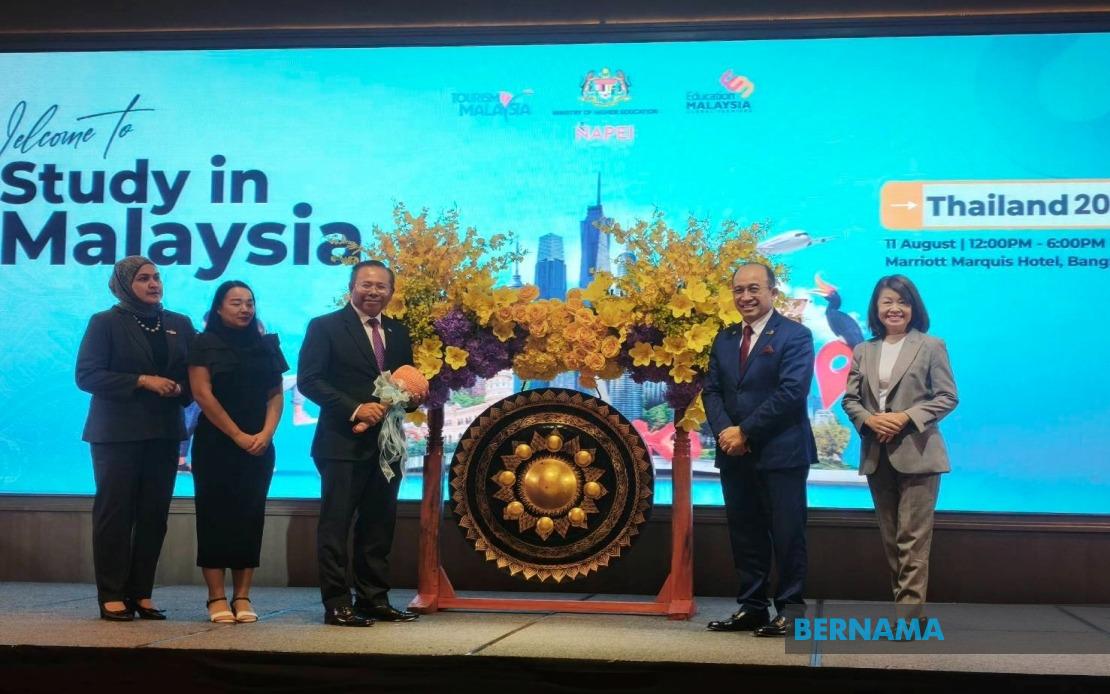
Malaysia is mounting an aggressive recruitment campaign to draw Thai students into its universities, capitalizing on its strategic position as a near neighbour and the competitive pricing of its higher education sector. The push reflects a broader regional strategy by Malaysian institutions to diversify their international student base and strengthen cross-border educational ties with Southeast Asia's second-largest economy. The initiative comes as Malaysia competes with established destinations like Australia and the United Kingdom for Thai students seeking quality tertiary education abroad.
Education Malaysia Global Services, the government-appointed body overseeing international student promotion, has partnered with the Thai International Education Consultants Association to amplify the message among prospective Thai learners about studying in Malaysian institutions. The network of 78 active education agents across Thailand will serve as key conduits for spreading awareness about programme offerings, institutional strengths, and the practical advantages of choosing Malaysia over geographically distant alternatives. This intermediary approach recognizes that education consultants in Thailand exercise considerable influence over student choices and university applications, making them essential stakeholders in any successful recruitment strategy.
The current cohort of Thai students in Malaysian universities stands at 634, according to EMGS data, with the demographic split revealing distinct academic preferences among Thai youth. More than three-fifths opt for undergraduate degrees, while approximately two-fifths pursue advanced qualifications at the master's or doctoral level. This distribution underscores Thailand's appetite for both entry-level tertiary education and specialized postgraduate training, suggesting that Malaysian universities can cater to both market segments effectively.
The growth trajectory, while modest, demonstrates genuine momentum. Thai enrolments nearly doubled from 300 students in 2024 to 360 in 2025, establishing a foundation upon which the 20 per cent expansion target is premised. Should EMGS achieve its objectives, Thai student numbers could reach approximately 432 by 2026, representing a cumulative increase of 44 per cent over two years. Such growth would position Thailand among Malaysia's more significant sources of international students and deepen educational interdependence across the shared border.
Malaysia's competitive advantages in attracting Thai learners extend beyond mere cost considerations, though tuition fees remain substantially lower than Anglo-American universities. The geographical proximity eliminates lengthy travel requirements and enables easier family visitation, addressing a concern for international students and their parents. The time-zone alignment means Thai students adapt more readily to campus life, while cultural and linguistic similarities facilitate social integration and academic transition. These soft factors, though less quantifiable than fees, significantly influence student satisfaction and retention rates throughout their studies.
A crucial differentiator has emerged through Malaysia's Graduate Pass scheme, which permits international degree holders to remain in the country for twelve months following programme completion to seek employment in designated sectors. This pathway addresses a critical pain point for international students: securing meaningful work experience in a foreign market after graduation. Thai graduates leveraging this facility can establish professional networks, build CVs with international exposure, and potentially transition to longer-term employment visas, creating tangible value beyond the degree itself. Such retention mechanisms increasingly influence international student decision-making, particularly among those seeking career advancement in competitive labour markets.
The Study in Malaysia Education Fair, orchestrated collaboratively by EMGS, Tourism Malaysia, and the National Association of Private Educational Institutions, represents a coordinated market activation strategy spanning Thailand's major population centres. The roadshow visited Chiang Mai on August 9, Bangkok on August 11, and concluded in Hat Yai on August 13, ensuring geographic coverage of key student recruitment zones across northern, central, and southern Thailand. This multi-city format allows Malaysian universities to present institutional differentiation directly to prospective applicants and their families, demonstrating commitment to the Thai market while gathering feedback on messaging effectiveness.
Malaysia's Ambassador to Thailand, Datuk Wan Zaidi Wan Abdullah, leveraged the fair's launch to propose that Malaysian public and private universities establish dedicated scholarship programmes targeting Thai students. Such financial incentives would materially lower barriers to entry, particularly for talented students from middle-income Thai families who possess strong academic credentials but limited capacity to absorb full tuition costs. Scholarship offerings also signal institutional commitment to Thai recruitment and create pathways for excellence-driven students who might otherwise default to domestic options or more expensive regional alternatives.
The diplomatic dimension underlying this educational initiative warrants recognition. Enhanced student flows strengthen bilateral relations between Malaysia and Thailand, fostering people-to-people connections that extend beyond formal government channels. Thai graduates who spent formative years in Malaysian universities accumulate professional networks, cultural familiarity, and favourable impressions of the country that influence long-term bilateral perceptions and engagement. Educational exchange thus functions as soft power, building social capital that translates into sustained political and economic cooperation.
Education Malaysia Global Services, operating under the Ministry of Higher Education's mandate, bears responsibility not only for international student recruitment but also for facilitating visa processing and positioning Malaysia as a regional knowledge economy hub. This institutional role reflects government recognition that higher education forms a component of broader economic strategy, particularly in developing services sectors and retaining talent within Southeast Asian supply chains. Close coordination between EMGS and the Thai Embassy in Malaysia further institutionalizes student support mechanisms and creates feedback loops enabling continuous programme improvement.
The recruitment push also acknowledges competitive pressures from alternative destinations. While Australia maintains historical advantages through established migration pathways and English-language instruction, Malaysia presents compelling alternatives through affordability, cultural proximity, and increasingly robust academic standards. Singapore, though proximate to Thailand, offers substantially higher costs and selective admission. This positioning allows Malaysia to capture students seeking quality education without premium pricing or extreme geographic dislocation—a substantial market segment that previous recruitment efforts may have insufficiently exploited.
Success of the current initiative will hinge on sustained commitment beyond the initial enthusiasm phase. Malaysian universities must ensure that Thai student experiences align with recruitment messaging, that support services adequately address language or cultural adjustment challenges, and that career placement outcomes justify study investments. Equally important, EMGS must maintain momentum through the Thai education agent network, periodically refreshing messaging and collecting data on student satisfaction to inform strategy refinement. The 20 per cent growth target, while ambitious, appears achievable if institutional execution matches diplomatic and marketing enthusiasm.
The broader implications extend across Southeast Asia, signalling Malaysia's strategic pivot toward deeper regional educational integration. As the country positions itself as a transnational education hub—attracting not merely Thai students but learners from across ASEAN—it simultaneously builds institutional capacity and international reputation that creates competitive advantages for decades hence. The current Thai initiative thus represents a microcosm of larger aspirations to establish Malaysian universities as premier regional destinations, ultimately enhancing the country's standing as a knowledge economy and source of skilled, internationally trained talent for regional professional networks.

