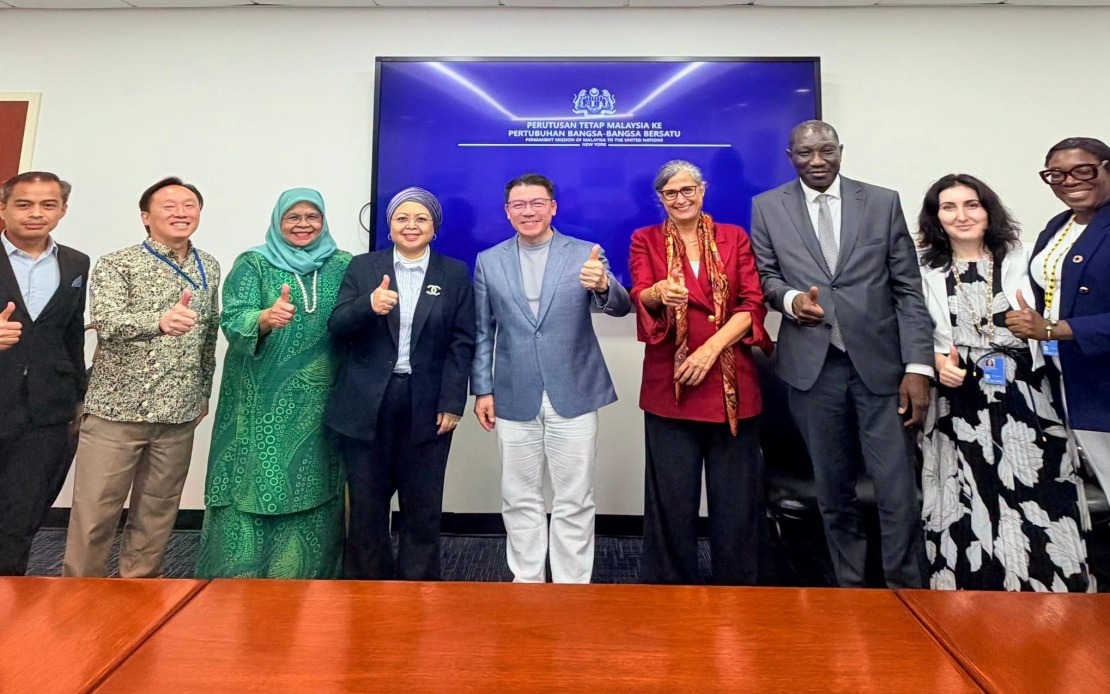
Malaysia has stepped up its advocacy for bolder international efforts to drive the implementation of the New Urban Agenda, warning that the window to deliver sustainable cities for the world's urban populations is rapidly closing. Housing and Local Government Minister Nga Kor Ming made the case during his participation in the High-Level Meeting on the Midterm Review of the New Urban Agenda at the United Nations Headquarters in New York on July 17, stressing that policymakers must move decisively beyond merely cataloguing progress and instead focus on producing meaningful, measurable outcomes for the billions residing in urban centres globally.
The minister's intervention at the UN gathering reflects Malaysia's deepening engagement with the international urban development agenda and its positioning as a voice for practical, achievable solutions within the Asia-Pacific region. His statement underscores a critical sentiment gaining traction among developing nations: that the 2030 deadline for achieving the Sustainable Development Goals leaves insufficient time for incremental approaches. With only four years remaining, Nga emphasised that the midterm review must serve as a turning point rather than a mere assessment document, compelling member states to translate high-level rhetoric into concrete policy shifts and investment decisions that will reshape how cities across the globe operate and expand.
As President of the UN-Habitat Assembly, Nga articulated Malaysia's vision for urban development centred on three interconnected challenges that demand immediate attention. The global housing shortage, which continues to displace millions and fuel informal settlements in cities across Asia, Africa and Latin America, remains perhaps the most visible symptom of inadequate urban planning and investment. Equally pressing is the digital divide that separates wealthy urban centres from marginalised neighbourhoods, limiting access to services, economic opportunities and information. Climate resilience has emerged as perhaps the most urgent imperative, with Southeast Asian cities increasingly vulnerable to flooding, typhoons and sea-level rise. Malaysia's call for ensuring that no community is sidelined in sustainable development reflects a recognition that urban transformation that benefits only affluent districts or commercial hubs ultimately fails to address the structural inequalities perpetuating poverty and exclusion within cities.
Malaysia's positioning within this global conversation is significantly strengthened by its articulation of a coherent domestic framework through the MADANI Economy initiative. By explicitly linking Malaysia's international advocacy to its own development strategy, the country demonstrates that sustainable urbanisation is not merely an aspirational global goal but a practical priority embedded in national policymaking. This approach lends credibility to Malaysia's calls for action, as other nations can observe a concrete example of how commitments translate into policy implementation and resource allocation at the domestic level.
Central to Malaysia's regional contribution is the Asia-Pacific Urban Action Platform, which the minister highlighted as a vital mechanism for operationalising the broader Sustainable Development Goals within the Asia-Pacific context. Rather than imposing one-size-fits-all solutions developed in distant forums, the platform creates space for countries to adapt global frameworks to local conditions, share learning across borders and co-finance infrastructure projects that benefit multiple economies. This approach acknowledges a fundamental reality: that cities in the Asia-Pacific region face distinct challenges shaped by rapid urbanisation, informal economies, climate vulnerabilities and varied governance capacities. The platform's emphasis on green infrastructure financing is particularly relevant for Southeast Asian nations seeking to balance development imperatives with environmental constraints.
Malaysia's track record in green building construction, with over 500 million square feet of green-indexed buildings already completed and more planned before 2030, provides tangible evidence of how governments can drive sustainable building practices through regulation and incentive mechanisms. This achievement is noteworthy not because it alone solves the region's urban sustainability challenges, but because it demonstrates that such targets are achievable within compressed timeframes when political commitment aligns with technical capacity and financial resources. Other countries observing Malaysia's experience can draw lessons about procurement policies, building code reform and the role of government facilities in spurring market transformation.
The minister's emphasis on political commitment as a foundational element reflects a sober assessment of why many urban development initiatives falter. Without sustained attention from senior elected officials and consistent funding allocations, even well-designed programmes struggle to survive shifts in government composition or compete for resources against more immediately visible spending priorities. Malaysia's model of combining strong political leadership with locally driven solutions and multi-stakeholder collaboration addresses this vulnerability by distributing ownership of urban agendas across government levels, civil society and communities themselves, making them more resilient to political discontinuity.
Malaysia's call for investment in climate-resilient infrastructure carries particular weight for Southeast Asia, a region confronting escalating climate impacts despite contributing relatively modestly to global emissions. Cities across Indonesia, the Philippines, Thailand and Vietnam face mounting adaptation costs that exceed the financial capacity of individual governments, necessitating regional cooperation on infrastructure standards, risk reduction knowledge and financing mechanisms. Green infrastructure, including urban forests, permeable pavements and constructed wetlands, offers co-benefits beyond climate resilience by improving air quality, reducing urban heat island effects and creating more liveable neighbourhoods, thereby addressing multiple urban challenges simultaneously.
The two-day gathering in New York brought together the diverse stakeholders whose engagement is essential for translating urban agendas into implementation: UN member state representatives, city governments, international development organisations and grassroots community groups. This convening reflected recognition that sustainable urbanisation requires coordination across multiple governance levels and sectors, a principle Malaysia has articulated through its emphasis on collaboration among governments, development partners and local constituencies. The diversity of participants also underscores the reality that cities themselves, as sub-national entities, are increasingly recognised as critical actors in global development frameworks, a shift from earlier approaches that treated urbanisation primarily as a national government responsibility.
For Malaysia and other developing nations in the Asia-Pacific, the outcomes of the midterm review carry implications extending well beyond diplomatic statements. The review period represents an opportunity to assess which components of the New Urban Agenda resonate with domestic priorities and which require recalibration. Malaysia's emphasis on delivering outcomes rather than merely refining frameworks suggests the country is positioning itself as a pragmatic partner in the global urban development agenda, willing to challenge grand pronouncements that lack implementable detail. This stance could enhance Malaysia's influence within subsequent negotiations as countries seek partners who combine ambition with realism about implementation constraints.
The minister's appeal to leave the high-level meeting with more than a renewed declaration speaks to a broader frustration with the gap between international agreements and ground-level change in cities. While declarations serve valuable functions in establishing norms and political cover for domestic reform efforts, they can become substitutes for the difficult work of sustained implementation, budget reallocation and institutional reform. Malaysia's framing challenges participants to consider concrete commitments: which governments will establish green financing mechanisms, which cities will adopt specific housing affordability targets, which countries will strengthen climate resilience standards for critical infrastructure. Without such specificity, even well-intentioned international gatherings risk becoming ceremonial exercises disconnected from the tangible improvements billions of urban residents require.
The contributions of the UN Secretary-General António Guterres, UN-Habitat Executive Director Anacláudia Rossbach and other international figures acknowledged by Nga underscore the multi-institutional nature of the global response to urbanisation challenges. No single organisation possesses the mandate, resources or expertise to address sustainable urbanisation comprehensively, necessitating coordinated engagement across development agencies, environmental bodies, humanitarian organisations and financial institutions. Malaysia's recognition of these diverse contributors reflects a sophisticated understanding that advancing the urban agenda requires mobilising the full institutional architecture of the international development system.
As Malaysia continues to advance its vision for sustainable urbanisation, the country faces an opportunity to translate its leadership position within the UN-Habitat Assembly into tangible benefits for Southeast Asian cities. The Asia-Pacific Urban Action Platform could become increasingly valuable as a vehicle for channelling climate finance, technology transfer and governance innovation to cities across the region. Malaysia's experience navigating rapid urbanisation, managing urban growth in environmentally sensitive areas and balancing development with sustainability offers valuable lessons for neighbouring countries confronting similar pressures. The next four years will test whether Malaysia and other advocates can indeed transform the urban development agenda from aspirational framework into the lived reality of inclusive, resilient and sustainable cities for the billions who call urban areas home.

