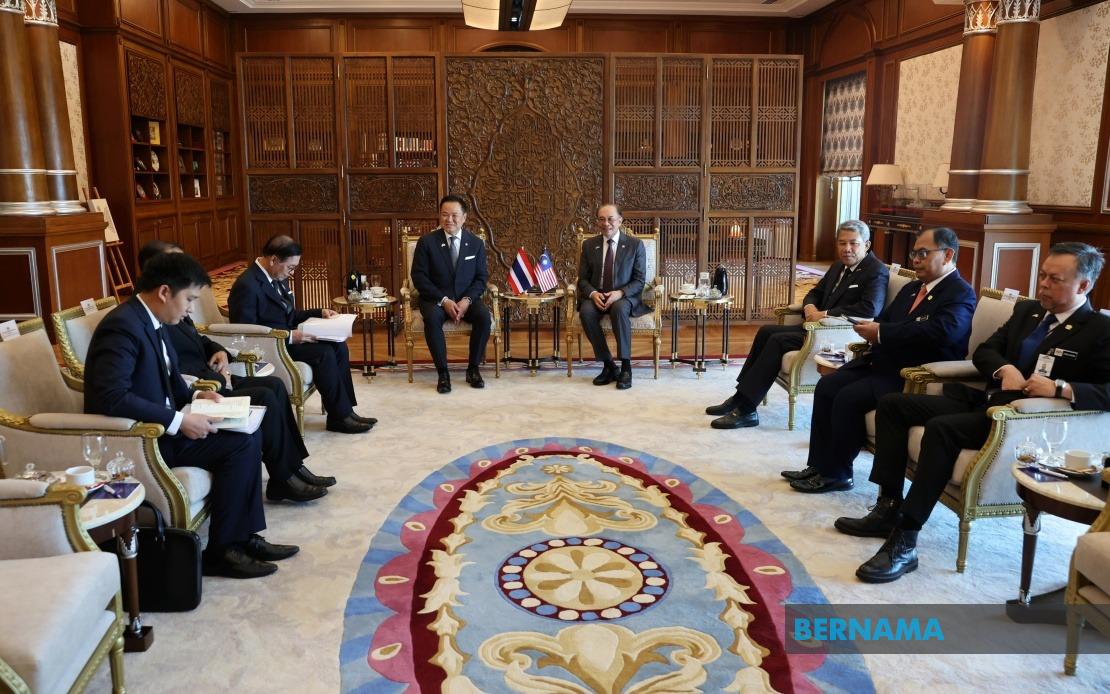
Malaysia has doubled down on its commitment to resolving the protracted Myanmar conflict through dialogue and diplomatic engagement rather than confrontation, with Prime Minister Datuk Seri Anwar Ibrahim underlining the country's belief that Myanmar's people should have the autonomy to shape their political future. Speaking during bilateral discussions with Thai Prime Minister Anutin Charnvirakul at Putrajaya on Thursday, Anwar articulated Malaysia's conviction that sustained constructive engagement remains the most viable pathway forward for addressing the humanitarian and political crisis that has gripped the Southeast Asian nation since the military seizure of power in 2021.
Anwar's restatement of Malaysia's position comes at a time when ASEAN continues grappling with deepening fractures over how to manage the Myanmar crisis. The regional bloc, which has placed Myanmar high on its agenda since the coup, has struggled to implement meaningful progress on its Five-Point Consensus—the diplomatic framework designed to facilitate dialogue between the junta and opposition forces. Malaysia's persistent emphasis on dialogue-based solutions reflects both its commitment to ASEAN consensus-building and its recognition that hard-line approaches have yielded limited results in persuading the military government to alter course.
Crucially, Anwar identified Thailand as occupying a uniquely advantageous position to advance mediation efforts, given Bangkok's geographical proximity to Myanmar and its established diplomatic relationships across the region. This assessment reflects a strategic reality that often goes unstated in official discourse: Thailand's position as Myanmar's direct neighbour, combined with its long history of border management and cross-cultural engagement, potentially equips it with channels and leverage unavailable to other ASEAN members. By publicly highlighting Thailand's role, Anwar signalled Malaysia's willingness to support creative diplomatic solutions that leverage individual member states' strengths rather than insisting on uniform ASEAN-wide approaches.
Thailand's own stakes in the Myanmar situation are substantial and multifaceted. Beyond humanitarian concerns regarding the displacement of populations and regional stability, Thailand faces direct consequences from instability across its borders, including refugee flows, cross-border armed movement, and economic disruption to trade networks. Anutin's visit to Malaysia, his first bilateral engagement with Kuala Lumpur since his reappointment in March 2026, provided an opportune moment for both nations to align on how they might coordinate pressure for a negotiated settlement that respects Myanmar's sovereignty while addressing the legitimate concerns of the international community.
The emphasis on allowing Myanmar's population self-determination carries particular significance given the complexity of Myanmar's ethnic landscape and historical grievances. Myanmar's diverse population encompasses numerous ethnic minorities, each with competing interests and historical memories of conflict. Malaysia's framing of the resolution process as fundamentally about respecting the Burmese people's agency implicitly acknowledges that external pressure alone cannot resolve such deeply rooted tensions. Instead, any sustainable solution must emerge from within Myanmar itself, though international actors can create conditions conducive to dialogue.
During the same engagement, Anwar also addressed the separate issue of the Thailand-Cambodia border dispute, expressing Malaysia's appreciation for Thailand's commitment to maintaining peace along that frontier. This gesture reflected Malaysia's understanding that regional stability depends on managing multiple concurrent tensions simultaneously. While the Myanmar crisis captures greater international attention, the Thailand-Cambodia border situation possesses its own potential for destabilisation if left unresolved, making it essential for ASEAN countries to signal collective commitment to peaceful dispute resolution across all flashpoints.
The bilateral talks also set the stage for a concrete economic initiative designed to deepen Malaysia-Thailand integration. On Friday, both Prime Ministers are scheduled to jointly open the connecting road infrastructure linking the Immigration, Customs, Quarantine and Security (ICQS) Complex in Bukit Kayu Hitam, Kedah, with Thailand's Customs, Immigration and Quarantine (CIQ) Complex in Sadao. This infrastructure project embodies the practical benefits of sustained bilateral cooperation and demonstrates how regional stability can translate into tangible economic gains through enhanced trade facilitation and cross-border cooperation.
The Bukit Kayu Hitam-Sadao corridor represents one of Malaysia's most important land checkpoints with Thailand and handles significant volumes of bilateral trade. Streamlining customs procedures and security protocols through integrated facilities reduces bottlenecks, lowers transaction costs for businesses, and enhances supply chain efficiency across both nations. For Malaysian exporters and Thai importers particularly, such infrastructure improvements create competitive advantages in accessing broader ASEAN and global markets. The timing of this opening alongside high-level political discussions underscores how Malaysia and Thailand are leveraging diplomatic momentum to advance mutual prosperity.
For Malaysia specifically, strengthening ties with Thailand assumes heightened importance given the evolving geopolitical landscape in Southeast Asia. Both nations share interests in maintaining ASEAN's centrality in regional affairs, preserving the rules-based international order, and managing the influence of external powers. Thailand's willingness to engage constructively on Myanmar reflects a broader regional understanding that the bloc's credibility depends on demonstrating capacity to resolve internal crises through consensus-based approaches rather than allowing external parties to arbitrate regional conflicts.
Anwar's diplomatic messaging throughout these engagements emphasises consistency: Malaysia remains committed to ASEAN solidarity, respects national sovereignty as a foundational principle, and believes dialogue yields superior outcomes to confrontation. This approach, while sometimes criticised as insufficiently forceful by human rights advocates, reflects Malaysia's calculation that maintaining ASEAN unity and keeping diplomatic channels open with Myanmar's military government preserves opportunities for eventual political transition. Conversely, isolationist or punitive approaches risk further entrenching the junta and severing communication lines through which constructive pressure might eventually be exerted.
Looking forward, Malaysia's continued emphasis on dialogue and engagement strategies will likely influence how ASEAN collectively responds as the Myanmar situation evolves. Should violence escalate or humanitarian conditions deteriorate dramatically, pressure within ASEAN for more assertive positions will intensify, testing Malaysia's commitment to its stated approach. Simultaneously, how effectively Thailand exercises its mediatory potential may determine whether dialogue-based strategies ultimately prove viable or whether the regional bloc must eventually contemplate more confrontational postures.
The bilateral engagement between Malaysia and Thailand demonstrates that regional powers remain committed to managing Myanmar's crisis through diplomatic channels rather than allowing it to fragment ASEAN or invite greater external intervention. By publicly affirming Malaysia's support for Thailand's role and reiterating faith in dialogue-based approaches, Anwar signalled that Southeast Asian nations continue seeking solutions rooted in regional agency and consensus rather than external pressure or military intervention.

