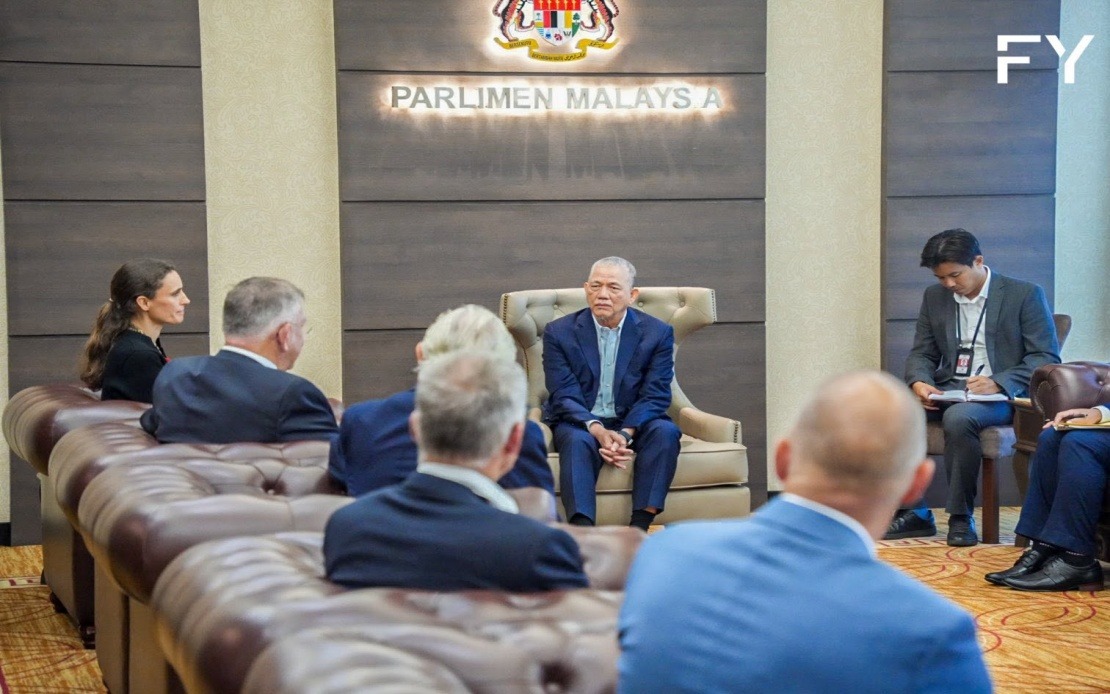
Malaysia is stepping up efforts to attract German small and medium enterprises into the country's expanding green technology sector, with Deputy Prime Minister Datuk Seri Fadillah Yusof signalling renewed commitment to deepening bilateral economic ties during a recent parliamentary meeting with Germany's Ambassador to Malaysia, Silke Riecken-Daerr, and delegates from the German SME Business Association.
Fadillah's statement reflects Malaysia's strategic pivot towards sustainable development investment, positioning renewable energy, water treatment infrastructure and environmental technologies as priority sectors for foreign direct investment. The emphasis on German SME participation specifically targets a demographic of businesses renowned for precision engineering, process innovation and environmental responsibility—qualities increasingly demanded as Malaysia accelerates its transition towards carbon neutrality and circular economy principles aligned with its 2050 net-zero ambitions.
The depth of existing German-Malaysian commercial engagement provides a solid foundation for expanding cooperation. Over 800 German companies currently maintain operations across Malaysia in diverse sectors, making Germany a consistently significant investor and manufacturing partner. This established presence spans mechanical engineering and advanced manufacturing technologies, sectors where German firms have historically contributed substantial technical expertise and production capacity to Malaysia's industrial base. The presence of such a substantial German business community suggests existing supply chains, regulatory familiarity and workforce relationships that new green technology ventures can leverage for faster market entry and operational scaling.
Beyond direct capital investment, the bilateral discussions underscored mutual interest in knowledge transfer and human capital development. Germany's globally respected Technical and Vocational Education and Training system represents decades of refinement in producing skilled workforces responsive to industrial demands. Malaysia, facing competitive pressures in attracting and retaining talent for advanced manufacturing and emerging industries, sees strategic value in adapting German TVET methodologies and institutional frameworks. Such collaboration could reshape how Malaysian vocational institutions train technicians for renewable energy installation, maintenance and repair roles—professions where skills shortages currently constrain sector growth across Southeast Asia.
The timing of this engagement reflects broader regional dynamics shaping investment patterns. Southeast Asian economies are increasingly competing for German capital as companies diversify supply chains away from China and seek manufacturing hubs with strong governance, intellectual property protections and workforce stability. Malaysia's position as an established industrial base with existing German business networks positions it advantageously against regional competitors seeking similar foreign direct investment. By actively cultivating SME partnerships in green sectors, Malaysia signals commitment to environmental standards that increasingly influence corporate investment decisions among European businesses subject to stricter ESG compliance requirements.
Water management and treatment capabilities represent a particularly strategic focus area. Southeast Asia faces mounting freshwater stress as rapid urbanisation and climate change intensify demand for reliable water infrastructure. German expertise in water purification, treatment technologies and sustainable management systems addresses a genuine regional need. Malaysian municipalities and industrial operators seeking to upgrade aging infrastructure or meet stricter environmental standards represent substantial market opportunities for German SMEs offering innovative solutions. Investment in this sector creates dual benefits: immediate revenue opportunities for German firms while simultaneously building Malaysian institutional capacity in essential infrastructure sectors.
The emphasis on green technology cooperation also reflects Malaysia's positioning within global climate finance flows and international investment frameworks increasingly rewarding countries demonstrating environmental commitment. As multinational enterprises face shareholder pressure and regulatory requirements to source from climate-conscious suppliers and invest in sustainable operations, Malaysia's explicit embrace of green technology investment signals market readiness. German SMEs seeking to meet EU carbon accounting standards and ESG targets may view Malaysia partnerships as strategic pillars of their global sustainability strategies, particularly for manufacturing and resource processing operations requiring geographic diversification.
Fadillah's confidence in strengthened bilateral relations rests partly on institutional frameworks already supporting German-Malaysian engagement. Existing business councils, trade associations and government-to-government channels facilitate communication and reduce transaction costs for new ventures. However, deepening SME-level partnerships requires attention to persistent challenges including regulatory clarity, intellectual property enforcement and skilled labour availability. German businesses evaluating Malaysian green technology investments will conduct rigorous assessments of these operating environment factors alongside financial returns.
The vocational training dimension extends beyond individual skill development to affect Malaysia's competitive positioning in attracting knowledge-intensive industries. Countries excelling in TVET systems generate workforce advantages attracting businesses requiring high-precision manufacturing, quality assurance expertise and continuous innovation. By adopting German methodologies, Malaysia could enhance its appeal to advanced manufacturing firms valuing technical competence and production reliability. This capability building contributes to Malaysia's broader transformation agenda shifting from commodity-dependent manufacturing towards higher-value industrial activities.
Regional implications merit attention as well. ASEAN neighbours including Thailand, Vietnam and Indonesia actively pursue similar German investment partnerships. Malaysia's success in securing German SME commitments in green technology strengthens its economic standing within the bloc and reinforces its reputation as a preferred manufacturing and technology hub. Conversely, if competing nations prove more successful in attracting German green technology investment, Malaysia risks falling behind in establishing expertise and supply chains in sectors increasingly defining industrial competitiveness.
Looking forward, translating diplomatic expressions of interest into tangible investment flows requires concrete policy support and regulatory streamlining. German SMEs evaluating Malaysian opportunities will assess whether government commitments materialise as simplified investment processes, infrastructure support and skilled labour availability. Public-private partnerships linking vocational institutions with German manufacturing firms could accelerate knowledge transfer while building domestic capabilities. Additionally, incentive frameworks specifically targeting green technology and renewable energy projects may prove decisive in competition with other investment destinations.