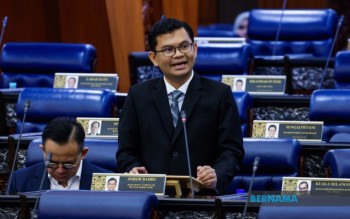
Malaysia's government has mobilised a substantial policy response to insulate the nation from the ongoing turbulence in global supply chains, Economy Minister Akmal Nasrullah Mohd Nasir told Parliament this week. The administration has either completed or is actively pursuing 120 distinct interventions approved by the National Economic Action Council, demonstrating what officials characterise as a methodical approach to economic crisis management. Of these measures, 27 have reached full implementation while 93 remain under active execution, indicating both the breadth of the government's engagement and the ongoing nature of the challenge.
The breadth of this intervention speaks to the sophistication of Malaysia's crisis response architecture. Rather than relying on ad-hoc measures, the government has embedded its supply chain mitigation efforts within the formal structures of the MTEN, ensuring that decisions receive regular scrutiny and adjustment based on evolving conditions. This institutional embedding provides continuity across political cycles and ministerial changes, a structural advantage for long-term economic management that many regional peers struggle to maintain.
The interventions span multiple economic tiers, with the government explicitly prioritising protection for vulnerable segments of the business landscape. Micro, small and medium enterprises occupy particular prominence in this calculus, as these organisations typically lack the financial buffers and diversified supply networks available to larger corporations. By targeting support towards MSMEs alongside measures protecting the general public, the government is attempting to prevent supply chain pressures from cascading into unemployment and social strain, a politically astute recognition that economic resilience depends on maintaining viability across the entrepreneurial ecosystem.
Critically, Akmal Nasrullah's parliamentary statement reveals that policymakers have adopted a long-term perspective on the crisis. The government has explicitly rejected the premise that near-term resolution is achievable, instead positioning its interventions as a multi-year holding pattern while global conditions normalise. This realistic framing contrasts with more optimistic international forecasts and reflects Malaysia's experience with previous supply shocks. Energy markets, which have emerged as a particular flashpoint for price volatility and scarcity, are not expected to stabilise meaningfully until the third quarter of 2026 at the earliest—a timeline suggesting Malaysian households and businesses should prepare for another two to three years of elevated uncertainty.
The minister's acknowledgement that energy price volatility will likely persist for one to two additional years carries significant implications for Malaysian cost structures. Energy comprises a substantial input for Malaysian manufacturing, from petrochemicals through semiconductor fabrication to food processing. Sustained price elevation could compress margins across these sectors unless offset by productivity gains or demand reductions, creating pressure for either consumer price increases or reduced competitiveness in export markets. The government's interventions must therefore address not merely immediate shortages but the structural erosion of Malaysian firms' competitive positioning during an extended crisis period.
Geopolitical considerations underpin much of this uncertainty. The minister's conditional language—that energy stabilisation depends on "geopolitical stability and the normalisation of trade routes"—obliquely references the tensions that have fractured global commerce. For Malaysia, positioned as a trading nation dependent on reliable shipping through contested waterways and integrated into supply chains that span regions experiencing heightened tensions, geopolitical risks impose constraints that conventional economic policy cannot fully overcome. The government's acknowledgement of these factors demonstrates sophisticated understanding that supply chain management now requires simultaneous attention to diplomatic and security dimensions.
The implementation pace, with 27 of 120 measures fully executed after several months, suggests a methodical rather than frantic approach. This measured tempo carries trade-offs: it reduces the risk of maladaptive policies introduced in crisis panic, yet it also means that benefits from these interventions may accumulate slowly relative to the pressure facing affected populations and businesses. The 93 measures in progress represent a significant pipeline of potential impact, but their drawn-out execution may test public patience if shortages persist or prices remain elevated.
The government's insistence on data-driven management and structured monitoring through MTEN provides a framework for adaptability. Rather than locking policymakers into predetermined responses, this approach permits course correction as global conditions evolve and domestic impacts become clearer. However, this flexibility depends on the quality of information flowing through MTEN and the political willingness to adjust course even when prior commitments must be abandoned. Malaysian experience with previous crises suggests that institutional rigidity sometimes outweighs flexibility in practice.
Akmal Nasrullah's emphasis on stakeholder cooperation underscores that government measures alone cannot sustain supply chains or control prices. Manufacturers must adapt sourcing strategies, retailers must manage inventory rationally, and workers must accept temporary wage pressures or reduced hours without triggering social discord. This cooperation cannot be simply mandated; it requires that public confidence in government management remains sufficiently intact that stakeholders view compliance as rational self-interest rather than imposed sacrifice. The minister's careful framing—vigilant but not alarmist, realistic but not defensive—appears calibrated to maintain this balance, though success ultimately depends on whether actual outcomes validate the government's confidence.
The broader strategic implication of Malaysia's response is that the nation is positioning itself neither as a passive victim of global disruption nor as an actor attempting to buck systemic constraints. Instead, the government presents itself as a prudent manager navigating unavoidable headwinds through judicious intervention and transparent communication. For Malaysian businesses and households, this signals that the worst consequences of global supply disruption will be buffered by state support, yet also that normalcy should not be expected soon. This manages expectations downward while preserving room for pleasant surprises if global conditions improve faster than current forecasts suggest.

