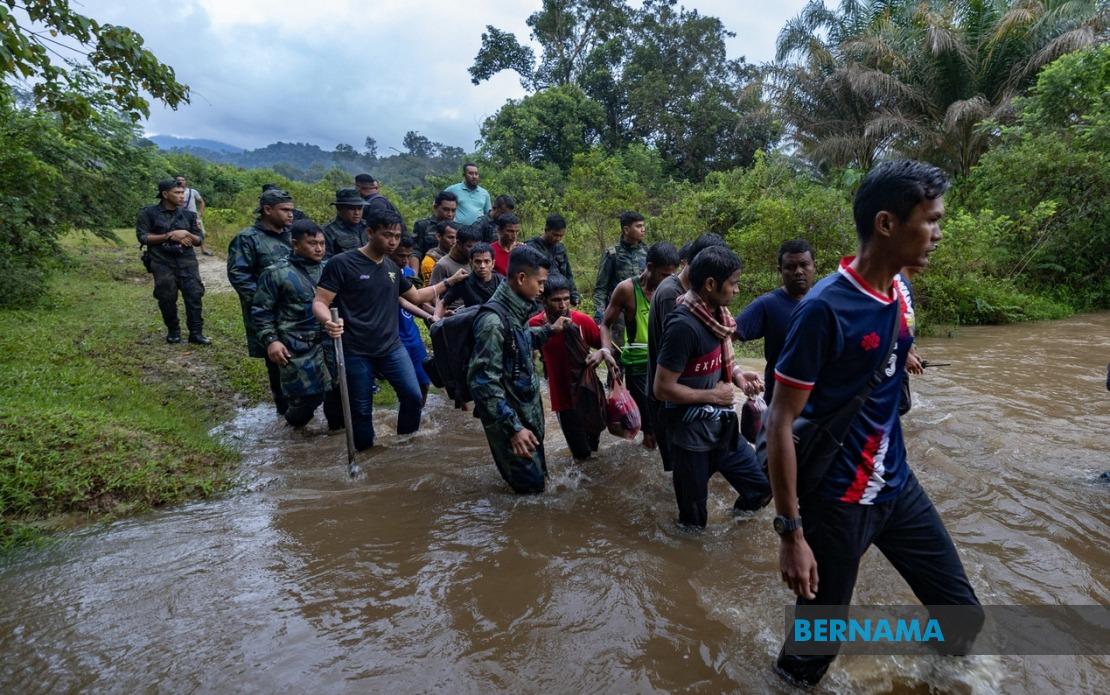
Malaysia has reaffirmed its determination to deepen partnerships with both ASEAN member states and the United Nations High Commissioner for Refugees in confronting the humanitarian dimensions of the Rohingya crisis. Deputy Foreign Minister Datuk Lukanisman Awang Sauni outlined this commitment during a Special Chamber session of the Dewan Rakyat, emphasizing that the country intends to pursue a strategic and comprehensive framework that moves beyond purely reactive measures to address one of the region's most pressing humanitarian emergencies.
The Rohingya displacement represents a complex challenge that transcends Myanmar's borders, creating cascading consequences throughout Southeast Asia. The flow of stateless refugees has triggered interconnected security concerns including irregular maritime migration, organised human trafficking networks, and broader destabilisation risks that threaten regional stability. Malaysia, as a frontline country hosting significant Rohingya populations, carries both the humanitarian burden and strategic responsibility of managing these cross-border implications. Datuk Lukanisman emphasised that addressing this crisis demands recognition of how refugee movements inevitably intersect with transnational criminal activities and migration pressures that affect multiple nations simultaneously.
Malaysia's existing approach relies substantially on leveraging the ASEAN platform to advocate for a peaceful resolution within Myanmar itself. The country has consistently raised the Rohingya situation during ASEAN forums, pushing member states to acknowledge the scale of the crisis and the necessity for coordinated regional responses. Simultaneously, Malaysia maintains operational engagement with the UNHCR to deliver protection mechanisms and humanitarian assistance to Rohingya populations already settled within Malaysian territory. This dual-track strategy reflects an understanding that genuine progress requires both pressure for internal political change in Myanmar and practical support for displaced populations in the interim period.
However, Datuk Lukanisman acknowledged significant structural limitations constraining the effectiveness of current efforts. ASEAN's foundational principle of non-interference in member states' internal affairs, combined with its consensus-based decision-making requirements, substantially restricts the bloc's capacity to implement stronger collective measures against Myanmar. This institutional framework, designed to protect sovereignty across diverse member states, paradoxically weakens the organisation's ability to respond decisively to humanitarian emergencies. The consequence is that ASEAN can facilitate dialogue and soft pressure but struggles to enforce meaningful accountability or compel substantive policy changes regarding minority protection in Myanmar.
The UNHCR, despite its specialised humanitarian mandate, operates within equally circumscribed boundaries. The organisation possesses authority to deliver protection, medical care, education, and livelihood support to refugee populations, but lacks the political leverage to address the root causes driving displacement from Myanmar. UNHCR's institutional remit concentrates on managing the consequences of conflict rather than resolving underlying political grievances or negotiating the conditions necessary for sustainable repatriation. This functional division between humanitarian response and political resolution creates a situation where international efforts, however well-intentioned, remain fundamentally incomplete.
The practical consequence is that existing multilateral frameworks emphasise human rights protection and immediate humanitarian assistance rather than comprehensive solutions addressing the political dynamics within Myanmar. This orientation inevitably produces a reactive posture where the international community responds to humanitarian emergencies while the underlying political calculus that generates displacement remains unaltered. Malaysia finds itself managing the symptoms of a crisis whose root causes lie beyond the scope of humanitarian institutions and the political capacity of regional organisations bound by non-interference commitments.
Looking forward, Malaysia has indicated willingness to champion several strategic innovations. Strengthening responsibility-sharing mechanisms among ASEAN states represents one proposed avenue, implying efforts to distribute the burden of hosting and supporting Rohingya populations more equitably across the region rather than concentrating responsibility on Malaysia, Bangladesh, and a handful of other frontline countries. This approach acknowledges that the Rohingya crisis fundamentally represents a collective regional challenge rather than an isolated bilateral matter between Myanmar and individual host nations.
Crucially, Malaysia is also promoting exploration of political solutions that would facilitate voluntary, safe, and dignified return of Rohingya refugees to Myanmar. Such a pathway presupposes fundamental transformations within Myanmar's political system—specifically, the development of governance structures and security guarantees that can assure returnees of their physical safety, property rights, and recognition as legitimate residents. This represents an enormously ambitious undertaking, as it requires not merely humanitarian cooperation but substantive political dialogue addressing Myanmar's military dominance, ethnic tensions, and citizenship frameworks.
Malaysia's positioning of these initiatives within its broader international identity as a nation committed to peace, security, and humanitarian principles reflects awareness that the Rohingya crisis has become emblematic of how developing nations navigate between humanitarian responsibility and national security interests. For Malaysian policymakers, demonstrating leadership on refugee protection enhances the country's standing within international forums while managing the domestic complexities of hosting large displaced populations in urban centres. This balancing act requires simultaneously arguing for enhanced international responsibility-sharing while maintaining domestic political consensus regarding refugee presence within Malaysia.
The proposed deepening of ASEAN-UNHCR cooperation also carries implications for how Southeast Asia positions itself within global humanitarian governance. Rather than accepting that regional organisations remain subordinate to international humanitarian institutions, Malaysia's advocacy suggests potential for developing complementary frameworks where ASEAN leverages its political proximity to Myanmar alongside UNHCR's technical capacity. Such partnerships could theoretically enhance response effectiveness, though success depends ultimately on Myanmar's willingness to address governance deficits and ethnic sensitivities that generated displacement initially.
For Malaysian readers and regional observers, these developments signal that the Rohingya crisis remains firmly embedded within ASEAN's institutional agenda despite the bloc's capacity limitations. Malaysia's continued emphasis on both regional cooperation and international partnerships reflects pragmatism about the multifaceted nature of the challenge—requiring diplomatic pressure, humanitarian support, and burden-sharing simultaneously. Yet the acknowledgement of structural constraints also hints at the sobering reality that without fundamental political transformation within Myanmar, the international community's efforts remain perpetually positioned between urgent humanitarian necessity and limited capacity for achieving durable solutions.

