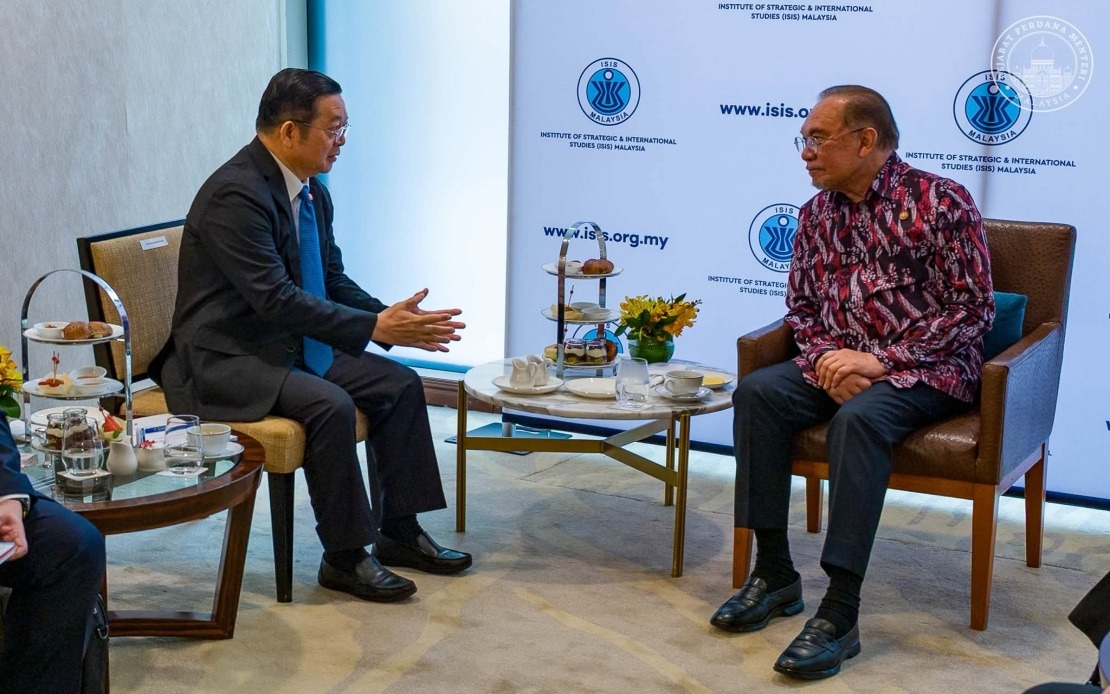
Prime Minister Datuk Seri Anwar Ibrahim has reaffirmed Malaysia's unwavering commitment to strengthening ASEAN as a resilient and inclusive regional community that can effectively serve the interests of its diverse membership. Speaking following a meeting with ASEAN Secretary-General Dr Kao Kim Hourn at the 39th Asia-Pacific Roundtable in Kuala Lumpur, Anwar emphasised the importance of Malaysia's constructive engagement in advancing the bloc's strategic agenda during a period of unprecedented regional complexity.
The timing of this commitment carries particular significance, arriving as ASEAN navigates a confluence of challenges that threaten regional stability and prosperity. The premier's remarks underscored Malaysia's recognition that the association's cohesion depends on sustained multilateral dialogue and coordinated policy responses to transnational issues that transcend individual member states' capabilities. By framing Malaysia's role in explicitly constructive terms, Anwar signalled his administration's intention to serve as a stabilising force within the 10-member bloc rather than pursuing narrower bilateral advantages.
During his engagement with the ASEAN Secretary-General, the conversation ranged across multiple critical policy domains reflecting the bloc's current preoccupations. The discussion encompassed the deteriorating humanitarian situation in Myanmar, where the military junta's control and ongoing civil strife continue to complicate regional responses and threaten ASEAN's credibility as a diplomatic player. This remains perhaps the most intractable issue facing the organisation, testing its commitment to the principle of non-interference against mounting pressure from international actors to take stronger positions.
The South China Sea featured prominently in their exchanges, reflecting Malaysia's direct stakes in maritime security and freedom of navigation within waters that remain geopolitically contested. As a coastal nation with territorial claims in the disputed waterway, Malaysia's perspective carries weight within ASEAN deliberations on this issue. The recent intensification of incidents involving major powers underscores why this domain demands sustained attention and careful diplomatic management to prevent escalation that could draw the region into great power competition.
Artificial intelligence capabilities emerged as a newer priority in their discussion, highlighting ASEAN's recognition that technological leadership and governance frameworks around emerging technologies will shape regional competitiveness and developmental trajectories. The bloc's members recognise that without coordinated approaches to AI regulation and adoption, they risk fragmentation or marginalisation in a technology-driven global economy. Malaysia's positioning within this conversation reflects broader awareness that Southeast Asia must proactively shape AI governance rather than passively absorbing external frameworks.
Timor-Leste's full accession to ASEAN, completed in 2023, introduces fresh dynamics that require careful management. Anwar's reference to navigating the post-accession phase indicates recognition that integrating a new member—particularly one with distinct historical experiences and security concerns—demands sustained attention and capacity-building support. The implications extend beyond bilateral Malaysia-Timor-Leste relations to questions of how ASEAN as an institution absorbs and accommodates new members' priorities while maintaining organisational coherence.
The ASEAN Community Vision 2045 implementation agenda represents the bloc's medium-term strategic roadmap for deepening integration across political-security, economic, and socio-cultural pillars. Anwar's emphasis on this framework suggests Malaysia views sustained progress on concrete initiatives—from connectivity infrastructure to people-to-people exchanges—as essential to preserving ASEAN's relevance and legitimacy among constituent populations increasingly buffeted by globalisation.
The West Asia conflict's regional implications demand ASEAN's serious consideration given potential spillover effects through terrorism, refugee flows, arms trafficking, and religious polarisation. Malaysia, with its significant Muslim population and regional diplomatic influence, recognises particular responsibility for managing these implications constructively. Anwar's inclusion of this issue in his discussion with the Secretary-General reflects awareness that ASEAN cannot remain entirely insulated from global conflicts, particularly those affecting populations and territories with whom regional societies maintain cultural and religious connections.
Anwar's emphasis on upholding ASEAN principles—unity, centrality, and close cooperation—suggests concern that centrifugal forces may be testing the bloc's foundational commitments. Regional great power competition, divergent economic interests, and competing security partnerships among members all create pressures toward fragmentation. By explicitly reaffirming these principles, Malaysia signals that it views institutional preservation as prerequisite for addressing any individual regional challenge effectively. A fractured ASEAN would lack the collective voice necessary to negotiate with major powers or address transnational problems requiring coordinated responses.
The broader context encompasses ASEAN's struggle to maintain relevance as an institution amid shifting global dynamics. The bloc's consensus-based decision-making processes, while valuing inclusivity, sometimes produce lowest-common-denominator outcomes that frustrate member states seeking more assertive positions. Malaysia's constructive engagement rhetoric suggests an attempt to balance respect for ASEAN mechanisms with recognition that the organisation must evolve to meet contemporary challenges whilst preserving its fundamental character as a forum for regional dialogue and cooperation.
For Malaysia specifically, leadership of ASEAN engagement carries both opportunities and constraints. Anwar's positioning represents an attempt to project Malaysia as a responsible regional stakeholder committed to inclusive multilateralism rather than unilateral assertion of interests. This approach distinguishes Malaysia from some regional actors pursuing more confrontational strategies whilst acknowledging that legitimate Malaysian interests—in maritime security, economic opportunity, and religious-cultural influence—require platforms for advancement.
Looking forward, Malaysia's continued constructive role will be tested through concrete contributions to ASEAN initiatives addressing Myanmar's crisis, South China Sea management, technology governance, and development equity. The gap between rhetorical commitment and substantive action often determines whether regional institutions maintain credibility and effectiveness. Malaysian policymakers recognise that their words must translate into diplomatic initiatives, capacity support for newer members, and willingness to moderate demands when collective ASEAN interests require compromise. The durability of ASEAN ultimately depends on member states like Malaysia continuously choosing institutional loyalty over narrow advantage-seeking.

