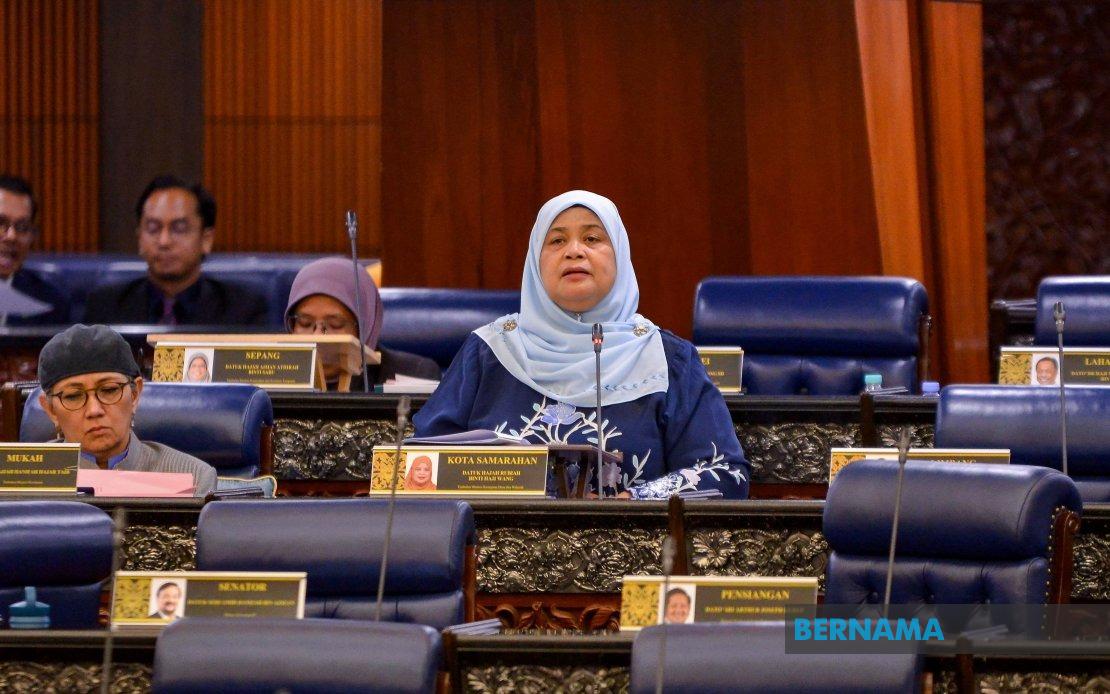
The Malaysian government has unveiled a comprehensive overhaul of its vocational education landscape through TVET 2.0, a framework designed to bridge the persistent gap between classroom learning and workplace demands. Speaking in Parliament, Deputy Minister Datuk Rubiah Wang outlined how direct recognition from major industry players will reshape how technical institutions validate and accredit their programmes. This shift represents a fundamental reorientation away from purely academic assessments toward competency standards that employers actually value when hiring. The transformation addresses a long-standing complaint from businesses that vocational graduates often lack the specific technical proficiency required for immediate deployment in modern workplaces.
Central to this reform is the principle of labour market alignment, which seeks to ensure that every curriculum module, training module, and assessment standard reflects genuine industry requirements rather than outdated or generic benchmarks. By embedding employer input directly into accreditation processes, Malaysia aims to reduce the skills mismatch that has plagued the sector and contributed to youth unemployment despite apparent labour shortages. Rubiah Wang emphasised that this market-responsive approach is not merely about filling job vacancies but about producing graduates capable of competing in global markets where technical credentials carry significant weight in recruitment decisions.
The government's vision extends beyond conventional technical training. Under TVET 2.0, Malaysia intends to cultivate techno-entrepreneurs and job creators who can catalyse economic activity in rural regions, where infrastructure and employment opportunities remain limited. This entrepreneurial dimension acknowledges that not all vocational graduates should necessarily become employees; many could establish small and medium enterprises that contribute to local economic resilience. The strategy thus positions TVET not as a pathway solely into existing job markets but as a vehicle for economic generation and rural development, linking vocational outcomes directly to broader national prosperity objectives.
A particularly distinctive initiative is the strengthening of the TVET Tahfiz programme, which integrates Islamic religious education with technical skills development. Rather than treating these domains as competing priorities, Malaysia is attempting to produce graduates who possess both spiritual grounding and cutting-edge technological competencies. This dual-focus model recognises Malaysia's Muslim-majority demographic and cultural values while ensuring that participants remain globally competitive. The programme reflects an understanding that modern education need not fragment spiritual and material development; instead, it can weave them together coherently.
The technological emphasis within TVET 2.0 aligns Malaysia with global economic trends and positions the nation to participate in high-value manufacturing and services. Institutions under the Ministry of Rural and Regional Development are now actively teaching artificial intelligence, Internet of Things connectivity, cloud computing platforms, cybersecurity protocols, automation systems, robotics applications, and smart manufacturing frameworks. These technologies are not peripheral luxuries but essential competencies in fourth industrial revolution contexts. Trainees who master these domains gain access to higher-wage employment and entrepreneurial opportunities that offer genuine pathways toward upward economic mobility.
The ministry has strategically distributed specialised centres across the country to build depth in critical technology domains. TVETMARA Petaling Jaya has been designated as a centre of excellence for Internet of Things applications, enabling focused curriculum development and instructor training in this expanding field. TVETMARA Besut similarly concentrates on cloud computing expertise, while TVETMARA Pasir MAS serves as Malaysia's Building Information Modelling hub. This dispersed specialisation approach prevents duplication, allows institutions to develop genuine centres of excellence rather than superficial offerings across numerous sites, and distributes advanced technological capacity more equitably across regions.
Beyond these MARA institutions, the German-Malaysian Institute plays a crucial role in transferring advanced German manufacturing methodologies and industrial technologies, particularly those developed under Industry 4.0 frameworks. Germany's manufacturing reputation provides valuable knowledge transfer opportunities, and Malaysia's partnership with German technical education reflects a deliberate strategy to absorb best practices from one of the world's leading vocational training systems. This international dimension ensures that Malaysian TVET does not develop in isolation but remains calibrated to global standards and contemporary practices.
At the higher education level, Universiti Kuala Lumpur serves as Malaysia's primary institution for advanced TVET qualifications, offering degree-level programmes such as the Bachelor of Artificial Intelligence Technology. This vertical integration ensures a clear progression pathway from entry-level vocational certificates through to bachelor's degrees, allowing high-performing graduates to advance their qualifications while remaining within the TVET ecosystem. The availability of degree-level technical education removes artificial barriers between vocational and university pathways, recognising that the distinction between these tracks has become increasingly arbitrary in contemporary knowledge economies.
The accreditation transformation represents a philosophical shift in how Malaysia conceptualises educational quality and relevance. Rather than quality being determined primarily through internal academic processes and regulatory checklists, it increasingly derives from external validation by employers and industry bodies that actually utilise graduate skills. This externally-validated approach creates accountability mechanisms rooted in labour market outcomes rather than bureaucratic compliance. Institutions that fail to produce genuinely employable graduates will find it difficult to maintain accreditation status, creating powerful incentives for continuous curriculum renewal and instructor development.
For Malaysian policymakers, this TVET 2.0 framework addresses several interconnected challenges: youth unemployment, skills shortages reported by employers, regional economic inequality, and the need to position Malaysia advantageously within regional and global supply chains. By integrating industry recognition into accreditation systems, establishing specialised technology hubs, combining spiritual and technical education, and creating clear pathways to higher qualifications, the government has constructed a comprehensive strategy that moves beyond merely expanding vocational institution numbers toward fundamentally improving the quality and relevance of technical education outputs.
The success of this transformation will ultimately depend on sustained engagement from industry partners willing to invest time in curriculum co-design and competency validation. It will also require adequate funding for infrastructure, instructor training in rapidly evolving technologies, and mechanisms to update programmes continuously as workplace demands shift. Whether Malaysia can maintain this momentum and translate policy frameworks into tangible improvements in graduate employability will become apparent as TVET 2.0 implementation matures across institutions and cohorts.

