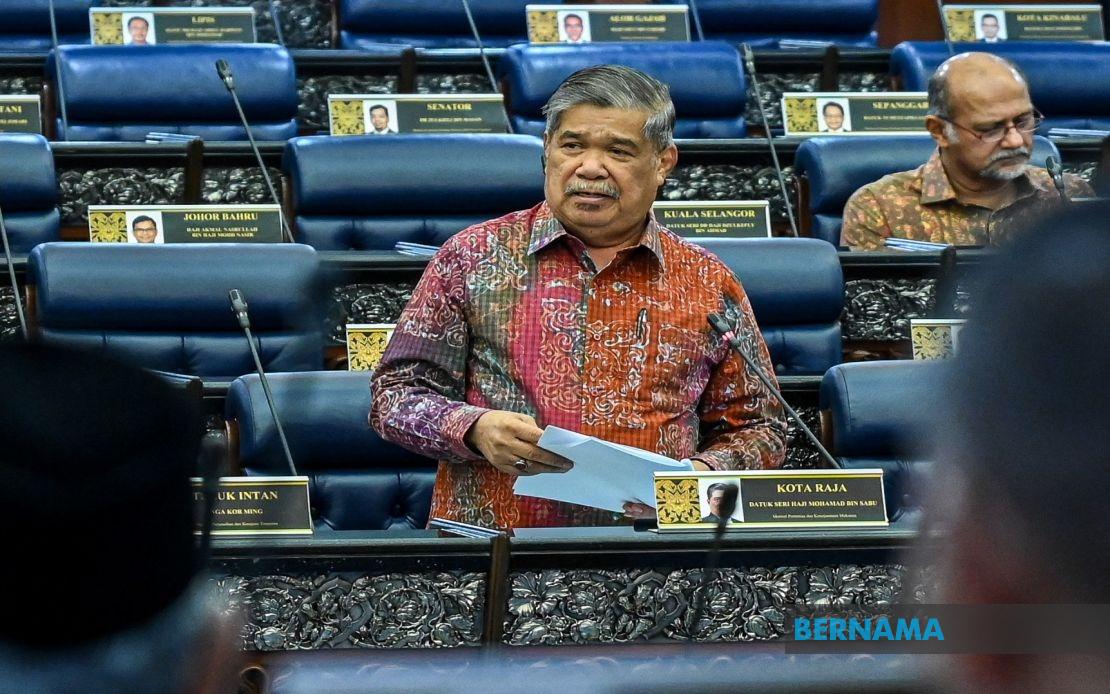
The Malaysian government has launched a structured approach to bring unlicensed fishermen into the formal regulatory system through a periodic regularisation programme designed to allocate licences vacated when existing permits are cancelled or expire. Agriculture and Food Security Minister Datuk Seri Mohamad Sabu announced the initiative in parliament, responding to concerns raised by lawmakers about the difficulties traditional coastal fishermen face when navigating the licensing framework.
The regularisation pathway provides opportunities for fishermen currently operating without proper documentation to formalise their status by submitting applications to their District Fisheries Offices. This mechanism represents a pragmatic middle ground between strict enforcement and outright amnesty, allowing individuals to transition into the legal fishing sector whilst ensuring government oversight of resource management and sustainability standards. The Fisheries Department has established specific eligibility criteria and conditions that applicants must meet, creating what the ministry characterises as a merit-based system for licence distribution.
Formalisation carries tangible benefits beyond mere legal compliance. Fishermen who obtain proper licences gain access to numerous government assistance programmes, credit facilities, and insurance schemes that remain unavailable to unlicensed operators. This structural incentive addresses a key challenge in fisheries governance throughout Southeast Asia: the difficulty of persuading informal sector participants to voluntarily enter regulated frameworks when doing so entails compliance costs without corresponding immediate benefits. By explicitly linking licence acquisition to concrete government support, Malaysia aims to make formalisation genuinely attractive rather than punitive.
The eligibility requirements reflect a careful balance between inclusivity and rigour. Applicants must be at least eighteen years old, maintain good health, and work primarily as fishermen rather than holding fishing licences as secondary income sources. Perhaps most significantly, pensioners may apply only if their monthly retirement income does not exceed RM2,200, a threshold designed to prioritise support for those genuinely dependent on fishing for subsistence rather than individuals using it for supplementary income. The programme also requires applicants to demonstrate ten years of residential confirmation from their fishing village head, ensuring deep community roots and verifiable fishing heritage.
Additional criteria demand that successful applicants demonstrate their commitment to fishing by operating at sea for at least one hundred twenty days annually. This requirement eliminates casual operators and focuses resources on individuals for whom fishing constitutes a genuine livelihood. Applicants must also secure endorsement from their State Fisheries Office, adding an institutional layer that allows regional authorities to assess local conditions and ensure that licences are distributed according to each state's ecological carrying capacity and resource management objectives.
Recent approval figures provide insight into the programme's scale. The Fisheries Department approved eight hundred licences nationwide during the previous year, compared to nine hundred fifteen the year before. These numbers suggest consistent demand for formalisation and indicate that the regularisation pathway remains relevant to fishing communities throughout the country. The year-on-year variations likely reflect fluctuations in licence cancellations rather than shifts in policy generosity, underscoring that the system responds to genuine vacancy creation rather than expanding total fishing capacity.
Parliamentary questioning revealed underlying anxieties within Malaysia's fishing sector regarding enforcement consistency and transparency. The member for Bukit Gantang raised specific concerns about enforcement actions against traditional coastal fishermen struggling with licensing compliance, prompting the minister to emphasise that flexibility exists within the existing framework. This exchange highlights an important governance tension: regulators must demonstrate both consistency and compassion when managing fishing communities that have historically operated informally and lack professional understanding of bureaucratic procedures.
The minister's response to supplementary questions regarding licence-issuing criteria acknowledged the legitimate demand for greater transparency. He undertook to conduct periodic reviews of eligibility standards to ensure that licences consistently reach individuals who genuinely depend on fishing and possess the necessary skills and experience. The minister also explicitly invited fishermen and community members to report suspected licence misallocation, indicating openness to external oversight and creating an accountability mechanism beyond mere departmental review.
This regularisation approach carries particular significance for Malaysian fisheries management at a time when regional stocks face mounting pressure from both commercial expansion and climate-related environmental changes. By bringing unlicensed operators into a documented, regulated framework, authorities gain improved visibility over fishing effort and catch volumes. This data foundation proves essential for implementing science-based catch limits and seasonal closures. Without comprehensive licensing records, fisheries managers operate with incomplete information, rendering sustainability policies less effective than intended.
The programme also addresses a secondary but important governance challenge: the need to maintain public confidence in regulatory fairness. When unlicensed operators face enforcement without access to formal pathways toward compliance, legitimacy questions emerge. A regularisation programme demonstrates that the state acknowledges the challenges facing informal operators and offers genuine alternatives to prohibition. This approach has proven effective in other Southeast Asian jurisdictions attempting to formalize informal fisheries sectors.
For Malaysian fishing communities specifically, access to formalisation carries implications beyond simple legal status. Licensed fishermen qualify for bank loans, insurance products, and government subsidy schemes that unlock investment capital for boat repairs, equipment upgrades, and infrastructure improvements. These opportunities accumulate over years, potentially enabling generational improvement in incomes and working conditions. The government's framing explicitly emphasises these welfare aspects alongside compliance objectives, signalling that regularisation serves fishermen's interests rather than merely expanding state control.
Looking forward, the effectiveness of this regularisation programme will depend substantially on administrative implementation. Fisheries Department staff at the district and state levels must process applications promptly, communicate clearly about eligibility criteria, and ensure that decisions are explained transparently. Given that many traditional fishermen lack formal education or bureaucratic experience, the onus rests on government institutions to simplify processes and provide adequate guidance. The minister's invitation for community complaints suggests awareness of this implementation challenge, though converting that recognition into systematic improvements requires sustained institutional effort and resource allocation.
The regularisation pathway represents an evolution in how Malaysia approaches informal sector governance, moving beyond prohibition toward structured integration. By creating legitimate pathways for unlicensed operators to formalise their activities whilst implementing meaningful eligibility criteria, the government attempts to serve multiple objectives simultaneously: expanding regulatory coverage, improving fisheries data, enhancing compliance, and supporting community welfare. Whether this balanced approach succeeds depends on consistent implementation and genuine commitment to assisting those who navigate toward formalisation.

