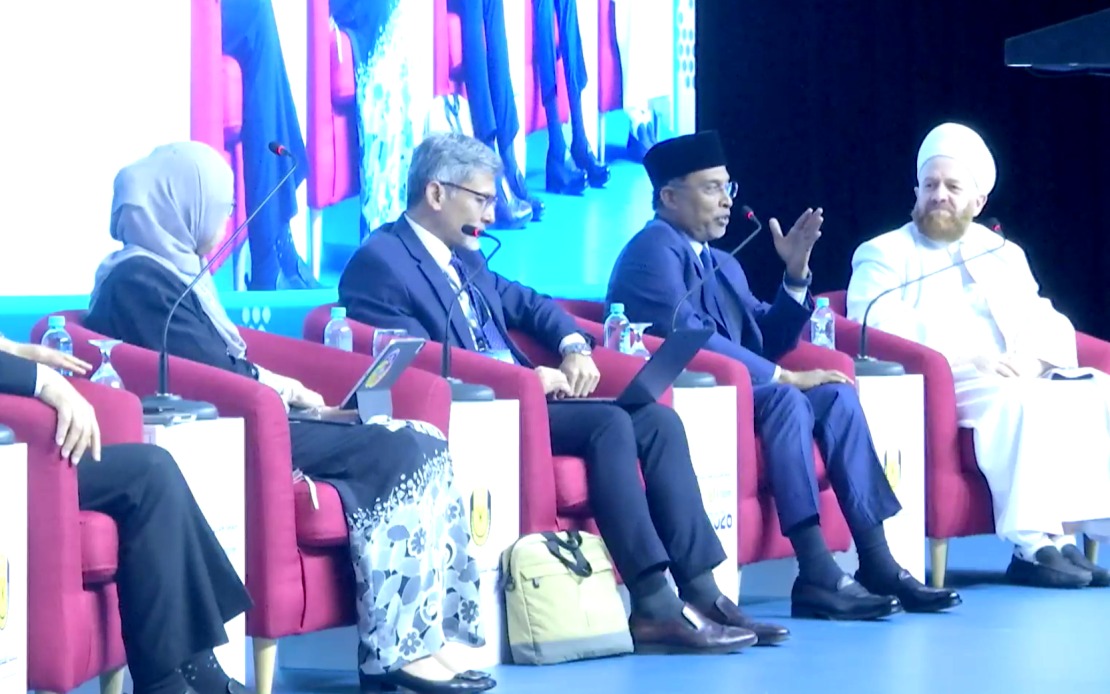
Higher Education Minister Datuk Seri Dr Zambry Abd Kadir has underscored the strategic necessity of embedding artificial intelligence and cutting-edge technologies within Malaysia's higher education landscape, positioning such integration as central to cultivating the skilled workforce and intellectual resources required to manage evolving international complexities. Speaking at the 8th World Conference on Islamic Thought and Civilisation in Ipoh on July 21, Zambry articulated a vision where technological adoption and human capability development advance in tandem rather than competing priorities.
The Ministry of Higher Education has charted an ambitious trajectory through a 10-year developmental roadmap spanning 2026 to 2035, designed to harmonise technological progress with comprehensive human capital formation while preserving foundational moral and ethical principles. This framework represents a deliberate policy pivot toward addressing what policymakers increasingly recognise as a critical gap: institutions producing graduates proficient in emerging technologies but potentially deficient in ethical reasoning and character formation.
Zambry's remarks reflect growing ministerial concern that traditional engineering and science curricula alone cannot adequately prepare students for increasingly complex technological and societal challenges. As disciplines including quantum computing and artificial intelligence accelerate in sophistication, coupled with emerging fields such as planetary health research, universities face mounting pressure to rethink pedagogical approaches and content sequencing. The minister stressed that moral reasoning and ethical frameworks must be seamlessly woven throughout academic programmes rather than treated as peripheral add-ons or standalone modules.
A significant dimension of this strategic shift involves transitioning institutional focus from the established STEM paradigm—Science, Technology, Engineering and Mathematics—towards an expanded STEAM framework that incorporates arts, design thinking and liberal studies. Zambry illustrated this approach by referencing Universiti Teknologi Petronas, where engineering students are required to complete coursework extending beyond technical domains to cultivate interpersonal skills, aesthetic awareness and philosophical grounding. This model recognises that technological competence divorced from humanistic understanding produces incomplete professionals.
The minister articulated a fundamental philosophical distinction between information delivery and character development, suggesting that artificial intelligence, despite its capacity for rapid computation and precise analysis, remains structurally incapable of addressing the deeper dimensions of human formation. While algorithms can process data and generate solutions with remarkable speed and accuracy, they cannot develop the ethical discernment, integrity and conscience that define holistic personal development. This observation carries particular weight for Malaysia, a nation navigating plural religious and cultural contexts where such shared values become increasingly essential.
Zambry's emphasis on critical thinking as an educational cornerstone suggests movement away from knowledge memorisation and rote application toward analytical capabilities and reasoned judgment. By coupling technical proficiency with exposure to humanities disciplines, universities could theoretically produce graduates capable of interrogating the societal implications of their technical work rather than simply executing technical tasks. This aligns with international discourse around responsible AI development and technology ethics that has gained prominence following high-profile algorithmic failures and unintended consequences of automated systems.
The 10-year blueprint's placement of humanity at its conceptual centre distinguishes this policy framework from purely technocratic approaches adopted elsewhere. Rather than viewing education as a mechanism for rapidly upskilling workforces to match technological demands, the ministry proposes education as fundamentally concerned with developing integrated human beings—individuals possessing both technical capability and moral reasoning. This positioning potentially addresses longstanding concerns within Malaysian society regarding graduate employability, not merely in terms of technical credentials but capacity for ethical leadership and social responsibility.
For Southeast Asian higher education more broadly, Malaysia's policy direction carries significant implications. The region faces similar pressures to produce AI-capable graduates while maintaining cultural and religious values within increasingly secular, technology-driven environments. Other nations observing Malaysia's STEAM implementation and ethics-integrated curriculum design may adopt comparable frameworks. The Malaysian approach suggests that technological modernisation and value preservation need not exist in opposition, potentially offering a counterpoint to Western models that sometimes compartmentalise technical and ethical education.
The practical implementation of such frameworks presents substantial challenges for Malaysian universities. Recruiting faculty qualified both in emerging technologies and humanistic disciplines remains difficult globally. Curriculum redesign at scale requires significant resource investment and institutional coordination. Assessment mechanisms must evolve to evaluate not merely technical proficiency but ethical reasoning and character development. Universities accustomed to disciplinary silos will require cultural transformation to deliver genuinely integrated programmes.
Zambry's framing occurs within Malaysia's broader positioning as a knowledge-based economy seeking competitive advantage through innovation. However, the minister's emphasis on moral foundations suggests recognition that technical skill alone provides insufficient differentiation in saturated global talent markets. Countries and institutions increasingly compete on the basis of graduate attributes—including ethical reasoning, cultural intelligence and adaptive capacity—alongside conventional competencies. By institutionalising such attributes through curriculum architecture and pedagogical practice, Malaysian universities could cultivate distinctive graduate profiles attractive to employers valuing responsible innovation and ethical leadership.

