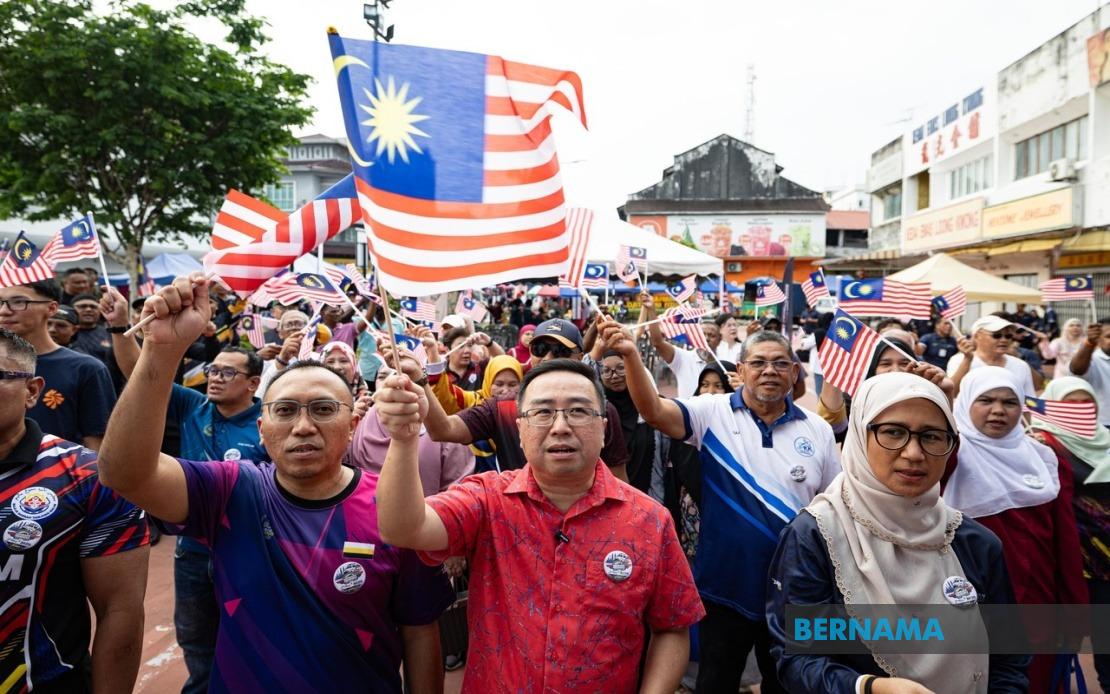
Malaysia's path forward depends on developing a more sophisticated conception of nationhood that transcends the divisive frameworks of identity politics, fear and coercion, according to Science, Technology and Innovation Minister Datuk Chang Lih Kang. Speaking as the country marks another independence anniversary, Chang articulated a vision where citizens of all backgrounds feel genuinely invested in the nation's trajectory, rather than seeing themselves as members of competing ethnic and religious blocs engaged in a zero-sum struggle for resources and influence.
The Tanjong Malim Member of Parliament emphasised that constructing a cohesive, resilient Malaysia requires moving beyond the rhetoric of intimidation and silence. He argued that true national strength emerges not from coerced conformity but from institutions that operate with professionalism, integrity and transparent equity across all communities. This conception stands in sharp contrast to governance models that rely on majority anxiety, exclusionary practices or the manipulation of historical grievances to consolidate political power.
Central to Chang's argument is the role of institutional architecture in fostering genuine belonging. Strong, impartial institutions—characterised by law enforcement applied consistently regardless of ethnicity, religion or political orientation, and public services delivered without discrimination—form the bedrock upon which authentic national unity can develop. Good governance emerges as the paramount defence against the fragmentation that occurs when state machinery becomes weaponised to privilege certain communities or suppress dissent from others.
The minister warned specifically against the instrumentalisation of race and religion for electoral mobilisation, a practice endemic across Southeast Asian politics. When political actors repeatedly invoke identity categories to mobilise support, they calcify those divisions into seemingly permanent social structures and fuel perceptions of systemic unfairness. This dynamic generates a self-reinforcing cycle in which communities increasingly view themselves as competitors rather than fellow members of a shared polity, ultimately destabilising the social contract.
On the symbolic realm, Chang articulated a nuanced position regarding expressions of patriotism and national pride. While the Jalur Gemilang merits genuine respect as an embodiment of Malaysia's historical journey and collective aspirations, he contended that excessive enforcement—treating unintentional errors as grave transgressions warranting public vilification, prosecution or severe penalties—paradoxically corrodes the patriotic spirit. When citizens fear disproportionate punishment for honest mistakes, they become hesitant to express their connection to national symbols, producing a hollow, fear-based nationalism rather than authentic commitment.
This reasoning reflects a maturity that acknowledges distinctions between inadvertent lapses and deliberate provocation. Intent, contextual factors and proportionality must inform responses to perceived infractions. By shifting the role of government agencies from merely punitive mechanisms toward educational and guiding institutions, societies create space for citizens to engage meaningfully with national symbols and values. Such an approach demonstrates confidence in the nation's institutional foundations rather than brittleness that requires constant defensive mobilisation against imagined threats.
Chang's framework, drawing intellectual support from remarks by Sultan Perak Sultan Nazrin Shah at the 8th World Conference on Islamic Thought and Civilisation, privileges unity rooted in authentic shared belonging over unity imposed through state coercion or social pressure. This distinction carries particular salience for Southeast Asian democracies grappling with pluralism. Societies that cultivate genuine inclusivity—where cultural, religious, linguistic and traditional diversity genuinely enriches national identity rather than threatens it—develop institutional resilience that transcends cyclical political upheavals.
The minister's vision invites Malaysians to reframe the essential question facing the nation. Rather than measuring national health through decibel levels of patriotic proclamation or competitive displays of loyalty, he argues that the pivotal inquiry concerns what kind of Malaysia future generations will inherit. This reorientation shifts focus from performative nationalism toward substantive questions about institutional equity, opportunity distribution and whether all communities perceive genuine pathways to economic mobility and political participation.
Crucially, Chang's framework demands that political leaders resist the temptation to weaponise state institutions for narrow partisan advantage. Those occupying positions of authority must internalise the principle that leadership constitutes a fiduciary responsibility toward all constituents, not a licence to consolidate sectional gains. This ethical conception of public office stands in tension with identity-based political mobilisation, which by definition privileges the material and symbolic interests of particular constituencies.
The articulation of this vision arrives amid an era of intensifying political polarisation across Malaysia and the broader Southeast Asian region. Democratic societies increasingly fragment along identity lines, with mainstream political discourse organised primarily through ethnic and religious categories. Chang's intervention suggests that sustaining democratic governance and social cohesion requires deliberate, sustained countermobilisation against these centrifugal forces—building institutions that operate above identity calculations and cultivating civic culture that values proportionality, empathy and shared responsibility.
For Malaysian readers and policymakers, the implications extend beyond abstract philosophy. A Malaysia that moves beyond identity politics creates space for class-based political competition, policy disagreements grounded in divergent visions of economic management, and governance debates centred on institutional effectiveness rather than communal preservation. Such reorientation potentially addresses underlying anxieties that fuel identity-based mobilisation by demonstrating that all communities can thrive within institutional frameworks built on transparent principles and genuine inclusivity.
Chang's call for mature nationhood ultimately represents an invitation to transcend the zero-sum thinking that characterises much contemporary Malaysian discourse. By construing national development as collectively beneficial rather than distributional conflict, policymakers and civic leaders can redirect political energy toward universal challenges—climate adaptation, economic competitiveness, educational quality—that demand comprehensive solutions benefiting all Malaysians. Whether Malaysian political institutions can sustain this reorientation amid competing pressures remains an open question bearing significant implications for regional stability.

