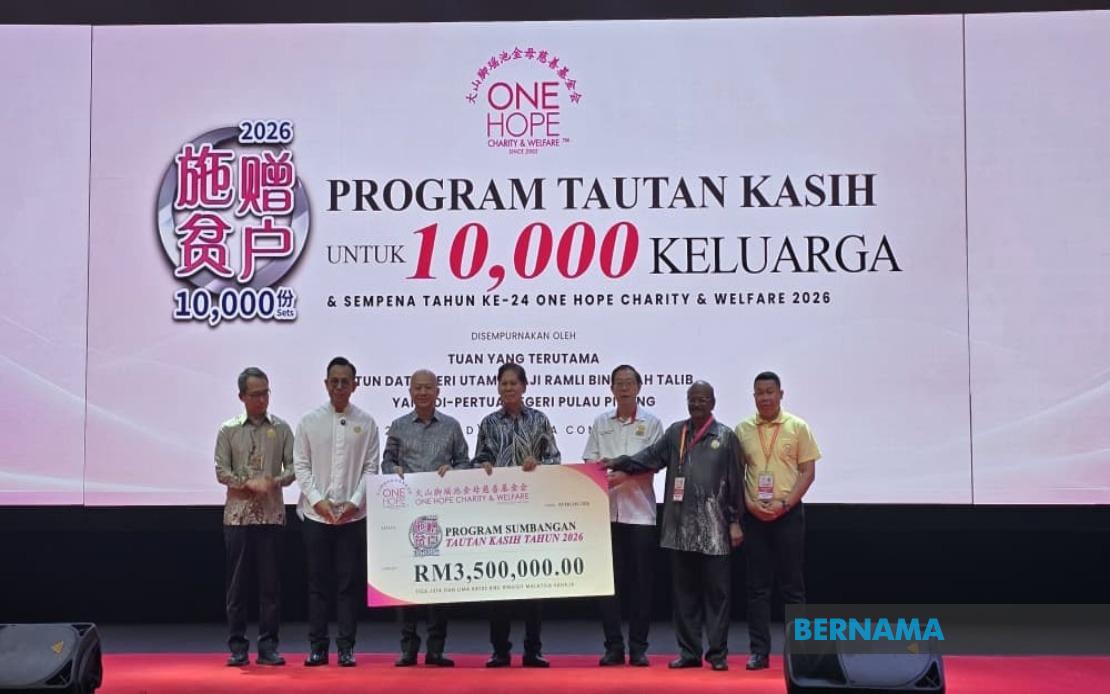
The imperative to bolster welfare systems across Malaysia has been underscored by Minister of Entrepreneur Development and Cooperatives Steven Sim Chee Keong during an event in Butterworth, reflecting broader policy discussions about how nations should support citizens navigating economic and social challenges. Speaking at the One Hope Charity programme, Sim articulated a vision where prosperity and progress cannot be measured solely through economic growth metrics, but must be assessed equally through the well-being of those experiencing hardship or vulnerable circumstances within society.
Sim's remarks reveal an understanding that national development remains incomplete without corresponding protections for citizens facing adversity. He acknowledged that life presents varying circumstances for different individuals and households, making it essential for governments to deploy comprehensive safety nets. This perspective resonates across Southeast Asia, where rapid economic development has sometimes left vulnerable populations behind, creating visible disparities that threaten social cohesion. The minister's emphasis on continuity and strengthening of welfare mechanisms suggests recognition that existing frameworks require ongoing evaluation and enhancement rather than static implementation.
A core argument advanced during the event centres on welfare's role in fostering social unity across Malaysia's multiethnic and multireligious landscape. Sim positioned welfare initiatives not merely as poverty alleviation tools but as instruments for building compassionate societies and strengthening bonds among Malaysians of different backgrounds. This framing proves particularly significant given Malaysia's diverse demographic composition, where inclusive social policies serve both humanitarian and nation-building functions. When welfare reaches across communal lines without discrimination, it reinforces the social contract binding diverse groups within a shared national project.
One Hope Charity exemplifies the charitable ecosystem Sim referenced. Founded as a modest initiative in Bukit Mertajam, the organisation has expanded considerably to become among Penang and Malaysia's largest welfare providers. The trajectory from small-scale local effort to substantial regional player demonstrates how concentrated effort and sustained commitment can create meaningful impact. The charity's expansion reveals opportunities within Malaysia's civil society sector for addressing gaps that government programmes may not fully cover, suggesting a collaborative model where public and private welfare mechanisms complement each other.
The scale of One Hope Charity's operations illustrates tangible outcomes from sustained welfare engagement. Distributing at least RM20 million annually across the community, the organisation has positioned itself as a significant player in Malaysia's social support infrastructure. Between 2021 and 2025, the charity channelled over RM100 million toward medical assistance, hospital support, medical equipment provision, and diverse welfare programmes. These figures demonstrate considerable resources flowing through charitable channels, raising questions about coordination between government welfare departments and private organisations to maximise coverage and minimise duplication.
The composition of assistance provided reveals practical understanding of vulnerable households' needs. Each recipient family receives approximately RM320 worth of essential goods and daily necessities alongside RM200 cash provision, allowing families discretion in addressing their specific circumstances. This combination of in-kind and cash support acknowledges that while certain necessities remain universal, individual situations demand tailored responses. This year, the charity assisted more than 10,000 families, indicating substantial reach though Malaysia's total vulnerable population likely exceeds available resources, pointing toward persistent gaps in comprehensive coverage.
Medical assistance programmes represent a particularly critical focus area, as healthcare costs frequently precipitate financial crises within Malaysian households. One Hope Charity's emphasis on this domain aligns with documented patterns where sudden medical expenses drain family savings and push households into poverty. By targeting hospital support and medical equipment provision, the organisation addresses vulnerability sources that extend beyond income poverty into health-related catastrophe risk. This approach reflects evidence that comprehensive welfare must address multiple deprivation dimensions rather than income metrics alone.
Looking ahead, One Hope Charity's announced plans for its 25th anniversary next year signal continued expansion ambitions. Approximately RM30 million in welfare initiatives are scheduled for implementation, with particular focus on expanding medical assistance programmes. This trajectory suggests organisational confidence in both fundraising capacity and societal readiness to support expanded charitable operations. For Malaysian policymakers, such private sector growth raises important questions about whether these expanding initiatives represent complementary additions to government welfare or substitutions for inadequate public provision that should trigger policy reassessment.
The involvement of Penang Governor Tun Ramli Ngah Talib in the programme underscores government recognition of charitable contributions to social welfare. When senior officials endorse private welfare initiatives, they implicitly acknowledge both the legitimacy of such efforts and gaps within government systems. However, this raises governance considerations regarding coordination, accountability, and sustainability. Private charities, while valuable, depend on donor commitment and may suffer from fluctuating resources. Resilient welfare systems typically require government guarantee of baseline protections supplemented by civil society contributions rather than reliance on charitable goodwill for core support.
For Malaysian and Southeast Asian readers, these developments signal important conversations about welfare state evolution in the region. Many countries have maintained minimal welfare expenditures while rapidly developing economically, creating circumstances where citizens rely heavily on family networks or charity. Minister Sim's advocacy for strengthened policies suggests potential policy directions, though effectiveness ultimately depends on budgetary allocation and implementation quality. The success of One Hope Charity demonstrates civil society capacity but cannot substitute for systematic government provision of welfare protections that reach every vulnerable Malaysian comprehensively and consistently.

