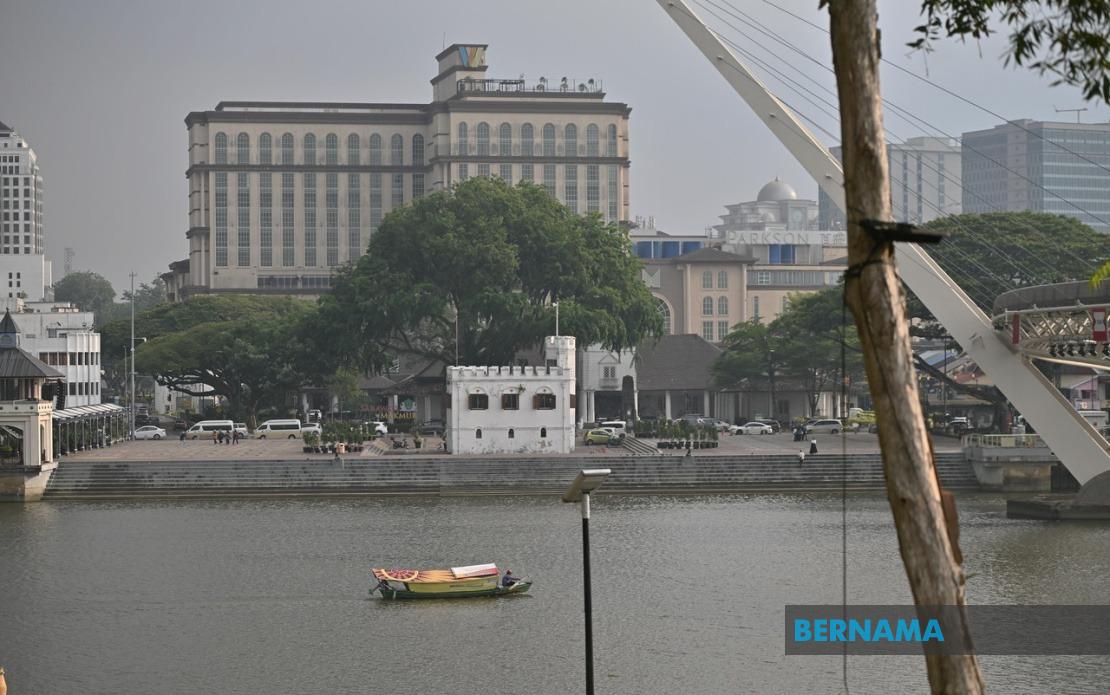
Malaysia faces mounting pressure to abandon its historically reactive stance on transboundary haze and instead implement comprehensive preventive strategies, according to Tan Sri Lee Lam Thye, chairman of the Alliance for a Safe Community. The warning comes as unhealthy air quality returns to several Malaysian regions, with six schools in Tebedu, Sarawak, forced to close after the Air Pollutant Index reading exceeded 200 on August 12. Lee's intervention signals growing concern within civil society that Malaysia remains perpetually underprepared despite decades of exposure to this recurring environmental crisis.
The deterioration in air quality across Sarawak and Peninsular Malaysia represents precisely the type of early warning system that should trigger immediate government activation of existing contingency frameworks, according to Lee. Yet Malaysia's track record suggests institutional memory remains weak—each seasonal episode appears to catch authorities by surprise, despite clear historical patterns. Lee emphasised that the current situation in Sarawak is particularly concerning because the convergence of prolonged hot and dry weather creates ideal conditions for rapid fire spread and cross-border smoke transmission. This vulnerability underscores why reactive management, which typically activates only after air quality reaches hazardous levels, proves consistently insufficient.
To address this structural weakness, Lee outlined a comprehensive five-point strategy centred on shifting the government's operational approach. The cornerstone involves automatic activation of the National Haze Action Plan whenever early warning indicators signal rising risk levels, rather than waiting for crisis conditions to materialise. This represents a fundamental change in institutional thinking—transitioning from threshold-based response to probability-based prevention. Strengthening hotspot monitoring across fire-prone regions, combined with real-time wind direction analysis and air quality tracking, would enable authorities to intervene before situations deteriorate beyond recovery.
Regional cooperation forms the second pillar of Lee's proposed framework. Malaysia, alongside all other ASEAN member states, formally ratified the ASEAN Agreement on Transboundary Haze Pollution in 2015, yet Lee argues that the agreement remains inadequately implemented. The legal architecture exists, but enforcement mechanisms and coordinated ground-level action remain underdeveloped. Lee called for intensified engagement with Indonesia and other neighbours to translate diplomatic commitments into tangible operational improvements. This distinction between formal agreement and functional implementation represents a critical gap that undermines regional air quality management across Southeast Asia.
Accountability mechanisms represent another essential component of Lee's approach. Transboundary haze extends far beyond environmental concerns—it constitutes a multifaceted public health, economic, and social crisis. Respiratory problems surge during haze episodes, schools close disrupting children's education, and healthcare systems face extraordinary strain from pollution-related ailments. The economic costs accumulate through lost productivity, increased medical expenditures, and damage to tourism and aviation sectors. Yet these consequences rarely translate into meaningful accountability structures that incentivise prevention across borders. Lee's emphasis on strengthened regional accountability mechanisms suggests that current diplomatic frameworks lack sufficient consequences to drive behavioural change.
Simultaneously, Lee stressed that Malaysia must confront its own domestic contributors to air quality degradation rather than attributing all problems to external sources. Illegal open burning practices, peat fires, agricultural land clearing, and poorly managed industrial land clearing within Malaysian territory significantly contribute to regional pollution. Addressing transboundary haze requires genuine commitment to environmental management standards domestically before legitimate claims can be made on neighbours regarding their obligations. This balanced approach—demanding accountability from regional partners while accepting responsibility for domestic practices—reflects mature environmental governance that acknowledges shared responsibility.
Public preparedness and communication form the final strategic element. Schools, hospitals, and workplaces require clear operational protocols for hazardous air quality events, including closure procedures, alternative arrangements, and health protection measures. Beyond institutional preparedness, the public needs timely and accurate air quality information to make informed decisions about outdoor activities and health precautions. Current information systems often lag behind actual conditions or provide incomplete data, leaving citizens unable to protect themselves adequately. Lee's emphasis on transparent, real-time communication reflects recognition that effective crisis management requires public cooperation and informed decision-making.
Central to Lee's argument is a fundamental reframing of how Malaysia conceptualises transboundary haze. Treating it as an annual seasonal inconvenience represents precisely the institutional complacency that perpetuates unpreparedness. Redefining haze as a recurring regional disaster risk requiring year-round prevention and preparedness would justify sustained institutional commitment, budget allocation, and interagency coordination. This reframing acknowledges that prevention activities conducted during clear-air months—monitoring system upgrades, equipment maintenance, hotspot surveillance technology deployment, and regional dialogue—are far more cost-effective than emergency response after skies turn grey.
The economic argument for prevention proves compelling. Reactive crisis management imposes enormous direct and indirect costs—hospital admissions spike, productivity plummets, flights are cancelled or delayed, and schools close. By contrast, preventive investment in monitoring infrastructure, regional cooperation mechanisms, and domestic fire management costs substantially less. Yet political systems often discount future costs in favour of immediate budget savings, creating cycles of preventable crises. Lee's articulation of this economic reality represents an implicit challenge to government prioritisation frameworks that chronically underinvest in prevention.
Asean's early warning system, Lee noted, exists but receives insufficient utilisation and responsive action. Member states receive data suggesting rising haze risks, yet often delay implementing mitigation measures until crisis conditions materialise. This pattern reflects broader governance challenges within regional cooperation—frameworks exist but institutional will to activate them promptly remains inconsistent. Stronger integration between early warning systems and automatic protocol activation could eliminate decision-making delays that currently characterise Malaysian responses.
The timing of Lee's intervention carries significance in Malaysia's environmental policy cycle. As monsoon seasons approach and weather patterns shift toward conditions favouring transboundary haze, preparation windows narrow. Institutions that have not yet activated monitoring systems, reviewed protocols, or engaged regional partners will face compressed timelines if hazardous conditions materialise. Lee's call for immediate action reflects recognition that preventive windows rapidly close once seasonal conditions shift unfavourably.
For Malaysia's regional standing and economic interests, embracing preventive haze management extends beyond environmental responsibility. As a growing economy increasingly dependent on tourism, aviation, and knowledge-intensive industries, Malaysia's competitiveness suffers during air quality crises. Singapore and international business centres view haze episodes as markers of regional instability and poor governance. Demonstrating commitment to prevention signals institutional maturity and reliability to international investors and partners. Conversely, predictable annual haze crises suggest inadequate governmental capacity, damaging Malaysia's regional positioning.
Lee's comprehensive analysis ultimately presents Malaysian policymakers with a clear choice: continue the costly cycle of reactive crisis management, or transition toward prevention-oriented frameworks requiring sustained institutional investment and regional cooperation. The evidence strongly supports prevention as economically superior, operationally more effective, and conducive to broader development objectives. Whether Malaysian institutions possess the political will to implement this reframing remains the central question determining whether future haze episodes represent unavoidable seasonal challenges or preventable governance failures.

