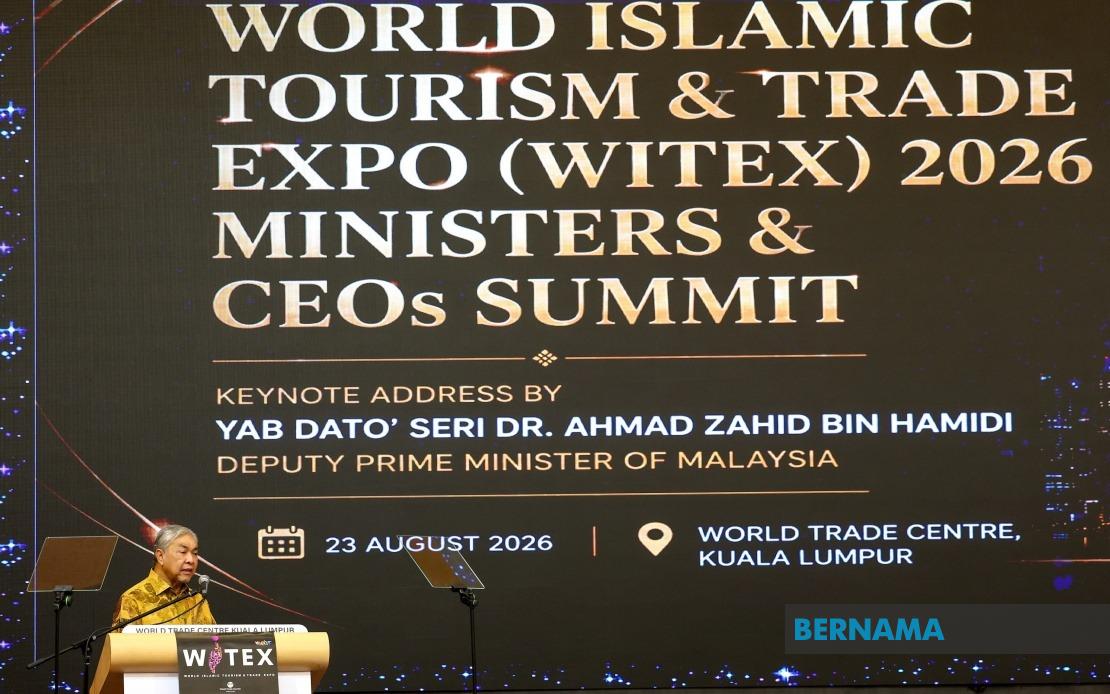
Deputy Prime Minister Datuk Seri Dr Ahmad Zahid Hamidi has outlined an ambitious vision for Malaysia to transcend its current status as merely a top Muslim-friendly tourist destination, instead positioning the nation as a vital nexus within the expanding global Muslim travel economy. Speaking at a high-level summit during the World Islamic Tourism & Trade Expo 2026 in Kuala Lumpur, Ahmad Zahid articulated a comprehensive strategy that moves beyond traditional hospitality offerings to create an integrated ecosystem binding tourism with halal commerce, technological advancement, and enterprise development across multiple sectors.
The deputy premier's remarks underscore a significant strategic shift in how Malaysia approaches Islamic tourism—one that recognises the sector's potential as an economic engine rather than merely a niche market segment. His emphasis on treating tourism as an "economic multiplier" reflects growing recognition among Malaysian policymakers that visitors generate far more economic impact than simple accommodation transactions. Each traveller's journey necessarily stimulates demand across interconnected industries including transportation networks, food production, retail establishments, entertainment venues, digital infrastructure, locally manufactured goods, and cultural programming. This interconnected approach positions tourism not as an isolated sector but as a catalyst for broader economic development.
The numbers underpinning Ahmad Zahid's vision are compelling. International Muslim travel arrivals reached 196 million in 2025, with projections indicating growth to 262 million by 2030—a remarkable expansion reflecting broader geopolitical and economic shifts reshaping global tourism patterns. Associated travel expenditure stands at approximately USD310 billion, representing a substantial financial opportunity. For Malaysia, a nation with established Muslim-majority demographics and existing tourism infrastructure, capturing even modest percentage increases in market share could translate into significant revenue generation and employment creation across multiple economic tiers.
Crucially, Ahmad Zahid highlighted that contemporary Muslim travellers have evolved beyond stereotypical expectations. While halal food provisions, prayer facilities, and appropriate accommodation remain baseline requirements, modern Muslim tourists increasingly travel for business conferences, wellness programmes, cultural immersion, nature exploration, and adventure activities. This diversification of travel motivations demands that Malaysia develop a more sophisticated and varied tourism product portfolio. The traditional association of Islamic tourism with religious occasions—Hari Raya Aidilfitri, Hari Raya Aidiladha, or Ramadan—represents an incomplete understanding of the market's full potential and leaves Malaysia vulnerable to competitor nations offering year-round attractions aligned with evolving visitor preferences.
Maintaining competitive advantage within this rapidly evolving sector requires deliberate investment in several interconnected areas. Ahmad Zahid specifically identified technology adoption, workforce development through Technical and Vocational Education and Training (TVET) programmes, and strengthening halal and Muslim-friendly certification standards as essential priorities. Each represents a distinct but mutually reinforcing challenge. Technological advancement enables superior visitor experiences through digital booking systems, AI-powered personalisation, and integrated payment solutions. TVET programme expansion ensures Malaysian service providers possess contemporary skills matching international quality benchmarks. Robust certification standards, meanwhile, provide assurance to increasingly discerning travellers and reduce information asymmetries that might otherwise advantage competitor destinations.
Geopolitical developments across West Asia have created unexpected advantages for Southeast Asian tourism destinations generally, and Malaysia specifically. Regional instability and travel safety concerns have prompted many West Asian visitors to redirect tourism spending toward alternative destinations, with Southeast Asia emerging as an attractive alternative. Ahmad Zahid explicitly acknowledged this dynamic, noting that Malaysia must intensify promotional efforts targeting West Asian markets through platforms such as WITEX. This represents not merely capitalising on short-term advantages but establishing durable market relationships that extend beyond current geopolitical circumstances.
The World Islamic Tourism & Trade Expo 2026, now in its fourth iteration, functions as a critical convening mechanism bringing together diverse stakeholders—tourism operators, halal producers, technology innovators, investors, and cultural institutions. This ecosystem-building function represents genuine value beyond traditional trade show dynamics. By facilitating connections between previously disconnected economic actors, WITEX creates possibilities for collaboration that might not emerge through conventional market mechanisms. A food producer might connect with hospitality operators, a fintech innovator might identify opportunities serving Muslim traveller payment preferences, or a cultural heritage site might discover new marketing channels—all contributing to ecosystem maturation.
Implementing Ahmad Zahid's vision requires coordinated action across governmental agencies, private sector entities, educational institutions, and community organisations. No single actor possesses sufficient leverage to transform Malaysia's tourism positioning unilaterally. Tourism Malaysia, the Malaysia Convention Bureau, the Malaysian Islamic Development Department (JAKIM), and various state tourism boards must align strategies and eliminate bureaucratic obstacles to innovation. The private sector—from major hospitality chains to small tourism enterprises—must invest in upgrading service quality and developing distinctive offerings. Educational institutions must reorient curricula to prepare workers for next-generation tourism employment. Communities, particularly those in tourism-dependent regions, must be engaged as active beneficiaries rather than passive subjects of tourism development.
The competitive landscape extending beyond Malaysia's borders demands particular attention. Indonesia, Thailand, and Singapore all recognise the Muslim travel market's significance and are investing accordingly. Indonesia possesses substantial domestic Muslim population advantages and has developed Islamic tourism offerings spanning spiritual tourism, cultural heritage, and increasingly sophisticated infrastructure. Thailand has expanded halal food certifications and accommodations, particularly within Bangkok and beach destinations. Singapore leverages financial services sophistication and technological infrastructure to attract Muslim business travellers. Malaysia cannot assume its current positioning, however advantageous, provides permanent competitive protection.
Diversifying Islamic tourism products throughout the calendar year addresses a critical vulnerability in Malaysia's current offering. Seasonal concentration during major Islamic holidays creates workforce challenges, infrastructure strain, and visitor experience degradation through overcrowding. Year-round attractions spanning nature-based experiences, business tourism, wellness retreats, cultural programming, and adventure activities would smooth demand fluctuations while maximising asset utilisation across accommodation, transport, and hospitality sectors. This diversification simultaneously reduces vulnerability to disruptions affecting any single seasonal period, whether travel restrictions, economic downturns, or geopolitical events.
Looking forward, Ahmad Zahid's articulation of Malaysia's Muslim travel economy ambitions provides useful strategic direction for multiple stakeholders. For investors, it signals long-term government commitment to sector development, justifying infrastructure investment. For entrepreneurs, it delineates opportunities within halal commerce, hospitality services, and tourism-related technology. For international partners, it communicates Malaysia's openness to collaboration within the expanding Muslim economy space. The coming years will determine whether Malaysia successfully transitions from a passive beneficiary of Muslim tourism demand to an active architect of a genuinely integrated Muslim travel and commerce ecosystem.

