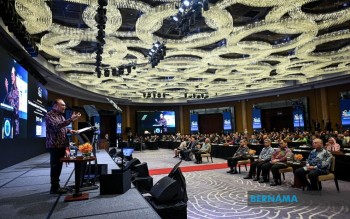
Malaysia must establish its own sovereign cloud infrastructure to protect critical security and personal information in an increasingly digitalised region, according to Prime Minister Datuk Seri Anwar Ibrahim. Speaking at the 39th Asia-Pacific Roundtable in Kuala Lumpur, the Prime Minister framed the initiative as a strategic response to shifting global power dynamics and data sovereignty challenges facing Southeast Asian nations. The proposal reflects growing concerns across the region about how major technology powers are accessing and controlling data flowing through their infrastructure, a issue that has become more acute as countries grapple with questions of digital autonomy and national security.
The Prime Minister's comments were prompted by questions about how Malaysia and other Southeast Asian countries could exercise meaningful control over their digital futures as the region becomes ever more reliant on critical technologies and infrastructure owned or operated by foreign entities. Anwar emphasised that a sovereign cloud would enable Malaysia to maintain a protective barrier around sensitive information while simultaneously remaining receptive to legitimate global digital investments. This balancing act represents one of the central tensions facing policymakers across Southeast Asia—the need to attract cutting-edge technology and foreign capital while ensuring that national interests and citizen data are not compromised in the process.
Central to the Prime Minister's concerns is the United States Cloud Act, which Anwar noted has created significant complications for countries seeking to safeguard their information. Under this legislation, American companies registered in the United States retain the legal right to access data stored on their systems, regardless of where those systems are physically located or which country's citizens the data belongs to. Anwar characterised this as a fait accompli, acknowledging that Malaysia cannot unilaterally change American law or corporate practices. However, he argued that Malaysia must take proactive steps to ensure its own vulnerabilities are not exploited, framing the sovereign cloud as a pragmatic defensive measure rather than a rejection of international cooperation.
The concept of a sovereign cloud, as Anwar envisioned it, would incorporate protective firewalls designed to isolate critical security information and sensitive personal data from foreign access. Yet the Prime Minister was notably candid about the limitations of such an approach in a genuinely globalised world. He recognised that absolute data protection is neither achievable nor perhaps even desirable in a liberal democracy that values openness and free information exchange. This acknowledgment reveals a sophisticated understanding of the trade-offs inherent in digital governance—Malaysia cannot simply wall itself off from the global internet without sacrificing the benefits of connectivity and international engagement. Instead, the approach must be nuanced, protecting what is genuinely sensitive while accepting that some degree of permeability is inevitable and even beneficial.
Anwar's emphasis on selective protection is particularly relevant given Malaysia's experience with digital platform abuses. The Prime Minister highlighted how social media and digital technologies, while powerful tools for connection and commerce, have become vectors for diverse harms. These range from political manipulation and misinformation to economic fraud and personal violations including sexual exploitation. He stressed that government has a legitimate responsibility to implement safeguards protecting Malaysians from such abuse, especially younger citizens who may be less equipped to navigate digital risks. This framing suggests that data sovereignty is not merely a technical or geopolitical issue but fundamentally a matter of citizen welfare and protection.
The broader strategic context for Malaysia's sovereign cloud ambitions involves the country's efforts to maintain its attractiveness as an investment destination while navigating great power competition. Anwar noted that Malaysia continues to welcome investment from the United States, China, and Germany, underscoring that the sovereign cloud initiative is not intended as a protectionist barrier against any particular nation. Rather, it represents an attempt to establish the conditions under which Malaysia can engage with all major technology and investment powers from a position of greater autonomy. This positioning aligns with Malaysia's traditional foreign policy emphasis on non-alignment and friendship with multiple partners, adapted to the digital and technological domain.
Underpinning Anwar's vision is a reaffirmation of ASEAN centrality as both a foreign policy principle and an economic imperative. The Prime Minister argued that ASEAN's collective strength and cohesion are critical not only for diplomatic leverage but also for making the region attractive to investors seeking stability and partnership. Rather than viewing digital governance as an issue for individual Southeast Asian countries to address in isolation, Anwar's remarks suggest the need for coordinated regional approaches. Sovereign cloud infrastructure, if developed on an ASEAN-wide basis or with regional standards and cooperation frameworks, could become considerably more robust and attractive to international partners than isolated national efforts.
Anwar also reflected on Malaysia's role in global affairs, characterising the country not as a great power or even an aspiring middle power, but as a small nation whose strength derives from regional cohesion. This self-assessment is instructive for understanding the sovereign cloud initiative—it is not framed as Malaysia's independent technological achievement but rather as part of a broader pattern of Malaysian agency exercised through engagement with neighbours. The Prime Minister explicitly cautioned against small countries pursuing middle-power status individually, arguing instead that regional evolution and collective strength should be the objective. This perspective suggests that Malaysia's digital sovereignty aspirations should ideally develop within an ASEAN framework rather than as a nationalist undertaking.
The practical implementation of a Malaysian sovereign cloud faces significant technical, financial, and institutional challenges. Establishing the necessary infrastructure, recruiting expertise, and ensuring interoperability with global systems would require substantial investment and coordination across government and the private sector. Moreover, the initiative must navigate the reality that many of Malaysia's largest companies and institutions already operate extensively on foreign cloud platforms, creating entrenched interests and technical dependencies. Yet the direction set by Anwar's remarks is clear—Malaysia is moving toward treating data governance and digital infrastructure as matters of strategic national importance requiring proactive state involvement alongside market mechanisms.
The Prime Minister's call for a sovereign cloud also resonates with similar initiatives being pursued or discussed across Southeast Asia and globally. Countries including India, Vietnam, and the European Union have all undertaken efforts to reduce dependence on foreign-controlled digital infrastructure. In the Malaysian context, however, the proposal carries particular weight given the country's position as a significant digital economy and its role as a potential model for middle-income countries seeking to balance development, democracy, and data protection. How successfully Malaysia navigates this challenge could have implications for technology governance across the broader region.

