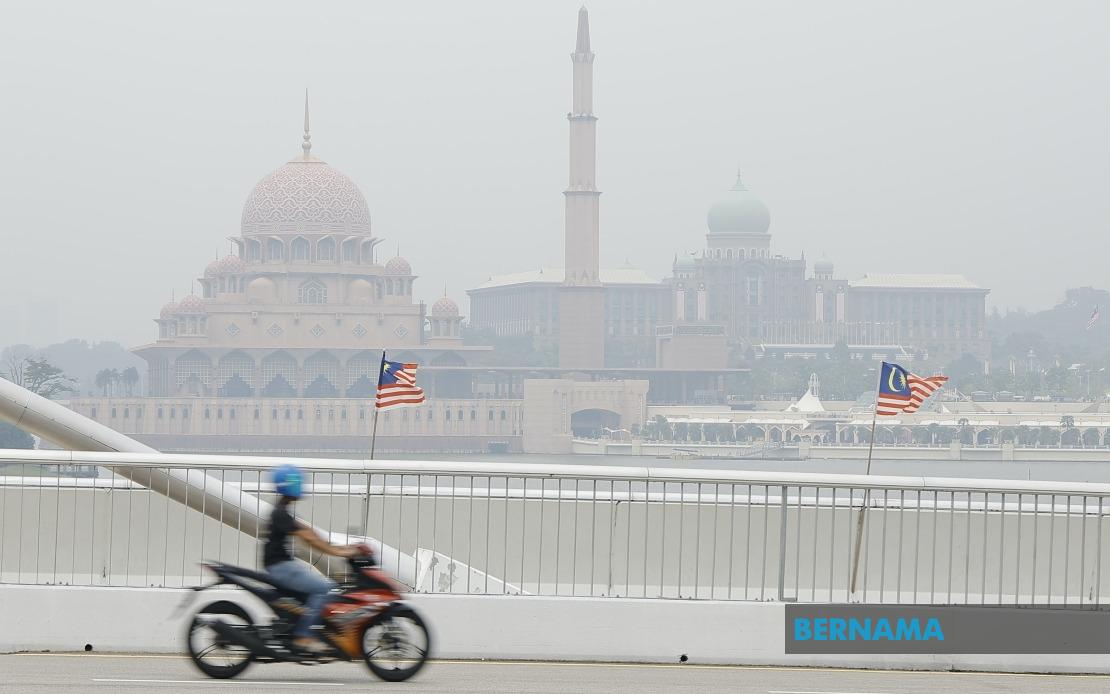
Malaysia must transition from reactive crisis management to proactive haze prevention by establishing an early warning system that forecasts air pollution events before they threaten public health, according to Associate Professor Dr Azman Azid, director of UniSZA's Besut Campus and a specialist in air quality research. Speaking in Kuala Nerus, Azman stressed that the nation already possesses the foundational data needed to construct such a system, but currently fails to integrate these resources into a cohesive predictive framework that would allow authorities and citizens to prepare in advance.
The urgency of implementing this system has been underscored by recent health data that reveals the true human cost of Malaysia's recurring haze episodes. During epidemiological weeks 32 and 33, the Ministry of Health documented a startling 259 percent surge in asthma cases, climbing from 61 to 219 patients within a short monitoring window. This statistic exposes a critical gap in how Malaysia measures and responds to air quality crises. While government agencies focus intensely on Air Pollutant Index readings and tracking smoke movement patterns, the corresponding spike in respiratory illnesses suggests that current monitoring approaches inadequately capture the broader public health implications of deteriorating air quality.
Azman's core argument centres on a fundamental shift in strategic thinking. Rather than continuing the established sequence of monitoring air quality, issuing warnings once pollution arrives, and then implementing reactive measures, Malaysia should adopt a forward-looking model that encompasses forecasting, prevention, protection and action. This reframing acknowledges that once hazardous particles saturate the atmosphere, intervention becomes far more challenging and costly. A predictive system, by contrast, would allow hospitals and clinics to increase staffing and supplies 48 to 72 hours before anticipated deterioration, while schools could reschedule outdoor activities and parents could make informed decisions about their families' movements and activities.
The technical architecture of such a system is achievable, according to Azman, by synthesising multiple data streams that Malaysia already maintains. Hotspot data collected through satellite monitoring can pinpoint active fire locations; satellite imagery can visualise developing smoke plumes; meteorological information can determine wind velocity and direction; and atmospheric trajectory models can trace the origin and projected path of incoming air masses. When integrated, these datasets would reveal whether fine particulate matter measuring 2.5 micrometres in diameter (PM2.5) concentrations would exceed dangerous thresholds in specific regions within the crucial 48 to 72 hour window, providing sufficient lead time for protective measures.
The distinction between current API-centric approaches and the proposed early warning system is subtle but consequential. The Air Pollutant Index remains valuable as a real-time indicator of existing conditions, yet it functions as a rear-view mirror rather than a windshield. By the time API readings spike and trigger warnings, pollutants already pervade the air that residents breathe. An advanced warning system would not replace API monitoring but rather complement it, enabling stakeholders to implement preventive strategies before the situation deteriorates. This complementary relationship would transform haze response from damage control into genuine health protection.
Beyond technological solutions, Azman emphasised that Malaysia must strengthen the enforcement of environmental laws governing open burning, bush fires and peatland management. These regulatory mechanisms form the foundation upon which any forecasting system rests; without preventing fires from igniting in the first place, early warning systems simply provide advance notice of an inevitable crisis. The consistency and rigour with which authorities apply existing legislation directly determines whether the preconditions for major haze events can be reduced.
Regional cooperation mechanisms demand equal attention, particularly given the transnational character of haze pollution. Malaysia participates in the ASEAN Agreement on Transboundary Haze Pollution, yet Azman contends that current collaboration remains largely reactive and confined to data exchange. He advocates for deepening cooperation across multiple dimensions: joint mapping of fire sources across borders, coordinated smoke trajectory forecasting, technology transfer among member states, formalised firefighting assistance protocols, and pre-agreed response mechanisms. These measures would transform ASEAN cooperation from an information-sharing exercise into an integrated prevention framework that recognises the fundamental truth that air masses acknowledge no national boundaries.
The challenge of addressing haze comprehensively extends beyond technology and diplomacy. Azman outlined a multifaceted approach encompassing fire prevention strategies, sustainable peatland management practices, atmospheric modelling capabilities, strengthened regional coordination, and long-term shifts toward more ecologically sustainable land use patterns. Each component reinforces the others; for instance, improved peatland management reduces the fuel available for fires, while early forecasting allows firefighting resources to be pre-positioned, and regional cooperation ensures that these efforts achieve scale and consistency across affected territories.
The implications for Malaysia specifically deserve particular consideration. As a nation frequently affected by transboundary haze originating from neighbouring countries' agricultural clearing and land development practices, Malaysia occupies a vulnerable position with limited unilateral control over pollution sources. However, this vulnerability also creates strong incentives for proactive internal measures and assertive regional leadership. By developing sophisticated early warning systems and demonstrating their effectiveness, Malaysia could model best practices and encourage neighbouring countries to adopt compatible forecasting frameworks, gradually building the technical and institutional foundations for more robust regional prevention.
In the shorter term, Azman acknowledged that Malaysia may not prevent every smoke plume from crossing its borders, nor can it unilaterally halt all fires affecting regional air quality. Nevertheless, he argued that substantial progress remains achievable through reducing domestic fire frequency, improving forecast accuracy for smoke movement, and—most importantly—placing public health protection at the centre of haze response strategy. This reorientation would represent a meaningful advance even if absolute prevention remains elusive, transforming Malaysia's relationship with a recurring environmental challenge that has cost the nation billions in economic losses and countless citizens their respiratory health.

