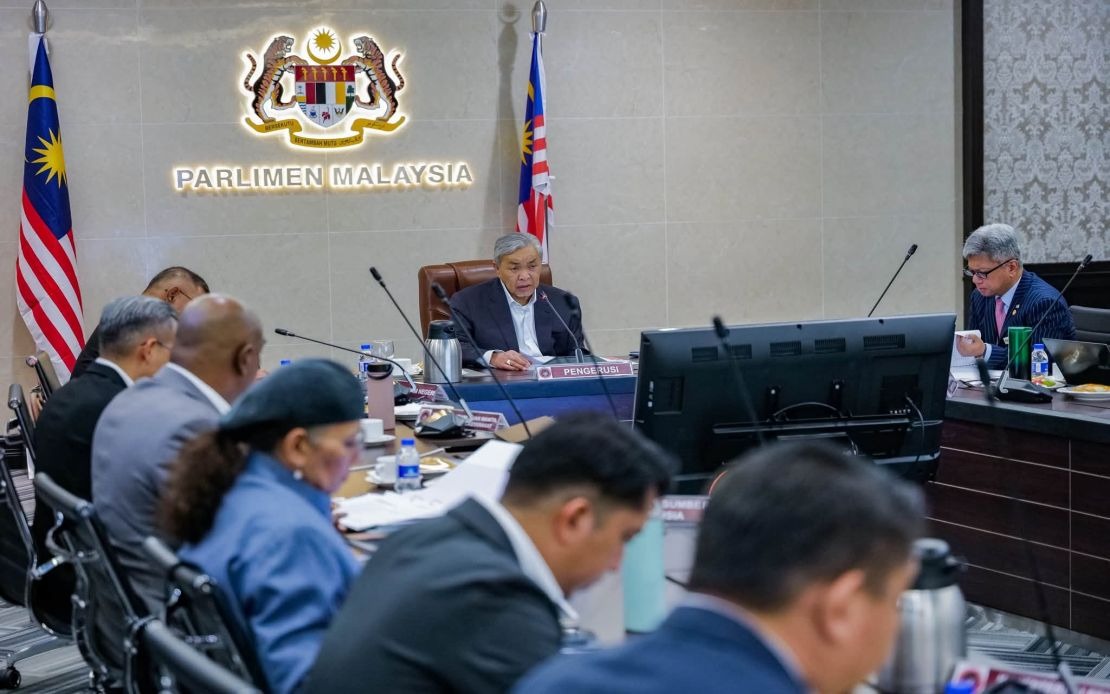
Malaysia faces mounting pressure to refine its approach to refugee management as the global displacement crisis deepens, with Deputy Prime Minister Datuk Seri Dr Ahmad Zahid Hamidi arguing that the nation must forge a coherent strategy that neither abandons humanitarian principles nor compromises security. Speaking after chairing the 6th High-Level Committee meeting on refugee and asylum seeker management, Ahmad Zahid stressed that the country's framework must evolve to handle an increasingly complex geopolitical landscape whilst protecting Malaysian sovereignty and public welfare.
The scale of the international crisis provides urgent context for this policy reassessment. With more than 122 million people forcibly displaced globally—a figure reflecting ongoing conflicts, economic collapse, and climate-driven instability—virtually every nation now grapples with how to respond compassionately without straining resources or creating security vulnerabilities. Malaysia, positioned at a crossroads of migration routes and home to significant displaced populations, cannot afford ad-hoc responses. Ahmad Zahid's framing of refugee management as fundamentally linked to national interest reflects a maturing recognition that this is not purely a humanitarian or administrative function but a strategic challenge touching every ministry and agency.
The Deputy Prime Minister, who also holds the Rural and Regional Development portfolio, explicitly rejected the false choice between compassion and caution. His statement that "refugee management is not merely an administrative matter" signals that Malaysia's approach has moved beyond treating refugee issues as logistical problems handled by one or two departments. Instead, the government appears to be embedding refugee policy into broader national security architecture, requiring coordination across law enforcement, health, education, and social agencies. This systemic thinking is necessary given Malaysia's experience with mixed-status populations, irregular migrants, and the genuine vulnerabilities that come with managing large transient communities.
The recent committee meeting reviewed implementation of concrete mechanisms designed to modernise Malaysia's refugee apparatus. Among these, the Refugee Registration Document (DPP) represents an attempt to bring greater transparency and traceability to the population of recognised refugees. Such documentation serves multiple purposes: it enables authorities to track individuals, reduces vulnerability to exploitation and trafficking, and provides refugees themselves with proof of status that facilitates access to basic services. However, the very existence of a registration system raises operational and humanitarian questions that Malaysia is only now systematically addressing through high-level coordination.
Education and healthcare access emerged as key areas requiring policy streamlining according to Ahmad Zahid's account. These sectors have historically struggled with refugee populations because guidelines remain fragmented, funding unclear, and administrative responsibilities poorly delineated between federal and state authorities. A refugee child seeking schooling or a pregnant refugee woman needing prenatal care should not encounter bureaucratic mazes that delay lifesaving or life-building interventions. By tasking the committee to harmonise access guidelines, the government acknowledges that better coordination reduces both unnecessary administrative burden on agencies and gaps in service that leave vulnerable populations at risk.
Malaysia's position as a non-signatory to the 1951 Refugee Convention gives it considerable flexibility in crafting its own framework, but this also means the country operates with less international oversight and fewer binding protocols. This independence requires Malaysia to develop particularly robust domestic standards, precisely because external accountability mechanisms are limited. Ahmad Zahid's emphasis on ensuring decisions are "guided by the interests of the people and Malaysia's sovereignty" suggests the government intends to apply strict criteria in determining who qualifies for protection and what resources should be committed to refugee populations versus citizens.
The political economy of refugee policy in Malaysia cannot be divorced from public sentiment. Periodic tensions between refugee communities and Malaysian residents—whether over housing, employment, or cultural integration—have surfaced in various states. A policy framework that appears to prioritise refugee welfare over citizen welfare risks eroding public support for any refugee protections at all. Conversely, policies perceived as dismissive of humanitarian suffering can invite international criticism and NGO pressure. Ahmad Zahid's repeated emphasis on balancing these competing demands reflects an attempt to build a politically sustainable refugee system.
Regional dynamics further complicate Malaysia's choices. Myanmar's ongoing civil conflict, Afghanistan's instability, and sporadic violence in parts of southern Thailand continuously generate displaced populations seeking refuge in Malaysia. Unlike wealthy Western nations that can absorb refugee populations through permanent resettlement, Malaysia faces the prospect of indefinite hosting of communities with limited onward resettlement opportunities. This structural reality makes efficient management and clear benefit-sharing mechanisms essential to long-term viability.
The government's focus on legal compliance and systematic administration signals an attempt to move away from ad-hoc charity or crisis-driven responses toward institutionalised refugee governance. This professionalisation of the sector could improve outcomes for both refugees and host communities by reducing corruption, ensuring equitable resource distribution, and preventing exploitation by unscrupulous actors within refugee populations or among service providers. However, it also risks creating bureaucratic distance between policy-makers and the human realities that refugee families experience daily.
Looking forward, Malaysia's refined refugee framework will likely become a model of interest throughout Southeast Asia, where several nations host refugee populations but lack comprehensive management systems. How Malaysia balances security, humanitarian obligation, and fiscal responsibility will offer lessons—both positive and cautionary—to regional partners facing similar pressures. Ahmad Zahid's committee work suggests the government recognises that refugee policy, properly designed, need not pit national interest against human decency but can integrate both.

