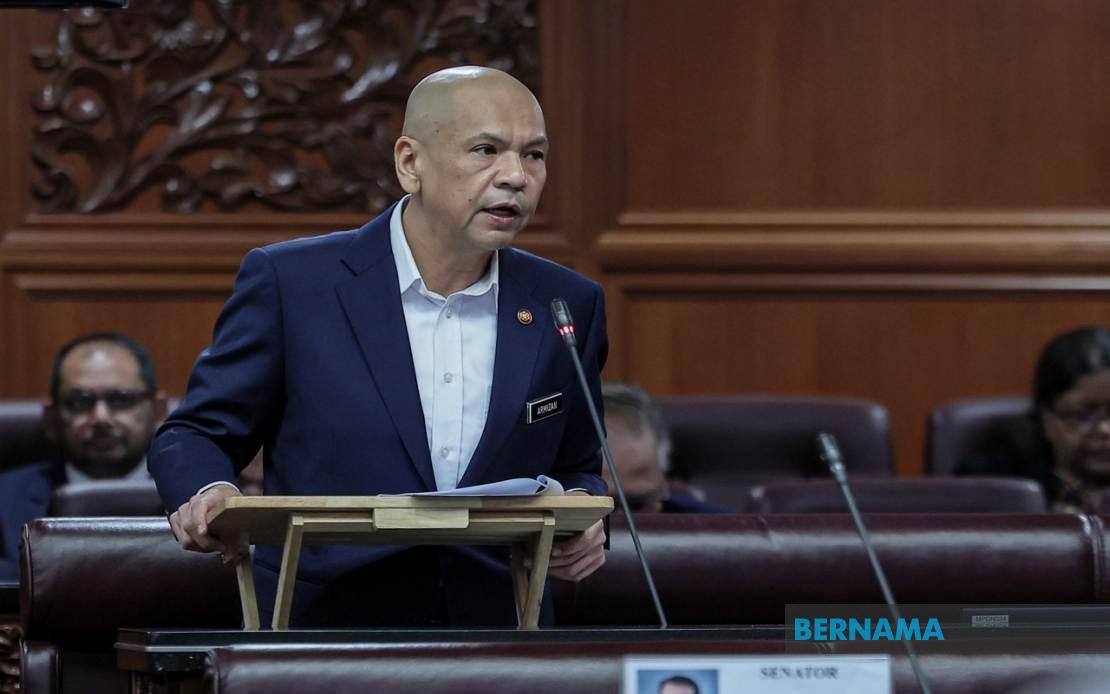
Malaysia has taken a significant step toward modernising its competition regulatory framework with the tabling of two comprehensive amendment bills in Parliament. The Competition (Amendment) Bill 2026 and the Competition Commission (Amendment) Bill 2026, both under the Domestic Trade and Cost of Living Ministry, received their first reading in the Dewan Rakyat on June 23, with Datuk Armizan Mohd Ali introducing both measures. Parliament is expected to proceed with second reading during the current sitting, signalling the government's commitment to advancing this legislative agenda without unnecessary delay.
The primary Competition (Amendment) Bill represents a substantial overhaul of Malaysia's Competition Act 2010, seeking to modernise investigative and enforcement mechanisms that have become increasingly important as the economy diversifies and new digital business models challenge traditional regulatory approaches. The proposed changes reflect growing recognition that the current legislative framework, now over a decade old, requires updating to address contemporary market dynamics and emerging competition issues. By strengthening MyCC's procedural powers and decision-making structures, the amendments aim to create a more responsive and effective competition enforcement regime capable of addressing complex cases involving digital platforms, e-commerce, and cross-border transactions.
One of the most consequential proposals appears in Clause 3, which would fundamentally broaden the application of competition law by expanding coverage from commercial activities alone to encompass all economic activities. This shift carries significant implications for sectors previously operating with lighter regulatory oversight, including government-linked companies, statutory bodies, and non-profit entities engaging in economic functions. For Malaysian businesses, this expansion signals that competition compliance obligations may extend further than previously understood, potentially affecting supply chains and business relationships across multiple sectors. The move brings Malaysia more into alignment with international best practices, where competition law typically applies broadly across the entire economy rather than targeting specific sectors selectively.
Clause 7 introduces expanded investigative authority by permitting MyCC to obtain information and documents from virtually any source—individuals or government entities alike—when conducting market reviews. This enhancement addresses a practical challenge regulators face when seeking to understand competitive dynamics and identify potential violations. The provision acknowledges that meaningful market analysis often requires comprehensive data gathering, and competitive concerns sometimes involve conduct by state-owned enterprises or heavily regulated sectors where information access has previously posed difficulties. For businesses, this represents a meaningful broadening of MyCC's reach during investigations, underscoring the importance of maintaining robust compliance and record-keeping systems.
The amendments introduce stronger protections against obstruction and destruction of evidence, a critical concern for any modern competition regime. Clause 13 establishes a specific offence for intentional destruction, concealment, defacement or alteration of data or materials designed to hinder MyCC's work, with criminal penalties implicitly attached through the offences framework. This provision responds to real enforcement challenges where witnesses or parties under investigation have destroyed potentially incriminating documentation. By creating explicit criminal liability for such conduct, the amendment aims to protect the integrity of competition investigations and ensure that enforcement actions can proceed on the basis of reliable evidence rather than compromised or incomplete records.
The Competition Commission (Amendment) Bill 2026 addresses internal governance and operational matters that, while less visible to the public than enforcement activities, significantly affect regulatory effectiveness. Clause 8 provides clearer delineation of MyCC's advisory role with government ministries, public authorities and regulatory bodies regarding competition policy and implementation. This formalisation reflects lessons learned in the existing regime, where the boundaries of advisory functions sometimes remained ambiguous. For regulators in other sectors—banking, telecommunications, utilities—this explicit articulation of MyCC's authority to provide competition-focused guidance represents an opportunity for better inter-agency coordination and integration of competition considerations into sectoral regulation.
Clause 10 grants MyCC flexibility in delegating functions and powers to its chairman, committees, officers and employees. This seemingly technical provision actually addresses practical governance needs within a growing regulatory institution, allowing the commission to distribute workload efficiently and empower lower-level officials to make routine decisions without requiring full commission deliberation. The capacity to delegate reflects MyCC's evolution from a nascent regulator toward a mature institution managing substantial caseloads and complex investigations requiring specialised expertise across multiple teams.
Perhaps most notably, Subclause 12(a) transfers MyCC officer appointments from ministerial discretion to commission-based selection upon the chief executive officer's recommendation. This governance change has profound implications for regulatory independence, as it reduces political influence over enforcement personnel and aligns appointment processes with international standards for independent competition authorities. By vesting appointment power within the commission itself, the amendment strengthens institutional autonomy and reduces perception that enforcement decisions might be influenced by political considerations. This structural reform matters particularly in Southeast Asia, where questions about regulatory independence remain relevant across multiple jurisdictions.
The amendments also include consequential changes to the Competition Commission Act 2010 to ensure consistency across the competition law framework and eliminate potential conflicts or ambiguities arising from the primary bill's substantive changes. These coordinating provisions, while technically dry, serve essential harmonisation functions that prevent unintended gaps or overlaps in the legal framework.
For Malaysian business stakeholders, these amendments signal a regulatory environment moving toward stricter compliance expectations and broader enforcement capacity. Multinational enterprises operating across Southeast Asia will need to ensure that competition compliance programmes account for MyCC's expanded authority, particularly in digital and emerging sectors now explicitly within the regulator's purview. The enhanced investigative powers and evidence-protection provisions emphasise that competition files must be managed with the understanding that MyCC may request them at any stage and that destruction could trigger criminal liability.
Regionally, Malaysia's legislative modernisation reflects broader trends across Southeast Asia toward stronger competition enforcement and more sophisticated regulatory frameworks. Countries including Thailand, Vietnam and Indonesia have similarly upgraded their competition regimes in recent years, suggesting a region-wide movement toward enhanced competition-law sophistication. For cross-border competitors and supply chain operators, this regional harmonisation, though still incomplete, gradually reduces the complexity of managing different competition standards across Southeast Asian markets.
The parliamentary process ahead will determine whether these proposals proceed with amendment or approval. Should both bills ultimately pass, Malaysia's competition framework will reflect contemporary regulatory thinking and position MyCC as a more capable, independent and effective enforcer. The amendments acknowledge that competition remains essential to consumer welfare, business efficiency and economic dynamism—increasingly important considerations as ASEAN economies navigate digitalisation and evolving global trade relationships.