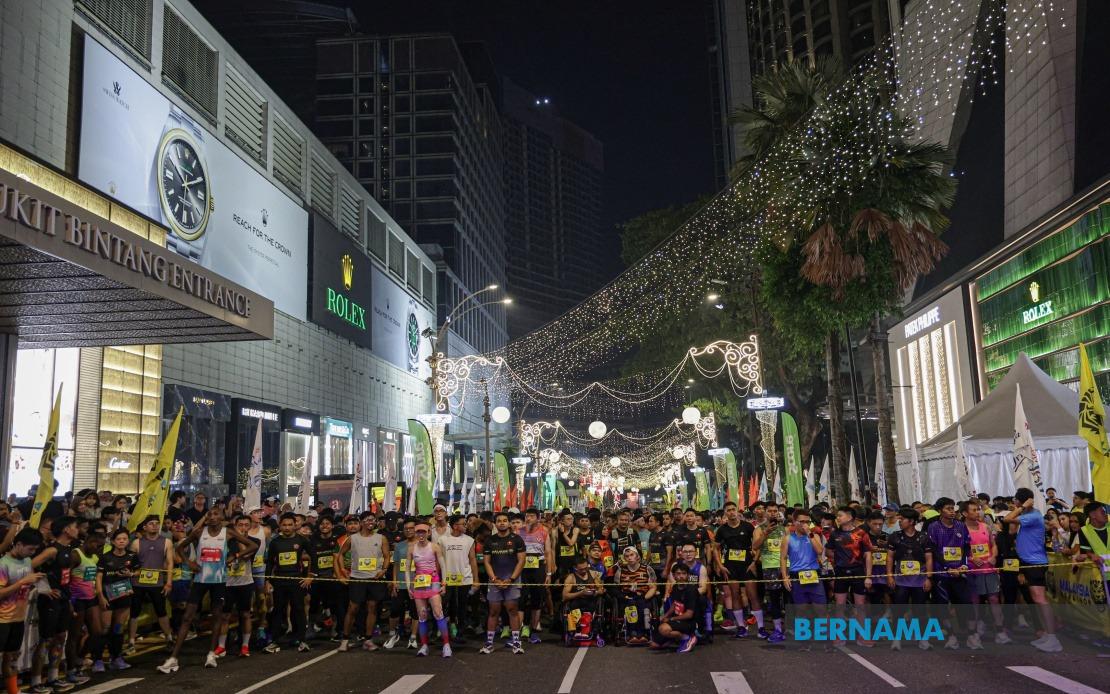
The Malaysia Marathon 2026 commenced in the pre-dawn hours of 30 August, mobilising nearly 25,000 runners in a coordinated celebration of Malaysia's 69th National Day. The ambitious multi-category event began with Minister of Tourism, Arts and Culture Datuk Seri Tiong King Sing officiating the flag-off ceremony near Pavilion Kuala Lumpur, signalling the start of the Full Marathon at 12:30 am. This staggered commencement across different race distances reflected careful event logistics designed to manage participant flow and road infrastructure throughout the capital.
The Full Marathon category, spanning the full 42 kilometres, brought together 2,000 competitors who braved the midnight conditions to tackle one of the year's signature endurance challenges. Approximately two hours later, at 2:00 am, the 21-kilometre Half Marathon began with 8,000 participants, substantially outnumbering the longer distance runners. By 3:30 am, a further 5,000 athletes launched into the 10-kilometre category, while the Family-oriented 5-kilometre Fun Run accommodated 10,000 participants at the more sociable hour of 7:30 am, ensuring accessibility for casual runners and younger participants.
What distinguishes this inaugural Malaysia Marathon from previous events is its reimagined route design. Rather than concluding at Dataran Merdeka, the traditional ceremonial heart of the nation, all race categories now converge at the Kuala Lumpur City Centre precinct. This shift represents a subtle but significant change in the event's symbolic geography, repositioning the urban landscape's gleaming skyline as the backdrop for athletic achievement rather than the historic plaza. The selection carries implications for sponsorship activation, spectator flow, and the visual narrative the event projects to both domestic and international audiences.
The Full Marathon course presents a formidable physical challenge that extends beyond mere distance. Participants face a 900-metre elevation gain as they navigate the Ampang-Kuala Lumpur Elevated Highway, a substantial climb that tests cardiovascular conditioning and mental resilience. For marathon athletes accustomed to road racing, the inclusion of significant topography on an elevated expressway adds technical difficulty and distinguishes Malaysia's premier marathon from flatter urban courses in the region. This topographical dimension has likely influenced both the race strategy of serious competitors and the self-selection of participants choosing their respective categories.
Among the innovations generating international interest is the participation of an HONOR-made humanoid robot competing within the 10-kilometre category. This technological addition transcends mere novelty, positioning Malaysia as a forward-thinking nation integrating advanced robotics into mainstream sporting events. The robot shares the course with runners from Japan, Nigeria, and numerous other countries, creating opportunities for cross-cultural exchange and media coverage that amplifies the event beyond traditional athletics audiences. Such integration of artificial intelligence into competitive sport reflects broader conversations about technology's role in modern athletic events.
Managing traffic flow across Kuala Lumpur presented a substantial operational challenge that Kuala Lumpur Police addressed through phased road closures and systematic diversions. Beginning the evening before the race and extending through the afternoon of 30 August, authorities restricted movement on multiple arterial routes including Jalan Bukit Bintang, Jalan Ampang, Jalan Sultan Ismail, and Jalan Raja Chulan. The closure of major expressways including AKLEH and SUKE highways required careful coordination with commuters, commercial vehicles, and emergency services to minimise disruption while ensuring runner safety. This infrastructure management represented one of the most complex urban logistics exercises the capital has undertaken.
World Athletics recognition confers legitimacy upon the Malaysia Marathon 2026, positioning it within the official international athletics calendar. This endorsement from the sport's global governing body elevates the event beyond a national celebration into a competition that attracts serious international athletes seeking certified course records and global ranking points. The recognition also signals Malaysia's growing prominence within the international athletics movement and its capacity to host world-class sporting events that meet rigorous standards for course measurement, safety protocols, and competitive integrity.
The event's timing relative to National Day celebrations demonstrates deliberate strategic planning to interweave athletic competition with patriotic commemoration. Rather than treating the marathon as incidental to independence festivities, organisers positioned it as a central expression of national pride and collective identity. The early-morning start times, particularly for elite categories, transformed Kuala Lumpur's streets into a moving spectacle of human endeavour precisely when the nation reflectively observes its anniversary. This integration suggests evolving approaches to how Malaysia conceptualises and celebrates its identity through sporting platforms.
For Southeast Asian sports tourism, the Malaysia Marathon 2026 represents a significant regional event that draws international participants while showcasing urban infrastructure, hospitality services, and organisational capability. Countries throughout the region increasingly compete for status as premier sporting destinations, with major marathons serving as crucial markers of a nation's development trajectory and global sporting credentials. The successful execution of this event reinforces Malaysia's position as a capable regional host while generating economic activity through participant spending, media rights, and sponsorship revenues that flow through the local economy.
The comprehensive infrastructure supporting 25,000 runners across multiple simultaneous and sequential races demands coordination across numerous government agencies, private sector partners, and volunteer networks. Beyond the visible elements of road closures and police deployment, extensive preparation encompassed hydration stations, medical support, participant tracking systems, and post-race logistics. This complexity underscores why modern marathons in major cities represent far more than point-to-point footraces, instead functioning as integrated urban systems that reveal underlying capacities for planning, execution, and adaptation under pressure.
Looking forward, the Malaysia Marathon 2026 establishes a template for future editions that combines competitive ambition with inclusive mass participation across multiple categories. The balance between 2,000 elite marathon runners chasing course records and 10,000 Fun Run participants seeking family engagement demonstrates how single events can serve diverse stakeholder interests. The demonstrated success of this initial iteration, particularly the integration of technological innovation through the HONOR robot and the strategic repositioning of the finish line, will likely inform subsequent editions and potentially inspire similar innovations across Malaysian sporting events. The event's legacy will extend beyond one day's athletic performances to influence how the nation conceptualises celebration, competition, and community participation in the years ahead.

