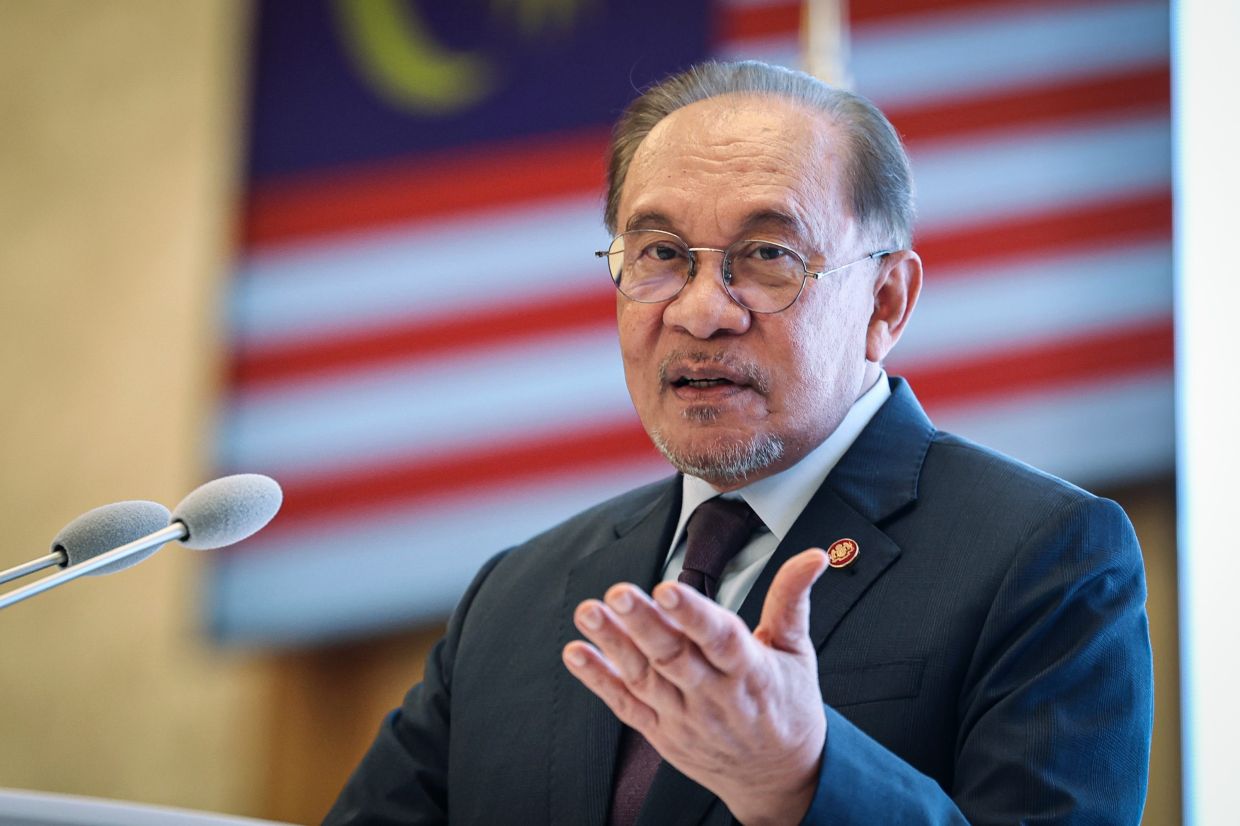
Malaysia's strategic position as a trading nation bridging major global commerce corridors has become the defining characteristic of its economic diplomacy approach, according to Prime Minister Datuk Seri Anwar Ibrahim. Speaking at the 39th Asia-Pacific Roundtable in Kuala Lumpur, Anwar, who concurrently holds the Finance Minister portfolio, underscored how the country's geographic advantage and supply chain connectivity have evolved into a cornerstone instrument for advancing national interests and regional cooperation. This positioning reflects decades of deliberate government effort to cultivate economic relationships with both established and emerging trading partners, transforming geographical circumstance into sustained diplomatic leverage.
The Prime Minister outlined how Malaysia has progressively deepened economic engagement with its longstanding trading and investment partners through a combination of bilateral relationships and multilateral frameworks. Rather than relying on single-source trade relationships, Malaysia has pursued a deliberately diversified approach that recognizes the inherent vulnerabilities in depending too heavily on any one market or partnership arrangement. This strategy acknowledges the reality that global commerce remains prone to disruption from geopolitical tensions, protectionist policies, and shifting supply chain dynamics—lessons reinforced by recent global supply chain shocks and trade tensions between major powers.
Central to Malaysia's multilateral economic architecture are three major trade frameworks that Anwar identified as vehicles for achieving tariff reduction, expanded market access, and more balanced investment arrangements. The ASEAN Free Trade Area provides the foundational integration mechanism within Southeast Asia, while the Regional Comprehensive Economic Partnership represents the broader Indo-Pacific economic integration effort involving the ten ASEAN member states plus China, Japan, South Korea, Australia, and New Zealand. The Comprehensive and Progressive Agreement for Trans-Pacific Partnership positions Malaysia within the wider Asia-Pacific trading ecosystem, encompassing eleven nations stretching from Chile to Vietnam. Through these interlocking agreements, Malaysia seeks to create redundancy in its trading relationships while maintaining leverage within multiple negotiating forums.
Anwar placed particular emphasis on ASEAN centrality as the organizing principle of Malaysia's foreign policy architecture, even while acknowledging persistent doubts and criticisms about the bloc's effectiveness and decision-making processes. This reaffirmation of ASEAN's primacy comes amid mounting pressure from major powers competing for influence in Southeast Asia and persistent internal tensions within the grouping over issues ranging from Myanmar's political crisis to conflicting maritime claims and development disparities. By anchoring Malaysian policy within ASEAN frameworks, Kuala Lumpur aims to preserve regional autonomy from great power competition while leveraging collective voice to negotiate more favorable terms with larger economies.
Beyond these established trading relationships, Malaysia is actively pursuing market access and economic partnerships with less developed and less strategically contested regions that offer substantial growth potential. The Prime Minister identified West Asia, Central Asia, Latin America, and Africa as priority expansion zones where Malaysia can establish deeper economic engagement without confronting the competitive saturation characterizing relationships with developed economies. This geographic diversification serves both economic and strategic objectives: it reduces reliance on traditional partners while positioning Malaysia as a development partner in regions increasingly courted by competing powers and investment models.
The energy sector features prominently in Malaysia's strategic calculations regarding engagement with Central Asia, a region rich in hydrocarbon resources but geographically distant from major consuming markets. During a recent official visit to Turkmenistan, Malaysia's national oil company Petronas formalized agreements with Turkmenistani state entities to explore and develop two significant gas fields, representing a concrete expression of this economic diplomacy strategy. This arrangement extends beyond simple commercial extraction, encompassing a long-term hydrocarbon development framework that incorporates knowledge-sharing on technical expertise and human capital development between the two nations' energy sectors.
Anwar articulated a broader vision of economic collaboration spanning the halal industry, digital economy, agricultural development, and green technology adoption. These sectors represent areas where Malaysia possesses distinctive competitive advantages or expertise that can be leveraged in partnerships with nations seeking to develop similar capabilities. The halal sector reflects Malaysia's established position within Islamic world commerce, digital economy engagement capitalizes on the country's technological infrastructure and fintech innovation, agricultural initiatives build on expertise in tropical farming systems, and green technology aligns with global decarbonization imperatives increasingly driving investment decisions and regulatory frameworks.
The strategic integration of economic diplomacy with geopolitical considerations acknowledges that trade and investment flows cannot be divorced from underlying power dynamics and security calculations. Rather than treating economics and politics as separate domains, Malaysia's approach recognizes that economic relationships generate political influence, create stakeholder constituencies for continued cooperation, and establish interdependencies that discourage conflict. This fusion of economic and geopolitical strategy aims to create a network of partnerships sufficiently diverse and deeply embedded that no single disruption can overwhelm national interests.
Diversification of economic partnerships and market exposure has shifted from being a mere business optimization strategy to a fundamental national necessity in Malaysia's strategic calculus. The increasing volatility of the international environment—encompassing great power competition, climate-related disruptions, potential supply chain fragmentation, and pandemic-related uncertainties—has elevated economic resilience to a primary policy objective. By maintaining broadly dispersed trading relationships and investment sources, Malaysia aims to insulate itself from shocks originating in any single market or region while preserving access to growth opportunities across multiple geographies and sectors.
Anwar's emphasis on maintaining forward-looking economic partnerships reflects recognition that tomorrow's trading relationships must be constructed today through sustained diplomatic engagement and institutional framework-building. Rather than passively accepting existing trade flows, Malaysia actively shapes its economic future through negotiations over framework terms, participation in regional institution-building, and strategic investments in sectors positioned to generate future demand. This approach treats economic diplomacy not as reactive adaptation to global market forces but as an instrument through which national leadership actively constructs preferred future trading arrangements aligned with development objectives and strategic interests.

