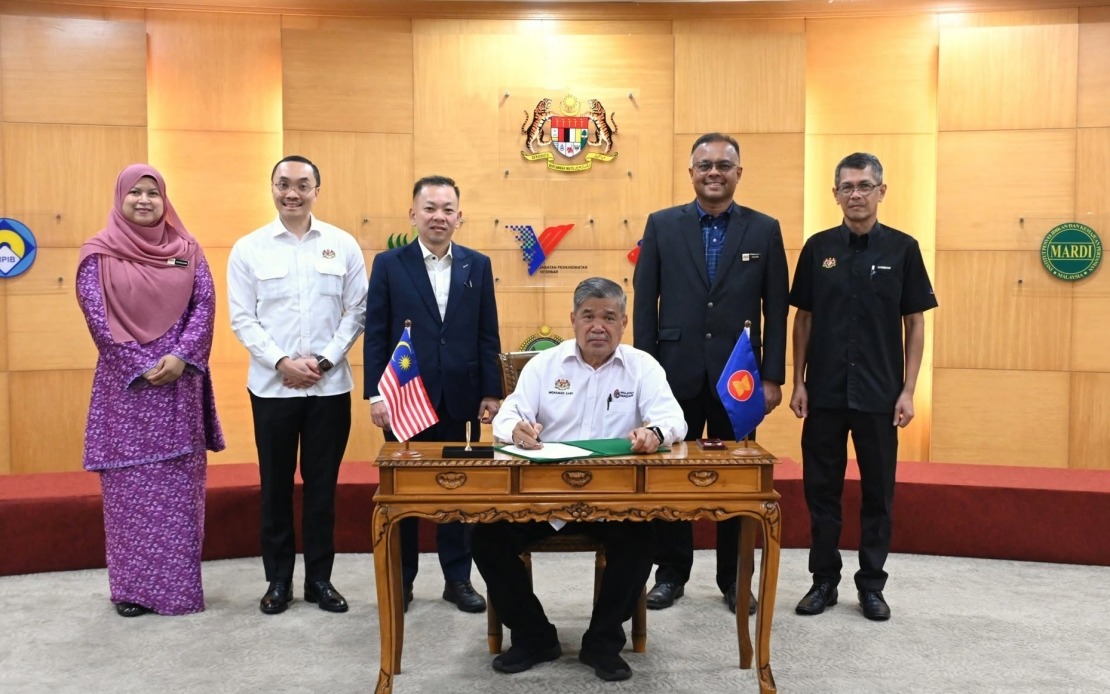
Malaysia has secured expanded commercial opportunities in regional agricultural markets through two freshly inked Memoranda of Understanding under the ASEAN framework, positioning the country to strengthen its position in agri-commodities whilst accessing cutting-edge climate-resilient farming technologies. Datuk Seri Mohamad Sabu, the Agriculture and Food Security Minister, formalised both agreements during yesterday's ASEAN Ministers on Agriculture and Forestry conference, with the Ministry of Agriculture and Food Security confirming the arrangements would fortify regional food supply systems against mounting vulnerabilities from climate-related disasters, cross-border agricultural diseases, and pest infestations.
The first accord, the ASEAN Cooperation in Agriculture and Forest Products Scheme, establishes a comprehensive framework encompassing five strategic pillars that aim to harmonise agricultural approaches across the ten-member bloc. These foundational areas target strengthened food self-sufficiency across ASEAN, improved trade facilitation for agricultural and forestry commodities, mobilisation of capital investment in the sector, environmental stewardship through sustainable natural resource management, and unified ASEAN representation in global agricultural negotiations. This structured architecture reflects growing recognition within the region that fragmented agricultural policies undermine collective bargaining power and food resilience.
Under this initial agreement, Malaysia has assumed lead-country responsibilities for two economically significant commodities. The Ministry of Plantation and Commodities will spearhead regional coordination for palm oil and cocoa, while the Ministry of Agriculture and Food Security will champion agri-food products. This leadership delegation underscores Malaysia's established expertise in plantation agriculture and processed food manufacturing, roles that position the country as a strategic anchor within ASEAN's agricultural ecosystem. The arrangement enables coordinated promotional campaigns defending palm oil's market standing internationally, a particularly strategic element given the commodity's vulnerability to environmental criticism and protectionist pressures in developed markets.
Beyond palm oil, the expanded market access provisions encompass industrial crops, livestock products, specialised items such as herbs and medicinal botanicals, and forest-derived goods including cultivated mushrooms, tree nuts, and apicultural products. For Malaysian exporters, this represents meaningful diversification away from overreliance on traditional commodities towards higher-value specialty agricultural products. Regional trade liberalisation under this framework could particularly benefit Malaysian producers of premium honey, medicinal plants, and processed livestock goods that currently face fragmented market entry conditions across neighbouring economies.
The second MoU, structured as a bilateral arrangement between the entire ASEAN grouping and China, introduces an eighteen-element cooperation agenda spanning five years with deliberate emphasis on environmental sustainability and technological transfer. This partnership carries particular significance for Malaysia given China's position as both a major agricultural technology developer and primary destination for Southeast Asian food commodities. The scope encompasses low-carbon climate-smart agricultural methodologies, sustainable woodland stewardship, structured disaster risk management frameworks, and agricultural insurance mechanisms designed to immunise supply chains against production shocks.
The ASEAN-China agreement specifically addresses contemporary agricultural vulnerabilities through dedicated cooperation pathways for transnational pest and disease surveillance, coordinated research initiatives, and systematic information-sharing on trading conditions. These elements prove especially pertinent for Malaysia, whose agricultural sector remains periodically disrupted by regional outbreaks of livestock diseases and crop pests that traverse national boundaries. By establishing institutionalised monitoring and response mechanisms, participating countries reduce response time to emerging biosecurity threats and distribute containment costs across the region.
Climate-smart agriculture has emerged as the centrepiece of the partnership, reflecting both parties' recognition that conventional farming methods face viability pressures from shifting precipitation patterns, temperature volatility, and extreme weather events across Southeast Asia. The technology transfer component proves particularly valuable for Malaysian agricultural enterprises, as Chinese institutions have invested substantially in developing resource-efficient cultivation systems, drought-resilient crop varieties, and precision farming technologies suited to tropical and subtropical conditions. For Malaysian smallholder farmers and agribusinesses, access to these innovations enables productivity improvements whilst reducing environmental footprints—an increasingly demanded attribute by international buyers.
The policy coordination dimension embedded within the ASEAN-China framework facilitates harmonisation of agricultural regulations and standards across participating nations, reducing compliance complexity for regional enterprises and enabling smoother commodity flows. Malaysian exporters navigating Chinese import requirements, food safety standards, and phytosanitary protocols historically confronted inconsistent application across different Chinese provincial administrations. Formalised policy alignment through this MoU provides greater predictability for Malaysian exporters targeting the Chinese market, a destination absorbing substantial volumes of Malaysian palm oil, rubber, cocoa, and seafood products.
Research and development cooperation provisions create institutional channels for Malaysian agricultural researchers to engage with Chinese counterparts on crop improvement, sustainable resource management, and adaptive farming systems. Universities and research institutes across Malaysia can access shared research facilities, collaborative funding opportunities, and peer networks within China's extensive agricultural science ecosystem. This intellectual exchange capacity strengthens Malaysia's domestic innovation pipeline whilst positioning the country as a knowledge broker between Chinese agricultural technologies and other Southeast Asian economies.
For Malaysia's broader economic strategy, these agreements represent strategic alignment with regional integration imperatives whilst securing technology access mechanisms that would prove costly or unfeasible for unilateral development. The arrangements acknowledge that contemporary agricultural challenges—climate volatility, emerging pests, market access restrictions, and resource constraints—exceed individual national capacity to address effectively. By institutionalising cooperation through binding memoranda, Malaysia transitions from bilateral negotiating positions to multilateral frameworks offering stability, cost-sharing mechanisms, and predictable pathways for technology and knowledge diffusion.
The timing of these agreements reflects heightened attention to regional food security following supply chain disruptions triggered by the pandemic, geopolitical tensions affecting commodity flows, and accelerating climate impacts on crop production across Southeast Asia. Malaysian policymakers recognise that food self-sufficiency and import cost management emerge as shared vulnerabilities across ASEAN, making collaborative approaches preferable to competitive isolation. These MoUs operationalise that strategic thinking, converting shared vulnerability into collective opportunity through markets, technology, and coordinated resilience-building.
Implementation success depends substantially on Malaysian institutions translating MoU commitments into operational structures, budget allocation, and capacity-building investments. The Ministry of Agriculture and Food Security and Ministry of Plantation and Commodities must establish coordination mechanisms, identify priority cooperation domains within the five-year framework, and mobilise domestic stakeholders around specific opportunities. Smallholder farmer associations, agribusiness enterprises, and research institutions require clear information regarding available technology transfer pathways, market access benefits, and participation channels. Without systematic domestic mobilisation, these regional agreements risk remaining framework documents lacking substantive impact on Malaysian agricultural competitiveness and sustainability transitions.

